
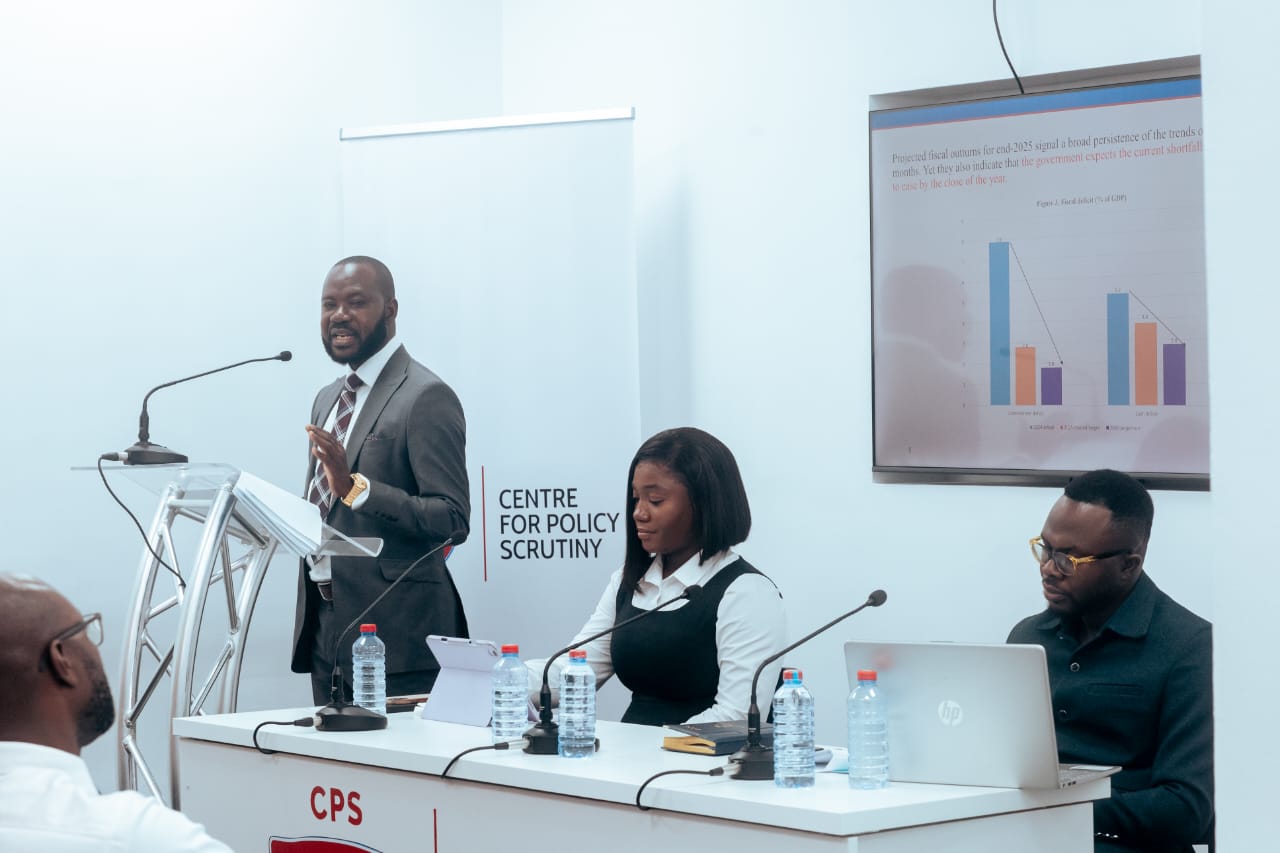
The Centre for Policy Scrutiny (CPS) has stated that the 2026 Budget marks a decisive turning point in the economic management, shifting emphasis from
The Centre for Policy Scrutiny (CPS) has stated that the 2026 Budget marks a decisive turning point in the economic management, shifting emphasis from three years of stringent consolidation to a bold, expansion-driven approach aimed at accelerating growth, job creation and infrastructure development.
Presenting its independent review at a media briefing on Thursday, November 20, 2025, the Policy Think Tank described the budget as both ambitious and risky, with success hinging heavily on realistic revenue mobilisation and disciplined implementation.
According to CPS, the government’s decision to scale up investment after years of fiscal tightening is a necessary pivot to restore momentum in key sectors of the economy.
Capital expenditure, which suffered significant cuts in 2025 due to revenue shortfalls, is projected to jump by an unprecedented 141 percent to GH¢57.5 billion in 2026. This represents 19 percent of total expenditure, a major departure from the 9.5 percent allocation recorded in the 2025 mid-year revisions.
“This budget clearly signals a shift,” said CPS lead analyst Dr. Adu Owusu Sarkodie.
“Government is deliberately moving from consolidation to expansion, with infrastructure, agriculture, and human capital development playing central roles. The ambition is commendable, but execution will be everything.
Strong Macroeconomic Gains Anchoring The Pivot
CPS praised the macroeconomic gains achieved in 2025, particularly the rapid disinflation from 32.1 percent in December 2024 to 8.0 percent in October 2025.
The drop, described as the most significant in two decades, reflects what CPS called “rare alignment” between fiscal and monetary policy.
The Bank of Ghana’s policy rate reduction from 28 percent to 21.5 percent it said has also helped ease liquidity constraints, lower borrowing costs, and stimulate private sector activity.
The review notes that gross international reserves have risen to an estimated US$12 billion, strengthening the cedi’s stability and boosting external buffers ahead of 2026.
“These gains give government some credible room to pursue growth,” CPS stated. “If stability continues, it can support job creation, stimulate investment and restore confidence in the broader economy.”
Revenue Gaps Pose Serious Risks
However, CPS cautioned that the budget’s success is tied to the government’s ability to meet its revenue target of GH¢268 billion, an 18.4 percent increase over 2025 projections. With the Ghana Revenue Authority’s operational budget rising by only 1.5 percent, the Think Tank doubts the realism of government’s revenue expectations.
“The GRA cannot deliver enhanced enforcement, AI-driven customs reforms and wider VAT coverage on a shoestring budget,” said Dr. Prince Adjei, co-author of the report. “If the revenue measures fail, the spending plans collapse with them.”
The review also notes that revenue performance in 2025 was below target by GH¢7.7 billion by the third quarter, worsening pressure on expenditure execution and undermining credibility.
Infrastructure And Human Capital Take Centre Stage
The 2026 budget places heavy emphasis on infrastructure, with GH¢30 billion dedicated to the continuation of Big Push road and bridge projects, alongside new allocations for urban transport systems, rural electrification, water and sanitation projects, and district housing initiatives.
This CPS notes that 14 major infrastructure projects have been carried over from previous budgets but applauds the continuity, arguing that sustained funding is essential to avoid the cycle of stalled public projects.
“The infrastructure drive is essential and overdue,” said Dr. Jacob Novignon of CPS. “Roads, energy, housing and digital infrastructure are key enablers of growth. What matters now is securing funding and ensuring value for money.”
Human capital programmes—including Free SHS and TVET expansion, Agenda 111 hospital construction, teacher training and digital learning—also feature prominently, with combined allocations exceeding GH¢50 billion.
Bold Job Creation Targets, But Sustainability Concerns
The National Democratic Congress government’s projection of creating up to 800,000 jobs in 2026 drew mixed reactions. CPS acknowledged the scale of job opportunities in roads, agro-processing, digital services and industrial parks but warned that many may be temporary.
“Jobs tied to construction or government-funded projects often disappear after project completion,” Dr. Sarkodie cautioned. “Long-term employment depends on sustained private sector expansion, not just public expenditure.”
The review highlights the Oil Palm Development Programme, which targets 250,000 jobs, and the establishment of three garment factories expected to create over 20,000 direct positions. Yet, CPS insists that structural reforms, stable macroeconomic conditions and private investment attraction remain critical.
Balancing Act Ahead
CPS concluded that the 2026 budget presents a promising shift toward growth and job creation but stresses that the country is entering “a delicate balancing act.”
Expanding spending while maintaining stability, meeting IMF programme thresholds, and avoiding excessive domestic borrowing will require what it called “a high level of policy discipline.”
“The 2026 budget has potential, but the risks are significant,” CPS said. “Revenue mobilisation, expenditure efficiency and private sector partnership will determine whether Ghana truly resets for growth—or simply accumulates new vulnerabilities.”
It urged government to invest in stronger revenue enforcement, safeguard macroeconomic stability and ensure transparent delivery of infrastructure projects to sustain confidence among citizens and development partners.

COMMENTS