
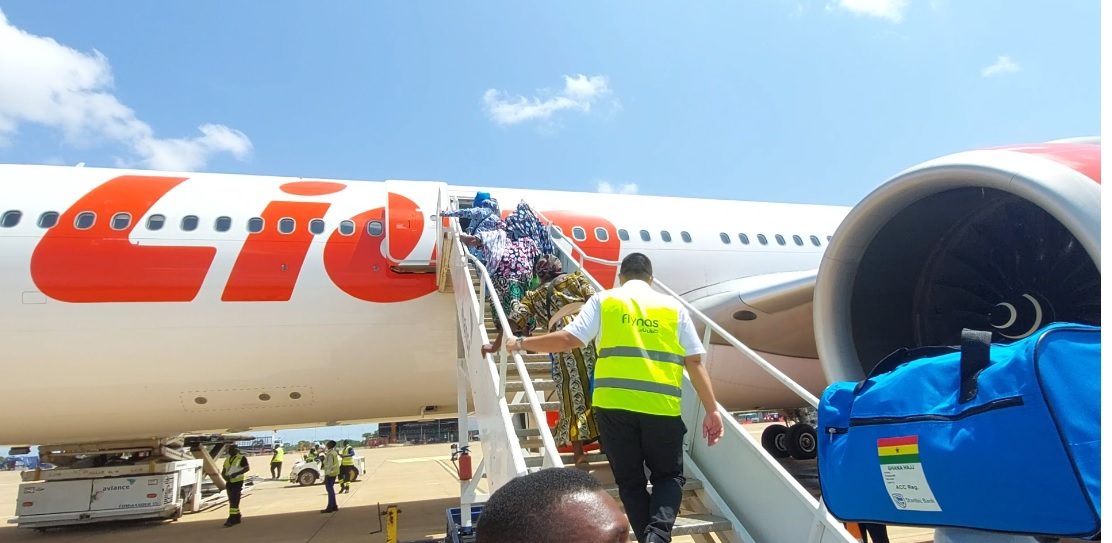
Ghana’s participation in the 2025 Hajj pilgrimage has been overshadowed by a string of troubling incidents, including the deaths of two pilgrims, emer
Ghana’s participation in the 2025 Hajj pilgrimage has been overshadowed by a string of troubling incidents, including the deaths of two pilgrims, emergency visa repatriations, a hotel evacuation scare, and mounting dissatisfaction over substandard conditions in Saudi Arabia.
On Sunday, May 25, panic broke out at the Rafahya Al-Seteen Hotel in Mecca, where hundreds of Ghanaian pilgrims were temporarily evacuated.
The scare was reportedly triggered by an incident on the 12th floor, although conflicting accounts have made the cause unclear.
Some witnesses claimed there was a fire, while others said the structure of the floor appeared to be failing.
The confusion caused widespread fear among occupants, with emergency responders from Saudi fire and police services swiftly deployed to the scene.
No injuries or fatalities were recorded, but several pilgrims lingered outside the hotel hours after the situation was declared safe, unwilling to return due to lingering anxiety.
The scare added to an already tense atmosphere for the over 6,000 Ghanaian Muslims participating in this year’s Hajj.
Just days earlier, the Ghana Hajj Taskforce confirmed that two pilgrims had died during the spiritual journey.
One of the deceased, 63-year-old Yussif Hawawu from Tamale in the Northern Region, collapsed and died on May 15 during the Tawaf ritual — the sacred circumambulation around the Kaaba at the Grand Mosque in Mecca.
According to Ismaila Skones, an administrator with the Ghana Hajj Taskforce, the late pilgrim passed away while in the company of fellow Ghanaian travelers and was buried in Makkah in accordance with Islamic rites.
In addition to the reported deaths, five other Ghanaian pilgrims were repatriated due to visa-related issues.
Alhaji A.B.A. Fuseini, Head of Corporate Affairs for the Hajj Taskforce, clarified that the individuals were not deported for any criminal reason but were affected by administrative visa errors.
He explained that some visa realignment attempts had led to unintended cancellations, and the affected individuals were being assisted to return to Mecca.
“Some said they were deported, but we choose to use the word ‘repatriated.’ Deportation connotes some criminality, but these people have not committed any crime,” he said.
Beyond these immediate incidents, there is growing frustration among Ghanaian pilgrims over the quality of arrangements made for their stay in Saudi Arabia.
Many pilgrims have taken to social media to decry what they describe as poor planning and inhumane living conditions.
Complaints have included overcrowded hotel rooms, inadequate bathroom facilities, malfunctioning air conditioners, and lodging that is located far from the Haram—the Grand Mosque.
A viral video featuring popular Tamale-based Islamic cleric, Sheikh Hashim Ibn, captured the growing sentiment of betrayal.
He revealed that despite paying GH¢62,000 for the pilgrimage, he was left to endure harsh living conditions and was even asked to serve on the Da’awa Committee due to staffing shortfalls.
“The hotel we’re in is far from the Haram, the lifts barely work, and the rooms are overcrowded,” he said.
“There’s just one bathroom for every 8 to 10 people, and the air conditioning doesn’t work even though temperatures exceed 45 degrees Celsius.”
Sheikh Ibn’s account is one of many shared online by pilgrims who believe the Hajj Taskforce has failed to deliver on its promises.
The Taskforce was established by President John Dramani Mahama to replace the disbanded Hajj Board and was tasked with ensuring a better-organized, dignified experience for Ghanaian pilgrims.
However, the growing number of complaints suggests serious shortcomings.
The accumulation of deaths, logistical failings, administrative errors, and poor living conditions has cast a shadow over what should be one of the most spiritually significant events in the lives of Ghanaian Muslims.

COMMENTS