
A last-minute petition has forced Ghana’s Parliament to suspend the confirmation hearing of Justice Kweku T. Ackaah-Boafo, stalling his anticipated el
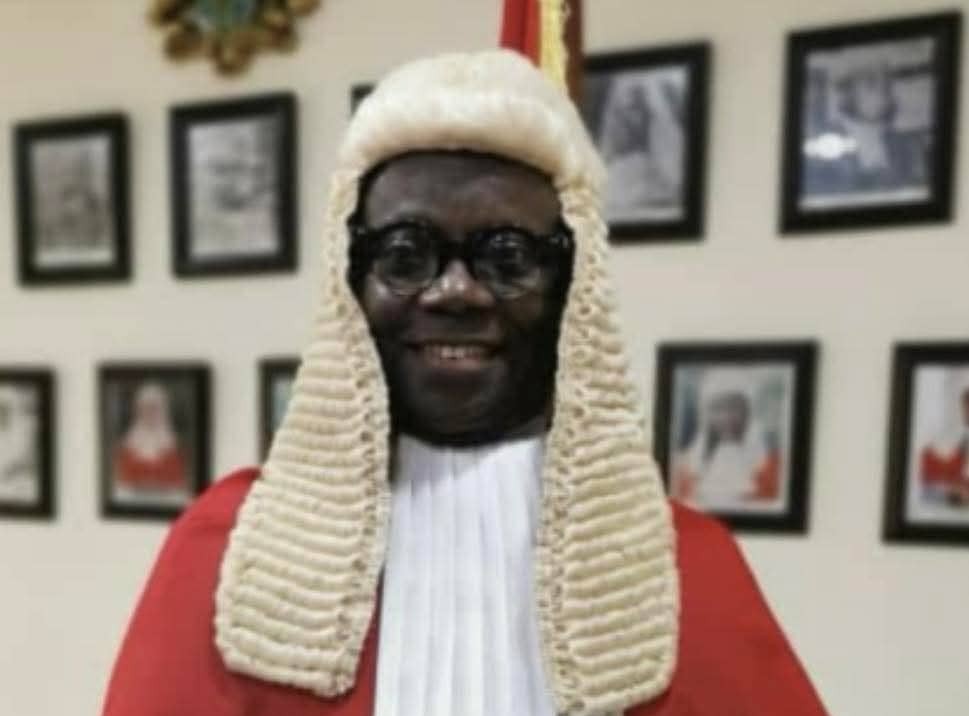
A last-minute petition has forced Ghana’s Parliament to suspend the confirmation hearing of Justice Kweku T. Ackaah-Boafo, stalling his anticipated elevation to the Supreme Court and sparking debate about the balance between public participation and the integrity of the judiciary.
Justice Ackaah-Boafo, a Court of Appeal judge and prominent figure in Ghana’s legal system, was scheduled to face Parliament’s Appointments Committee on Wesdnesday as part of his vetting
However, proceedings were shelved indefinitely after a petition submitted by a private citizen, Anthony Kwabena Rau, alleged instances of misconduct and judicial bias.
Citizen Activism or Personal Grievance?
Rau, who identifies himself as an “international human rights activist,” made sweeping allegations in the petition, accusing the judge of unprofessional behaviour and verbal attacks during court proceedings.
He claimed Justice Ackaah-Boafo insulted him in open court and questioned his legitimacy as a representative of litigants.
He also raised concerns about the judge’s cultural alignment, questioning whether Ackaah-Boafo’s Canadian ties impacted his understanding of Ghanaian customs and traditions.
The petition paints the judge as “arrogant, power drunk” and accuses him of aiding corruption through selective rulings.
It references a case tied to the New Patriotic Party (NPP) government where Rau claims the judge’s decision denied him accrued interest, which he interprets as politically motivated and linked to Ackaah-Boafo’s subsequent promotion.
Though passionate, the petition’s tone and composition have drawn skepticism.
Parliamentary insiders described the document as “clumsily written” and possibly motivated more by personal dissatisfaction than objective misconduct.
Parliamentary Response
The Appointments Committee’s swift decision to postpone the vetting reflects an effort to preserve procedural integrity.
The petition has now been referred to Speaker Alban Bagbin in line with Standing Order 99, which governs petitions submitted to Parliament. By rule, any petition must be examined within 30 days to assess whether it is frivolous, vexatious, or worthy of further investigation.
The Speaker’s decision will determine whether Parliament proceeds with the vetting or awaits additional scrutiny through the Petitions Committee.
Legal experts note that while the vetting process permits public input, it rarely sees vettings suspended outright due to a single citizen’s complaint.
Judicial Conduct Under the Microscope
This incident throws a spotlight on how Ghana handles allegations against sitting judges and judicial nominees.
According to Article 146 of the 1992 Constitution, superior court judges can only be removed through a formal mechanism involving a petition to the President, a prima facie determination by the Chief Justice, and inquiry by a five-member committee.
There’s no indication yet that Rau has initiated this route, making his petition more a public challenge to the nominee’s character than a formal bid to remove him from office.
Nonetheless, the episode reopens the conversation around how judicial temperament, public accountability, and constitutional safeguards coexist—especially when one person’s allegations threaten to derail a high-profile appointment.
Support for the Nominee
While the petition has dominated headlines, those who have worked with Justice Ackaah-Boafo offer a sharply contrasting view. Legal academic Benjamin Alpha Aidoo, a student at the Ghana School of Law, has described the judge as “a gentleman” and a model of integrity and discipline.
In a recent tribute, Aidoo noted that Ackaah-Boafo is known for his respectful interactions, high ethical standards, and insistence on civility both in the classroom and the courtroom.
The judge’s rulings, including in a recent disciplinary case involving two lawyers, reflect a commitment to professional decorum and the rule of law, supporters argue.
Larger Implications for Judicial Appointments
Justice Ackaah-Boafo’s vetting postponement is more than a procedural hiccup—it may serve as a precedent for how Ghana manages public involvement in appointments to sensitive state positions.
As Parliament navigates the petition, civil society observers warn against politicising the process or allowing unsubstantiated claims to override merit.
“Parliament must walk a fine line,” said one legal analyst. “It should take concerns from the public seriously, but it must also protect the judiciary from unnecessary reputational harm—especially when the allegations are tied to personal grievances.”
Speaker Bagbin has yet to issue an official directive, but sources say the vetting could resume if the petition is dismissed or found lacking in substance.
For now, the appointment process is on hold—an unusual development in Ghana’s judicial history.

COMMENTS