
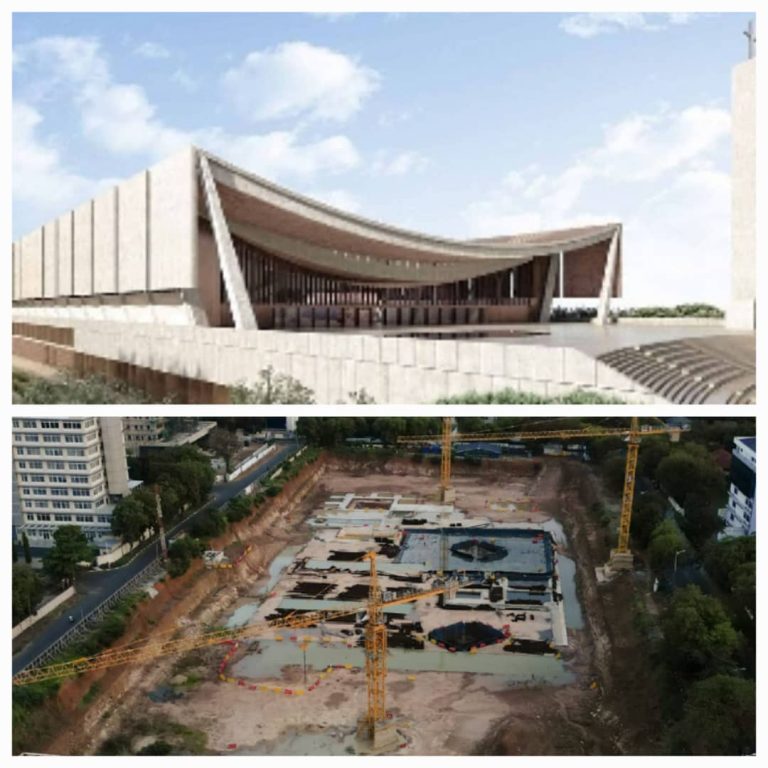
The Board of Directors of the National Cathedral of Ghana has reacted strongly to growing reports that the project’s site is being repurposed into a C
The Board of Directors of the National Cathedral of Ghana has reacted strongly to growing reports that the project’s site is being repurposed into a Cultural Convention Centre, insisting that no formal communication has been received and rejecting any suggestion that the vision for the Cathedral has been abandoned.
In a detailed statement issued following an emergency board meeting held on July 7, 2025, the Executive Director of the National Cathedral Secretariat, Dr. Paul Opoku-Mensah, said the Board was compelled to clarify misconceptions after online reports suggested a government-led repurposing of the Cathedral project site.
“Although the Board has not received official confirmation on such a decision,” the statement emphasized, “it was important to address the issue squarely.”
Background of the Cathedral Project
The National Cathedral project, first announced by then-President Nana Addo Dankwa Akufo-Addo in 2017, was envisioned as a unifying religious and national monument to serve as a sacred infrastructure for state religious ceremonies.
It was to host national Christian events such as state funerals, thanksgiving services, and memorials.
In 2021, construction officially began, albeit after several delays, and by the time it was suspended, only about eight percent of the work had been completed.
The project was designed to include not only the cathedral itself but also a Bible Museum, a Biblical Garden, a banquet hall, a 350-seater restaurant, a library, and a conference facility — all part of what was described as the “economic engine” of the Cathedral’s sustainability model.
The site, located in Accra’s Ridge enclave, was gifted by the state to the National Cathedral of Ghana, which was legally incorporated as a company limited by guarantee.
The deed to the land was officially transferred to the incorporated entity, allowing it to spearhead fundraising and construction efforts.
The Politicization and Stalling of the Project
Despite its lofty vision, the Cathedral has been dogged by controversy. Allegations of mismanagement, lack of transparency, and politicization of the project eroded public trust.
Fundraising efforts were significantly hampered following revelations that large sums of state funds had been spent without parliamentary approval — a matter that sparked heated debate in the media and among civil society groups.
However, in its latest statement, the Board insisted that an independent audit by Deloitte and Touche had confirmed that all public funds used in the project were duly accounted for and linked to legitimate work done.
“Disbursements were based on contracts, and payments were made for actual work completed,” the Board clarified.
Path Forward
Rather than abandoning the project, the Board maintains that the National Cathedral remains a crucial piece of national infrastructure, deeply tied to Ghana’s religious and cultural identity.
Dr. Opoku-Mensah revealed that a new model is under consideration — one that involves depoliticizing the project and building a state-church-society financing partnership to resume construction.
According to the Board, this renewed framework aims to restore confidence, attract local and diaspora support, and align the project more clearly with Ghana’s identity as a religiously pluralistic nation.
They emphasized that the Cathedral is not solely a Christian monument but an interfaith platform that would symbolically serve all Ghanaians.
Concerns Over Cultural Conversion
The Board’s firm rejection of the proposed Cultural Convention Centre conversion reflects fears that the core vision of the Cathedral is being diluted or possibly shelved.
As of now, they say the original architectural designs and specifications for the site have been completed and remain intact, despite construction being stalled for over two years.
In defending the continued relevance of the project, the Secretariat pointed to President Mahama’s recent declaration of July 1st as the official National Day of Prayer.
The inaugural event, held at the State House forecourt, they argue, underscores the need for a permanent national religious venue, reinforcing the urgency of completing the Cathedral.

COMMENTS