
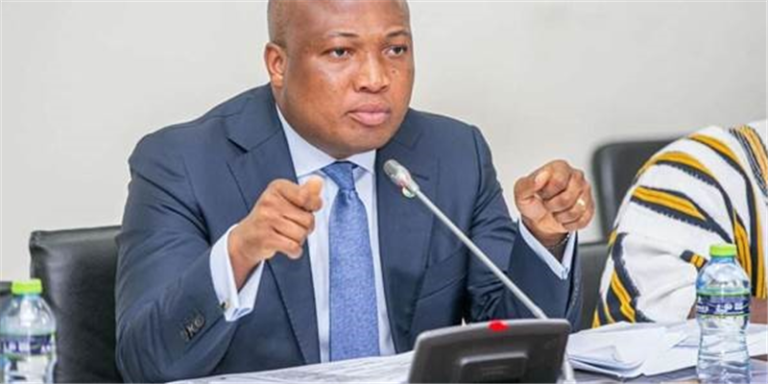
Ghanaians at home and abroad are venting their frustration over the latest diplomatic setback between Ghana and the United States, blaming Minister of
Ghanaians at home and abroad are venting their frustration over the latest diplomatic setback between Ghana and the United States, blaming Minister of Foreign Affairs and North Tongu MP, Samuel Okudzeto Ablakwa, for what they describe as “unprofessional conduct and undiplomatic commentary” that has triggered harsh visa restrictions from the U.S. government.
The U.S. State Department has officially slashed the validity of most Ghanaian non-immigrant visas to a single-entry, three-month limit, citing visa reciprocity protocols.
Previously, many Ghanaians — particularly those in the business, academic, and tourism sectors — enjoyed multiple-entry visas valid for one to five years.
While the U.S. government did not name specific reasons for the downgrade, several Ghanaians, civil society voices, and opposition figures have squarely pointed fingers at Ablakwa for engaging in what they call “Twitter diplomacy”, which has reportedly rubbed key U.S. policymakers the wrong way.
From Diplomacy to Provocation?
For months, Okudzeto Ablakwa’s outspoken comments on social media — including direct jabs at foreign governments and senior international figures — have raised eyebrows. Critics say his tone lacks the discretion and tact required of a Foreign Minister, especially one dealing with strategic partners such as the United States.
Media personality Okatakyie Afrifa-Mensah, a known critic of the government, did not hold back in a televised broadcast this week:
“One of the people who will destroy Mahama’s government is Okudzeto Ablakwa,” he warned.
“He’s on Twitter every day parading as a sovereign power, disrespecting U.S. senators and making unnecessary public commentary. Diplomacy is not propaganda!”
Observers note that Ghana’s previously warm relationship with the U.S. — built on decades of collaboration in development, education, peacekeeping, and trade — is at risk of being undermined by what many describe as Ablakwa’s populist style of engagement.
Visa Restriction Details
The new U.S. visa regime for Ghanaian nationals took effect this week and affects several categories of travel:
B1/B2 Visas (Business & Tourism): Now limited to a single entry valid for 90 days.
F-1 Student Visas: Also reduced to three-month validity, single entry — a major blow to Ghanaian students in U.S. institutions who often return home during breaks
K1/K2 Visas (Fiancé and dependents): Remain six-month single entry.
K3/K4 Visas (Spouses of U.S. citizens): Still valid for 24 months, multiple entries.
Diplomatic Visas (A Category): Exempted — still valid for 2–5 years, multiple entries.
The change means that Ghanaian applicants must reapply for every new trip, significantly increasing visa processing costs, wait times, and uncertainty.
Public Outcry and Backlash
The restrictions have sparked outrage among Ghanaians, especially those in academia, entertainment, commerce, and diaspora communities.
Many believe the move is a direct consequence of recent diplomatic missteps and a failure of Ghana’s foreign affairs leadership.
“The Minister is supposed to build bridges, not burn them,” said a U.S.-based Ghanaian academic.
“We are now paying the price for reckless social media outbursts and shallow diplomacy.”
Others accuse Ablakwa of turning the Foreign Ministry into a platform for political self-promotion rather than responsible diplomacy.
According to opposition voices, his recent confrontations with American lawmakers — including a public rebuke of U.S. foreign policy decisions — may have worsened an already delicate situation.
Opposition Blames Government
The opposition New Patriotic Party (NPP) wasted no time capitalizing on the controversy.
In Parliament, the Deputy Ranking Member of the Foreign Affairs Committee, Nana Asafo-Adjei Ayeh, questioned why the Foreign Ministry has failed to engage directly with the U.S. Embassy in Accra to de-escalate tensions.
“We are facing a visa crisis, yet our Foreign Minister is busy attacking critics online,” Nana Asafo-Adjei Ayeh said.
“The Mahama administration must demonstrate maturity and seriousness in foreign affairs. This isn’t student politics.”
He also condemned the government’s “lavish and needless” $1.2 million biometric passport re-launch, which he called wasteful given the already existing infrastructure launched under the previous NPP administration.
Additionally, he cited the unexplained closure of Ghana’s Embassy in Washington, D.C., in May — which left over 400 confirmed applicants stranded — as a further sign of diplomatic disarray and operational failure.
Souring of U.S.–Ghana Relations
Analysts say the U.S. visa cutback is part of a broader recalibration in Washington’s West Africa strategy, which has also affected Nigeria.
However, while Nigeria quickly acknowledged the reciprocity issue and moved to negotiate, Ghana’s government has attempted to deflect public concern, sparking more confusion.
Many citizens feel the government has failed to communicate honestly about the reasons behind the U.S. action.
“The U.S. clearly stated it’s about reciprocity,” one citizen wrote online. “Instead of addressing it, our Minister is debating his own people on social media.”
The U.S. has long emphasized that visa policies are based on mutual treatment, meaning Ghana may have brought this on itself by issuing short-duration visas to Americans.

COMMENTS