
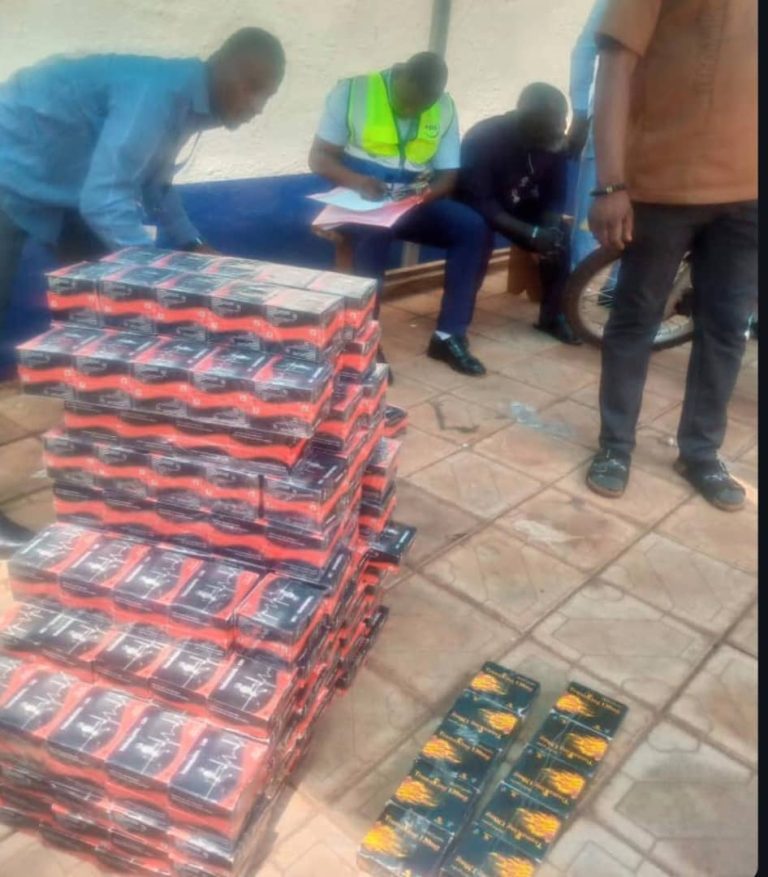
There was drama at the Tamale Circuit Court on Wednesday, July 16, 2025, when a suspected drug baron, Alhaji Abdulai Sayuti, collapsed moments after p
There was drama at the Tamale Circuit Court on Wednesday, July 16, 2025, when a suspected drug baron, Alhaji Abdulai Sayuti, collapsed moments after pleading guilty to two criminal charges related to the possession and illegal sale of restricted pharmaceutical drugs.
The 53-year-old suspect, who runs a chemical shop in Tamale, was arrested following a coordinated operation by a joint security taskforce comprising personnel from the Ghana Police Service, the Narcotics Control Commission, the Food and Drugs Authority (FDA), National Security, and the Northern Region’s anti-drug taskforce.
According to a preliminary report presented to the court, Sayuti was first apprehended on July 15 at around 3:20pm after intelligence gathered by local taskforce members pointed to the illegal sale of high-strength prescription drugs.
He was found in possession of 368 blisters of Tramadol 120mg and 298 blisters of Tramaking 120mg during a search at his residence.
Further investigation led the taskforce to his warehouse located in Fuo, a suburb of Tamale, where authorities uncovered a massive stash of illegal pharmaceuticals — specifically 447 boxes of Tramadol 120mg and 11 boxes of Tramaking — all stored without legal authorization.
When arraigned before the Tamale Circuit Court, presided over by Francis Asobayire, Alhaji Sayuti admitted to both charges: possession of restricted drugs without lawful authority and prohibited sale of restricted drugs without lawful authority.
The courtroom was left in shock when, moments after the conviction based on his own plea, Sayuti collapsed, prompting a brief disruption in proceedings.
Medical assistance was immediately called in, and the accused was attended to before being transported under heavy security.
Expanding Pharmaceutical Crisis
Sayuti’s arrest comes amid growing national concern over the abuse and black-market circulation of controlled substances, especially Tramadol — a powerful synthetic opioid increasingly misused among the youth and commercial drivers across Ghana.
Authorities have repeatedly warned of the health risks, including addiction, mental health complications, and, in extreme cases, death.
Over the last decade, the FDA and Ghana’s Narcotics Control Commission have stepped up enforcement actions against the illegal sale of restricted medicines.
However, the scale of recent seizures suggests a well-organized network operating under the guise of licensed chemical shops and wholesale distribution hubs.
Sources within the enforcement agencies believe that Sayuti was a major supplier in the northern distribution chain, potentially connected to wider trafficking routes that span from the ports in Tema through Kumasi and into the Sahel regions.
Legal Proceedings
Though Sayuti has been convicted on his own plea, the court has deferred sentencing to Monday, July 21, 2025, pending further assessment of the public health and legal implications of the case.
In the meantime, the security agencies are said to be expanding their investigations to determine if other accomplices or entities are involved in Sayuti’s operations.

COMMENTS