
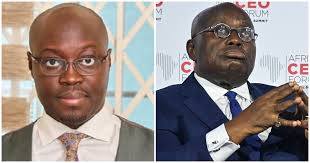
The Minister for Finance, Cassiel Ato Forson, has issued a scathing criticism of the Akufo-Addo-led administration, accusing it of fiscal recklessness
The Minister for Finance, Cassiel Ato Forson, has issued a scathing criticism of the Akufo-Addo-led administration, accusing it of fiscal recklessness that precipitated the controversial Domestic Debt Exchange Programme (DDEP), which wreaked havoc on the finances of pensioners, bondholders, and the middle class.
In delivering the 2025 Mid-Year Budget Review in Parliament on Thursday, July 24, Forson minced no words as he laid the blame for what he described as “devastating haircuts” squarely on the doorstep of the New Patriotic Party (NPP) government.
“The mismanagement of our public finances by the previous administration led to devastating haircuts through the Domestic Debt Exchange Programme (DDEP), which denied pensioners and the middle class their lifetime savings, livelihoods and dignity,” Dr Forson told MPs.
The DDEP, which was rolled out in late 2022 as a key condition to secure a $3 billion International Monetary Fund (IMF) bailout, was aimed at restructuring Ghana’s unsustainable debt levels.
But it came at a high cost: many domestic bondholders saw the value of their investments slashed by up to 50%, with some pensioners and individual investors left with little to no returns.
Forson, who took over as Finance Minister under the new administration of President John Dramani Mahama, described the programme not just as an economic necessity but as a tragic outcome of fiscal irresponsibility.
He emphasized that the scars left by the programme were deeply personal and enduring for many Ghanaians.
“This was not a policy born of choice. It was forced upon us by years of unchecked spending, excessive borrowing, and lack of accountability. The people paid the price,” he stated.
Rebuilding Confidence
Despite the heavy human and economic toll of the DDEP, Dr Forson assured the nation that the current government was charting a path toward recovery and stability.
He announced that reforms are being implemented to restore investor confidence, rebuild the integrity of government securities, and prevent similar financial upheaval in the future.
“We are committed to restoring fiscal discipline and rebuilding trust in our financial system,” he said. “This government will not allow such reckless mismanagement to recur.”
He further appealed to Parliament for bipartisan support to advance key economic reforms, warning that without collective responsibility, the hard-earned stability the country is beginning to experience could be derailed.
Signs of Recovery Amid Past Failures
In his broader budget presentation, Forson highlighted early signs of economic recovery, pointing to a rising primary surplus, improvements in the strength of the cedi, and enhanced revenue mobilization.
He described these gains as the result of intentional, disciplined economic planning rather than chance.
“This is not luck. It is hard-earned progress — the product of prudent policies and national effort,” he declared.
However, he warned that the road ahead remains challenging, with global economic volatility, climate shocks, and domestic structural issues still posing risks to Ghana’s fragile recovery.
Bleeding Energy Sector
Dr Forson also addressed the ongoing crisis in Ghana’s energy sector, revealing that his administration inherited a system plagued by inefficiencies, ballooning debts, and poor contractual arrangements with independent power producers.
He cited an annual financing shortfall of over $1.5 billion and blamed the former government for locking the country into expensive power purchase agreements that continue to drain public coffers.
“The sector was bleeding. We have begun taking steps to restructure debts, renegotiate contracts, and introduce accountability,” he said.

COMMENTS