
A behind-the-scenes coup d’etat by the National Democratic Congress Majority Caucus in Parliament has backfired, allowing Minority Leader Alexander Af
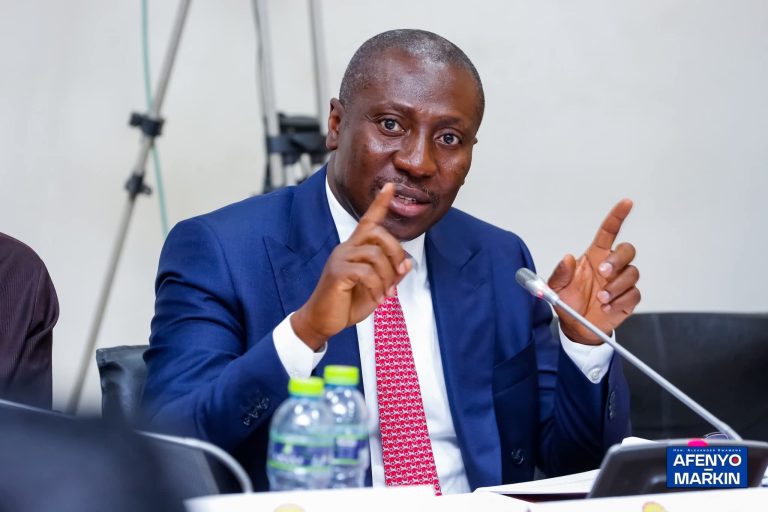
A behind-the-scenes coup d’etat by the National Democratic Congress Majority Caucus in Parliament has backfired, allowing Minority Leader Alexander Afenyo-Markin to retain his influential role at the ECOWAS Parliament as a deputy Speaker despite a coordinated effort that appeared to sideline him.
In a dramatic twist that unfolded on July 22, the Majority side in Parliament moved a controversial resolution to reshuffle Ghana’s delegation to the ECOWAS Parliament.
The proposal saw Afenyo-Markin’s name dropped from the list and replaced with his own deputy, Patricia Appiagyei.
The change also positioned Deputy Majority Leader George Kweku Ricketts-Hagan as the new leader of the delegation, poised to take over from Afenyo-Markin as the Third Deputy Speaker of the ECOWAS legislative body.
However, what seemed like a routine reshuffle quickly morphed into a political debacle.
Appiagyei Rejects Move, Blows Whistle
In a bold and unexpected move, Patricia Appiagyei, the supposed replacement, rejected the offer outright. In a strongly worded memorandum addressed to the Speaker of Parliament, Alban Bagbin, and copied to both Majority and Minority leadership, Patricia Appiagyei disassociated herself from the nomination.
“I was neither consulted nor did I give my consent to be considered as a replacement for the Minority Leader,” she wrote.
She went further to describe the move as “a calculated effort to cause division between myself and my Leader,” insisting it was a plot to fracture the cohesion within the Minority Caucus.
Patricia Appiagyei’s protest prompted a wider outcry and reopened debate on procedure, tradition, and the constitutional obligations of Parliament in international representation.
Procedural Violations and ECOWAS Rules Cited
Patricia Appiagyei’s rejection letter didn’t stop at personal protest. She highlighted serious procedural and legal breaches in the Majority’s conduct.
According to her, Afenyo-Markin was duly sworn into the ECOWAS Parliament in 2024 and was elected as its Third Deputy Speaker — a term that, per ECOWAS rules, lasts four years unless the member voluntarily resigns, assumes an executive or judicial role, or becomes incapacitated.
“This attempt to remove him midstream not only flouts parliamentary norms but may also be rejected by the ECOWAS Parliament,” she warned.
Her stance drew strong support from many within the House, including opposition voices and even some neutrals in the Majority who were uneasy about what appeared to be a politically motivated reshuffle disguised as an administrative update.
Majority’s Defence Falls Flat
Majority Leader Mahama Ayariga tried to justify the change, stating that ECOWAS parliamentary roles traditionally go to Deputy Leaders in the House.
But his argument was quickly countered by precedent, notably Afenyo-Markin’s own current status as a Minority Leader who has held the ECOWAS seat since 2024 without such technical objections.
MP for Bimbilla, Dominic Nitiwul, was one of the first to raise alarm, accusing the Majority of bulldozing a partisan agenda without consultation.
“The Majority must not use its numbers to force representation changes on the Minority,” he warned.
Nitiwul’s comments underscored what many now see as a growing pattern of unilateralism in parliamentary conduct, which has the potential to weaken bipartisan cooperation on national and regional platforms.
Gender Parity Argument Rejected
In what some critics described as a veiled justification, proponents of the reshuffle had quietly floated the idea that Patricia Appiagyei’s nomination would boost gender representation in Ghana’s delegation. But the Deputy Minority Leader was quick to shut down the narrative.
“Gender equity must never be reduced to a political weapon,” she said. “Representation should be pursued through consultation, not coercion.”
She added that weaponizing the gender card not only disrespects female leadership but also undermines the legitimacy of such appointments when done without merit or due process.
Call for Restoration of Original Delegation
In her final appeal, Patricia Appiagyei called on the Speaker to reverse the resolution that included her name and to uphold the original list of Ghanaian ECOWAS representatives — namely Afenyo-Markin, Kwame Anyimadu-Antwi, and Bryan Acheampong.
“For the avoidance of doubt, I reiterate that the resolution that has my name as a nominated member for the delegation to ECOWAS Parliament be stayed,” she stated firmly.
Political Fallout
This episode has not only exposed the cracks within Parliament’s leadership framework but also highlighted the dangers of political gamesmanship in regional diplomacy.
Analysts say the failed attempt to replace Afenyo-Markin may reflect deeper political undercurrents — perhaps even factional tensions within the NDC, where the Majority Leader has come under increasing scrutiny for aggressive tactics.
For now, Afenyo-Markin remains at post, backed by institutional legitimacy and unexpected loyalty from his own Deputy Leader.
The entire episode, while embarrassing to the Majority, also serves as a powerful reminder that due process, transparency, and internal cohesion remain critical to Ghana’s parliamentary integrity.

COMMENTS