
A storm is brewing around the newly appointed Deputy Health Minister, Dr. Grace Ayensu-Danquah, after official correspondence from the University of U
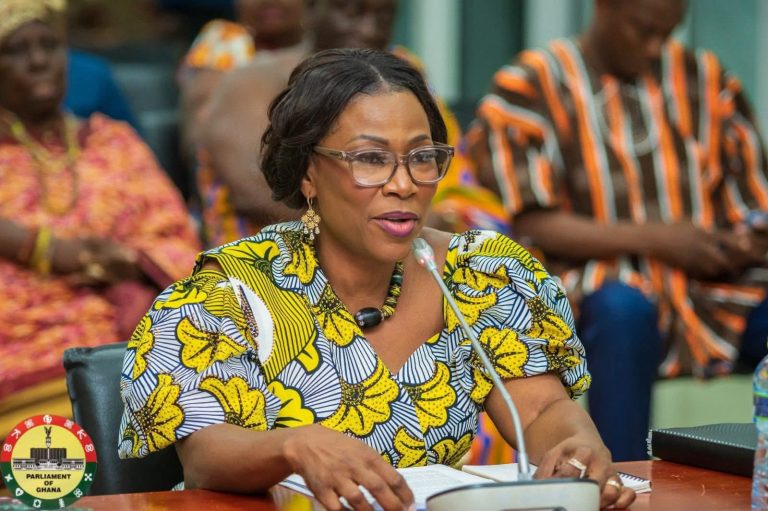
A storm is brewing around the newly appointed Deputy Health Minister, Dr. Grace Ayensu-Danquah, after official correspondence from the University of Utah debunked her claims of being a full professor of surgery — a title she has reportedly used publicly and in official communication.
The clarification, provided by Piikea Godfrey, Director of the Office for Faculty at the University of Utah’s Spencer Fox Eccles School of Medicine, states unequivocally that Dr. Ayensu-Danquah holds the rank of Adjunct Assistant Professor, not a tenured full professor.
The university has also indicated that it will contact her to correct any misrepresentation of her academic rank.
Attempt to get further clarification from the nominee was unsuccessful.
No Full Professorship
The University’s response, prompted by inquiries from academic and civic watchdogs, leaves no room for ambiguity.
“She does not hold a Tenure-line appointment at the rank of Professor, as she is an Adjunct Assistant Professor,” Godfrey wrote. “She should not be representing herself as a Full Professor of Surgery.”
This development follows public scrutiny of Dr. Ayensu-Danquah’s academic credentials after she was nominated and vetted for the position of Deputy Minister for Health.
The question of her professional title became a central issue during her vetting before Parliament’s Appointments Committee, where she was challenged on the legitimacy of the “Professor” title associated with her name.
Exchanges at Vetting Hearing
The controversy initially came to a head during a heated vetting session on Friday, July 25, when Minority Leader Alexander Afenyo-Markin grilled Dr. Ayensu-Danquah over a social media post that described her as “Professor Dr. Grace Ayensu-Danquah.”
The nominee refused to confirm whether the post had originated from her verified page, insisting that the document presented lacked verification and citing the existence of fake pages using her identity.
Repeated efforts by Afenyo-Markin to elicit a straightforward confirmation or denial were met with cautious deflection.
“I cannot verify from a piece of paper whether it’s a verified page or not,” she said. “My Facebook account is meta-verified, and this document lacks verification.”
Although the Minority Leader later offered an apology for earlier remarks suggesting her nomination was “strange,” his line of questioning had already cast a significant shadow over her academic integrity.
False Professorship Claim Adds to Mounting Questions
While Dr. Ayensu-Danquah’s qualifications as a U.S.-trained surgeon with global experience are not in dispute, the revelation from the University of Utah adds a critical dimension to an already sensitive vetting process.
In academic and professional circles, the title of “Professor” carries legal, institutional, and scholarly significance — typically requiring years of peer-reviewed research, academic service, and formal institutional conferment.
Her official listing at the University of Utah now confirms that she neither holds a PhD nor a tenure-line professorship.
She has only been appointed as an Adjunct Assistant Professor, a non-tenure position that does not confer the title of “Professor” in the formal academic sense.
Political Undercurrents
The fallout from this revelation has sparked debates within political and academic communities alike.
Some observers believe the issue may reflect deeper political tensions, especially with critics questioning how certain individuals secure high-level appointments within the ruling National Democratic Congress (NDC) administration.
Comparisons have been made to other NDC figures, like Dr. Zanetor Agyeman-Rawlings, who, despite impressive qualifications, has not been appointed to ministerial roles.
Others argue that Dr. Ayensu-Danquah’s nomination and the scrutiny it attracted may stem from internal party dynamics or efforts to uphold merit-based appointments.
On social media, defenders of Dr. Ayensu-Danquah argue that her achievements in global surgery and public health speak volumes and that the debate over academic titles is a distraction from her real-world impact.
Dr. Grace Ayensu-Danquah boasts an impressive academic and medical background.
Her credentials say she studied medicine at the University of Wisconsin and completed surgical training at the University of Southern California.
She also holds a Master of Public Health from the prestigious Johns Hopkins University and maintains medical licenses in California, Maryland, and Michigan.
She is a fellow of several professional bodies, including the Ghana College of Physicians and Surgeons and the American College of Surgeons.
Despite these accomplishments, critics insist that misrepresenting one’s academic status is a serious ethical lapse — especially for someone holding public office.
Next Steps: Calls for Accountability
With the University of Utah confirming the discrepancy, pressure is mounting on Parliament to correct her official records and for Dr. Ayensu-Danquah to publicly address the growing list of inconsistencies.
Civic activists and academic watchdogs are already drafting formal complaints to the Speaker of Parliament, citing deception during the vetting process.

COMMENTS