
The escalating standoff between the Government of Ghana and MultiChoice Ghana, operators DStv, over subscription fees has taken a new turn, as the Min
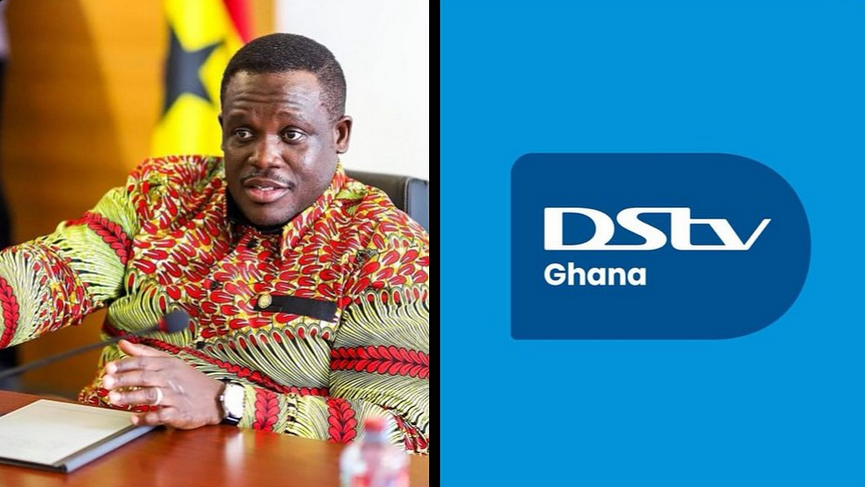
The escalating standoff between the Government of Ghana and MultiChoice Ghana, operators DStv, over subscription fees has taken a new turn, as the Minority in Parliament formally steps into the fray, calling for parliamentary oversight and constructive engagement.
In a press statement issued on Sunday, August 3, 2025, the Minority Caucus in Parliament expressed strong support for public outcry over what many Ghanaians see as unfair and exorbitant pay-TV subscription fees.
The Caucus backed calls for pricing reform and urged Parliament to intervene to ensure a fair, lawful, and consumer-focused resolution to the impasse.
Parliamentary Hearing
The statement, signed by Nyindam, Ranking Member on the Committee on Information and Communications, revealed that the Minority has petitioned the Committee’s Chairman to summon the Minister for Communication, Digital Technology and Innovation, Samuel Nartey George, alongside executives of MultiChoice Ghana and officials from the National Communications Authority (NCA).
The Minority emphasized that the objective of the parliamentary hearing would be to:
Examine the basis of MultiChoice’s current pricing structure,
Assess the NCA’s effectiveness in protecting consumers, and
Work towards a fair pricing outcome that reflects Ghana’s economic realities.
“We believe solutions must be grounded in law, fairness, and constructive engagement,” the statement read.
“The goal should be to secure a price reduction for Ghanaians while maintaining a stable investment environment.”
Sam George’s Ultimatum
The Minority’s intervention comes days after Sam George issued a public ultimatum to MultiChoice Ghana, warning that the company’s broadcasting licence could be suspended by August 7, 2025, if it fails to reduce its subscription fees.
Speaking at the Government Accountability Series on August 1, the Communication Minister denounced DStv’s pricing model as exploitative, arguing that it fails to align with the economic indicators, including the recent appreciation of the cedi and falling inflation and fuel prices.
“Ghanaians have been cheated for too long,” he said. “We cannot allow foreign companies to continue to take advantage of our people under the pretext of economic pressure.”
Sam George dismissed the company’s claims that a 200% depreciation of the cedi over the past eight years justifies current prices, pointing out that the cedi had appreciated recently without a corresponding price drop from DStv.
He further revealed a rejected offer from MultiChoice, which he said proposed maintaining the current high prices while restricting revenue transfers abroad—a move he called “illogical and insincere.”
“For far too long, corporations have fleeced the Ghanaian people,” he added.
“There has been a reset, and it demands a new style of public service that is fiercely protective of Ghanaians.”
MultiChoice Ghana Pushes Back
In a press release on August 2, MultiChoice Ghana expressed disappointment with the Minister’s approach but reaffirmed its openness to dialogue.
The company highlighted its 30-year presence in Ghana, noting its contribution to job creation and media development.
“We remain committed to the Ghanaian market and will continue to act within the framework of Ghanaian law and global best practices,” the release stated.
MultiChoice defended its pricing, stating that it reflects global economic conditions and local operational costs, not just currency fluctuations.
The company denied referring to the cedi’s appreciation as a “fluke,” and warned that abrupt government action could disrupt services and negatively affect its employees and partners across the country.
Public Divided Amid Regulatory Tensions
The regulatory row has stirred intense public debate. While some consumers back the government’s hardline stance, citing regional price disparities between Ghana and countries like Nigeria, others caution that an abrupt licence suspension could deprive households of entertainment and businesses of key content services.
Critics have also raised questions about the broader implications of political interference in commercial pricing, even as supporters frame the move as necessary to protect consumer rights.
In Nigeria, a similar campaign by the National Assembly forced MultiChoice to reverse price hikes earlier this year—a precedent the Ghanaian government now appears keen to replicate.
What Happens Next?
With only days left before the Minister’s deadline lapses, attention now shifts to whether DStv will reduce its prices or risk regulatory sanctions.
Meanwhile, the Minority’s call for parliamentary hearings signals a potential new route toward mediation, policy clarity, and long-term reform.

COMMENTS