
The simmering debate over the recognition of Ga culture in the Nation’s capital city has taken a new twist, with the Ga Mantse, King Tackie Teiko Tsur
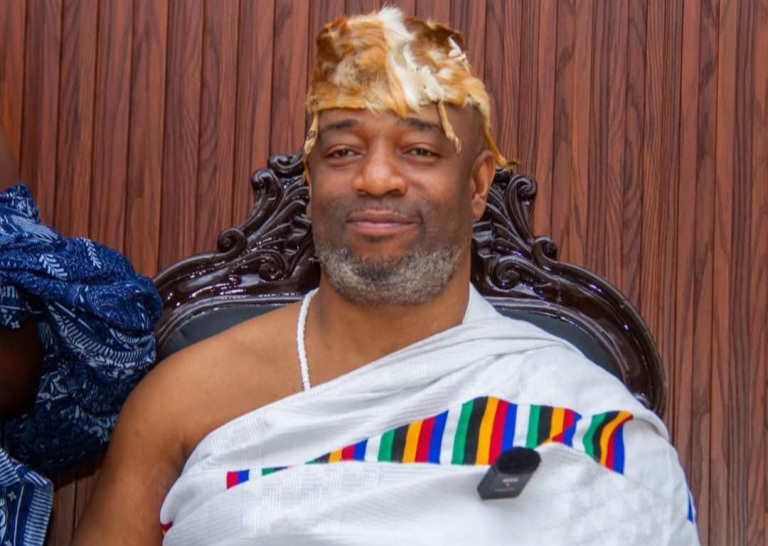
The simmering debate over the recognition of Ga culture in the Nation’s capital city has taken a new twist, with the Ga Mantse, King Tackie Teiko Tsuru II, openly expressing displeasure at government’s handling of proposals to rename welcome signage at key national monuments.
His reaction comes after Greater Accra Regional Minister, Linda Akweley Obenewaa Ocloo, attempted to calm tensions surrounding the demand to replace the Twi expression “Akwaaba” with the Ga word “Oobakɛ” at Kotoka International Airport and the Kwame Nkrumah Memorial Park.
Speaking at the climax of the 2025 Homowo festival in Kpone on Saturday, August 30, Ga Mantse King Tackie Teiko Tsuru II warned that the Ga people, as custodians of Accra, must not be disrespected or sidelined in matters that directly affect their heritage and identity.
His remarks were interpreted as a subtle rebuke of the Regional Minister’s earlier statement, which sought to balance Ga demands with what she described as the need for “unity in diversity.”
“We won’t banish anyone from Accra because we are welcoming by nature, and the least we expect is to be respected and duly honoured. The Greater Accra Region has been successful as the country’s capital because of the loving nature of the Ga people. It should never happen that we are disrespected for hosting the nation’s capital,” King Tackie Teiko Tsuru said.
The Renaming Controversy
The controversy began when Ga indigenes petitioned authorities to replace “Akwaaba” (Twi for welcome) with “Oobakɛ” (Ga for welcome) at the major international gateway.
They argued that it was a cultural affront for the Ga language — the indigenous tongue of Accra — to be absent in a city they have historically safeguarded.
The demand sparked heated public debate, with some backing the Ga claim as legitimate, while others feared it could inflame ethnic rivalries.
Regional Minister Linda Ocloo acknowledged the concerns of the Ga people but insisted that government decisions would be made through “broad consultations” with all ethnic groups, not just the Ga-Dangme.
“Our strength lies in the coexistence of various ethnic groups whose values and traditions enrich our national identity,” she said in a statement.
Her comments, however, appeared to downplay the specific frustrations of the Ga people, triggering the Ga Mantse’s sharp reminder that indigenous custodianship cannot be ignored in favour of political balancing acts.
A Struggle for Recognition
This is not the first time Ga leaders have raised concerns about cultural marginalization.
Rapid urbanization and migration into Accra have diluted the visibility of Ga traditions, with many complaining that the city’s cosmopolitan character has come at the expense of indigenous identity.
From land disputes to language recognition, the Ga Mantse and other chiefs have consistently fought to protect the cultural heritage of their people.
Beyond Language
At the Homowo durbar, King Tackie Teiko Tsuru II made it clear that his concerns went beyond the airport signage.
He stressed that preserving Ga traditions is crucial for empowering traditional authority, safeguarding peace, and ensuring cultural continuity in a city that is rapidly modernizing.
He also appealed to businesses operating in Ga communities to contribute to development through meaningful corporate social responsibility.
The Larger Question
The standoff between the Regional Minister and the Ga Mantse underscores a broader dilemma for Ghana — how to reconcile national unity with recognition of indigenous custodianship in Accra, a city that serves as both the political capital and a melting pot of cultures.

COMMENTS