
President John Mahama administration has moved to defend its borrowing strategy, insisting that loans contracted under its watch will be channelled st
President John Mahama administration has moved to defend its borrowing strategy, insisting that loans contracted under its watch will be channelled strictly into transformative projects as the nation’s debt sustainability continues to improve.
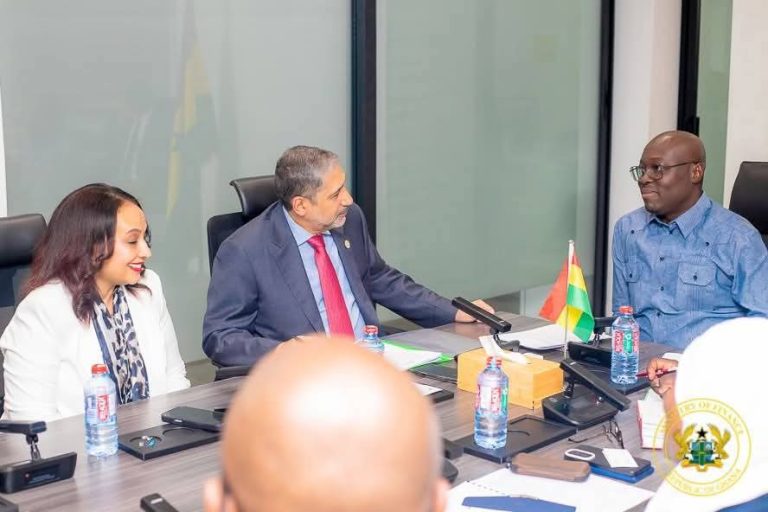
Minister for Finance, Dr. Cassiel Ato Forson gave the assurance in Accra during a meeting with Abdullah KH ALMUSAIBEEH, President of the Arab Bank for Economic Development in Africa (BADEA).
According to him, the government is fully aware of public concerns about borrowing but stressed that loans would not be used for recurrent expenditure or consumption. Instead, they would finance projects that deliver long-term economic and social benefits.

Declining Debt Levels
Recent data from the Bank of Ghana shows that the public debt stock has witnessed a significant decline over the past year.
The total public debt, which stood at GH¢763.8 billion (64.9% of GDP) in July 2024, has dropped to GH¢628.8 billion (44.9% of GDP) as of July 2025.
This improvement in debt sustainability, the Minister argued, provides the fiscal space for government to cautiously take on new financing for critical national development projects.
Infrastructure as Priority
Ato Forson singled out infrastructure as a major focus of the government’s medium-term borrowing plan.
He cited the proposed Accra–Kumasi motorway project as a flagship initiative, revealing that feasibility studies were ongoing.
Once approved, the road is expected to be completed within two and a half years, easing transport between Ghana’s two busiest cities and boosting economic activities across the country.
BADEA’s Support
The Finance Minister’s justification received a positive response from BADEA President Abdullah KH ALMUSAIBEEH, who commended Ghana’s disciplined approach to debt management.
He pledged BADEA’s commitment to supporting large-scale projects that have transformative potential, describing the new borrowing model as one that could serve as an example for other African economies.

Historical Context
Ghana’s borrowing practices have often been a subject of political debate, particularly during periods of rising debt-to-GDP ratios.
In 2022 and 2023, the country faced one of its most severe debt crises, forcing government into negotiations with international creditors and the International Monetary Fund (IMF) for a bailout.
Critics, particularly from opposition parties, accused the Akufo-Addo government of worsening the crisis through excessive borrowing.
However, with the latest figures showing a downward trajectory in public debt, government officials argue that Ghana has turned the corner and is better positioned to borrow responsibly.
The Finance Ministry maintains that loans will only be taken when they are tied to productive ventures capable of generating revenue and supporting growth.
While the assurances have been welcomed by some, analysts caution that Ghana must remain vigilant to avoid slipping back into unsustainable debt levels.
The success of the government’s borrowing policy, they note, will depend largely on transparency in loan agreements and the timely execution of projects.

COMMENTS