
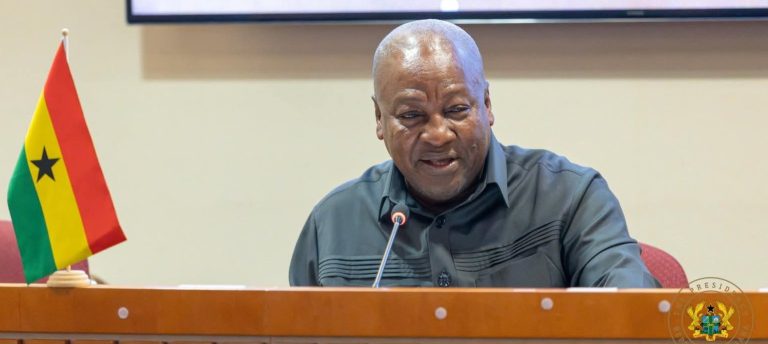
President John Dramani Mahama’s recent address at the 80th United Nations General Assembly (UNGA) has reignited debate over Africa’s place in global g
President John Dramani Mahama’s recent address at the 80th United Nations General Assembly (UNGA) has reignited debate over Africa’s place in global governance.
While his speech was hailed for its bold criticism of the UN’s shortcomings and its call for reforms to the Security Council, history shows that Mahama’s position is not new but part of a long-standing African and Ghanaian tradition.
Africa’s Common Position Since 2005
The demand for permanent African representation on the Security Council dates back to the Ezulwini Consensus of 2005, when African leaders agreed on a common position: the continent should be granted at least two permanent seats with veto powers.
The rationale has remained consistent—Africa bears the brunt of global conflicts, with over 75 percent of Security Council deliberations concerning the continent, yet it has no permanent representation at the table where binding decisions are made.
Ghana’s Successive Presidents And The Call for Reform
Mahama’s call echoes the voices of his predecessors.
In 2005, then-President John Agyekum Kufuor stood before the UN and firmly demanded permanent African representation.
Nana Addo Dankwa Akufo-Addo, during his tenure, repeated the same appeal. In 2017, he declared: “It is unfair that Africa, with 1.2 billion people, does not have a single permanent seat on the Security Council.”
He reiterated this message in subsequent addresses, including in 2023.
This year, Kenya’s President William Ruto went further, warning: “You cannot claim to be the United Nations while disregarding the voice of 54 nations.”
Against this backdrop, John Mahama’s intervention is less a groundbreaking shift and more a continuation of the diplomatic consistency.
Mahama’s Novel Twist: A Check on Veto Power
Where President John Mahama arguably broke new ground was in his proposal for a mechanism to curtail abuse of the veto power. He suggested that the UN General Assembly (UNGA) should have the authority to override a Security Council veto—a bold idea targeting what many critics see as the UN’s most undemocratic feature.
The U.S. and Russia, in particular, have frequently used the veto to shield allies or advance national interests, often at the expense of global consensus.
Warning of a UN Failure Like the League of Nations
President John Mahama also issued a stark warning that the UN risks repeating the failures of its predecessor, the League of Nations, which collapsed under the weight of unchecked aggression in the 1930s.
Citing today’s conflicts—from Russia’s invasion of Ukraine to Israel’s military actions in Gaza—he argued that the UN is dangerously close to losing credibility.
A Stronger Stance on Israel-Palestine
Ghana’s long-standing foreign policy has supported a two-state solution with East Jerusalem as the Palestinian capital.
However, Mahama took a sharper tone than recent Ghanaian leaders.
He described the ongoing war in Gaza as “genocide”, directly confronting U.S. narratives that equate Palestinian statehood with a reward for Hamas.
He also criticized the U.S. government’s decision to deny visas to Palestinian authorities, calling it a dangerous precedent that undermines the very spirit of the UN.
Migration And Climate Justice
Turning to migration, Mahama rejected Western depictions of migrants as criminals or invaders—a narrative frequently pushed by former U.S. President Donald Trump.
Instead, President John Mahama argued that migration is often a response to climate change and economic imbalances created largely by industrialized nations.
He cited the contributions of African migrants, including Kofi Annan, the Ghanaian diplomat who rose to become UN Secretary-General, as proof of migration’s potential to enrich societies.
Gender And Leadership At The UN
In a lighter but symbolic moment, Mahama congratulated the current UNGA President for being the fifth woman to hold the role.
He expressed hope for the day when a woman would lead the UN as Secretary-General.
Domestically, he praised the Vice President, Professor Jane Naana Opoku-Agyemang, as the country’s first female vice president, though he stopped short of suggesting she could be his successor
Continuity, Not Novelty
Ultimately, John Mahama’s speech added urgency and detail to Africa’s long-standing demand for a more equitable global order.
But it is important to note that his message was not unprecedented—it was a continuation of Ghana’s consistent stance at the UN for nearly two decades.
President Mahama may have introduced a new dimension with his veto reform proposal, but the call for Africa’s permanent seat remains a shared demand across the continent. His predecessors laid the foundation; he has added his voice.

COMMENTS