
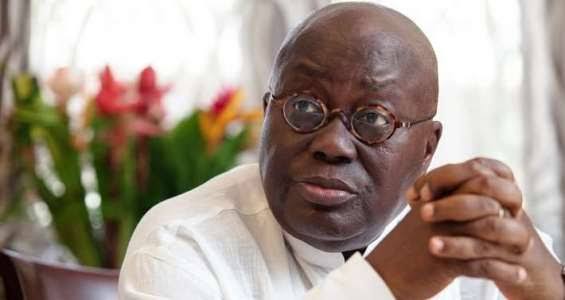
Former President Nana Addo Dankwa Akufo-Addo has for the first time offered an emotional reflection on Ghana’s controversial debt restructuring progra
Former President Nana Addo Dankwa Akufo-Addo has for the first time offered an emotional reflection on Ghana’s controversial debt restructuring programme, describing it as the most painful period of his presidency and one that still troubles him deeply.
Speaking at the AU-EU High-Level Seminar in Brussels over the weekend, on the eve of the AU-EU Summit, the former President revealed that while the exercise provided short-term relief and stabilized Ghana’s economy, it came at devastating social and human costs for ordinary citizens.
Debt Crisis
Ghana entered 2023 facing one of its worst fiscal crises in decades, with public debt soaring above 85 percent of GDP, leaving the country unable to meet debt service obligations.
In response, the Akufo-Addo administration turned to the International Monetary Fund (IMF) for a bailout, which required sweeping fiscal reforms, including a comprehensive debt restructuring under the G20 Common Framework.
The move resulted in the restructuring of $13 billion in Eurobonds and commitments that secured $10.5 billion in external debt service relief through 2026.
The measures reduced the debt-to-GDP ratio to 70.5 percent and reassured international investors. However, it also triggered widespread discontent, especially with the introduction of the Domestic Debt Exchange Programme (DDEP).
Under the DDEP, local bondholders—including pensioners, labour unions, and small investors—suffered significant financial “haircuts,” leading to public protests in Accra and other cities.
Retirees picketed outside the Finance Ministry for weeks in early 2023, demanding exemptions from the programme.
Akufo-Addo’s Painful Admission
At the Brussels forum, Akufo-Addo admitted that the most heartbreaking aspect of the restructuring was the toll it took on ordinary Ghanaians.
“I witnessed the suffocating grip of debt on our economy and on our citizens. This deeply troubled me and still does,” he said.
“The most painful part was the impact on ordinary people. Pensioners, young people, and small investors saw their lives and livelihoods shattered.”
He further described the exercise as a necessary but deeply regrettable decision, likening it to a national sacrifice for economic survival.
Africa’s Wider Debt Burden
Moving beyond Ghana, Akufo-Addo also highlighted Africa’s $1 trillion debt burden, arguing that the problem is rooted in systemic inequities in the global financial system.
“Every dollar diverted to creditors is a dollar taken from a hospital, from a child’s vaccination, from a community’s future. This is not economics, it is inequity,” he stressed.
He urged European leaders to support Africa’s call for reforms to the G20 Common Framework, declaring, “Debt relief for Africa is not an act of generosity. It is an act of justice.”
Akufo-Addo also proposed a new initiative, Debt Relief for Green Investment and Resilience, which links debt cancellation to climate action—arguing that sustainable development must go hand-in-hand with financial restructuring.
Political Reactions Back Home
In Ghana, Akufo-Addo’s admission comes as the political class continues to debate the legacy of his government’s debt management.
During the 2025 Mid-Year Budget Review, Minority Leader Alexander Afenyo-Markin defended the Akufo-Addo administration, insisting that the debt exchange was a painful but responsible measure.
“The NPP devised solutions: the Energy Sector Levy Act, the Fiscal Responsibility Law, and the Debt Exchange to restore sustainability. We take responsibility and say sorry to Ghanaians, but we acted as a responsible government,” he said.
Afenyo-Markin accused the current National Democratic Congress (NDC) administration of benefiting from the painful economic sacrifices without acknowledging the role played by the New Patriotic Party (NPP).
“You are taking advantage of this painful decision without giving credit to us. You are the political naysayers, engaging in double standards,” he argued.
The Human Cost of Recovery
Despite the political back-and-forth, ordinary Ghanaians remain the hardest hit by the restructuring.
Many pensioners continue to grapple with reduced benefits, while small businesses still struggle to access credit due to tightened financial conditions.
Akufo-Addo’s admission that the programme continues to trouble him may resonate with those who bore the brunt of the policy.
Yet, for others, it rekindles anger over decisions they believe sacrificed citizens for the sake of international approval.

COMMENTS