
The Environmental Protection Authority (EPA) has announced a scientific breakthrough that could mark a turning point in the country’s long and costly
The Environmental Protection Authority (EPA) has announced a scientific breakthrough that could mark a turning point in the country’s long and costly battle against illegal mining (galamsey) pollution.
The agency says it is ready to pilot a revolutionary copper-based “nano liquid” technology capable of cleansing heavily contaminated rivers, but requires an urgent US$200,000 in funding to begin the demonstration.
The announcement was made by the Executive Director of the EPA, Prof. Nana Ama Browne Klutse, during an appearance on JoyNews’ The Probe on Sunday, October 5
She revealed that the agency has successfully tested the new “dechemicalisation” technology both in Ghanaian laboratories and in countries such as Greece, where it has already proven effective in restoring polluted water bodies.
“There is still hope for Ghana. We are in a technology age, and this challenge can be addressed through science,” Prof. Klutse said, calling for national optimism amid public frustration over the failure of previous military-led anti-galamsey operations.
A Technological Shift from Military to Science-Based Solutions
For years, the anti-galamsey campaign has relied heavily on security crackdowns and equipment seizures — operations that have yielded limited success.
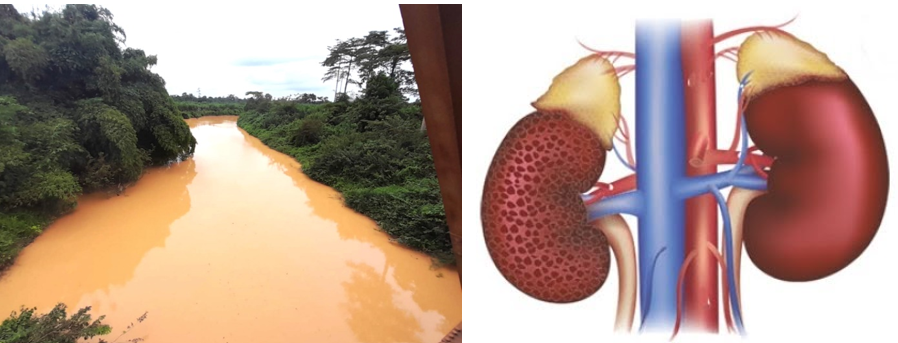
Despite these efforts, about 60% of the country’s major rivers remain severely polluted, with alarming levels of arsenic and mercury detected.
These toxic chemicals, used extensively in illegal mining, have rendered several rivers — including the Pra, Offin, and Ankobra — unsafe for both human consumption and aquatic life.
The Ghana Water Company Limited (GWCL) has on multiple occasions shut down treatment plants due to high contamination levels, raising fears of long-term water scarcity.
Prof. Klutse said the time has come for Ghana to adopt a science-first approach rather than relying on enforcement alone.
The EPA, she noted, has identified two promising technologies for dechemicalising polluted rivers, with the “nano liquid” showing the most immediate potential for deployment.
How the ‘Nano Liquid’ Works
The copper-based nano liquid, according to the EPA boss, works by stripping pollutants from flowing river water — neutralizing harmful substances and restoring the river’s natural chemistry.
“Yes, there’s a nano liquid that is copper-based that can be used. We’ve tested it locally, and it works,” she explained. “We have done the lab tests at the EPA and have advised government accordingly. This is not theoretical; it is practical and doable.”
Prof. Klutse emphasized that this technology could serve as the first real step toward “dechemicalisation” — a term used by environmental scientists to describe the removal of chemical pollutants from natural ecosystems.
The Cost of a Pilot: A $200,000 Test for National Proof
While the EPA acknowledges that a full national cleanup would run into billions of dollars, Prof. Klutse said the immediate priority is a $200,000 pilot project to demonstrate the technology’s effectiveness to policymakers and the public.
“If I get the US$200,000 today, we can start the pilot immediately for everyone — including the President — to see how this technology works in a flowing river,” she said.
This pilot, she added, would be crucial in securing government and donor support for a large-scale rollout across the country’s most polluted water bodies.
Public Health Emergency Looms
The EPA’s call for urgent funding comes amid mounting pressure from health experts to declare the galamsey crisis a public health emergency.
The Pharmaceutical Society of Ghana and environmental researchers have issued alarming data showing that arsenic and mercury contamination in river basins pose a “non-threshold” cancer risk — meaning no safe level of exposure exists.
According to recent studies, the Cancer Risk (CR) in some affected communities stands at 0.16, with a projected 78 cancer cases per 1,000 infants exposed to arsenic through drinking water.
Towards a Science-Led Recovery
The EPA’s renewed push marks a major shift in Ghana’s environmental strategy — one that prioritizes technology, innovation, and cost-effective purification systems over enforcement alone.
Prof. Klutse assured that the final choice of technology will be guided by both effectiveness and affordability, rather than short-term cost-cutting.
“We are looking at all the available options and will choose what is most effective and economically viable. The goal is not cheapness — it’s sustainability.”

COMMENTS