
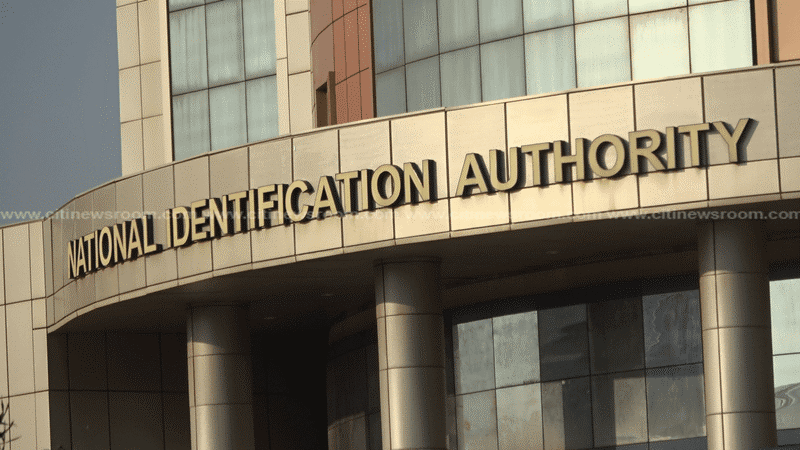
The Divisional Union of the National Identification Authority (NIA) has issued a strong clarification to dispel widespread misinformation surrounding
The Divisional Union of the National Identification Authority (NIA) has issued a strong clarification to dispel widespread misinformation surrounding the proposed amendments to the NIA Act and the Security and Intelligence Agencies Act.
The Union has accused policymakers of attempting to quietly push through legal changes that could strip staff of their labour rights while misleading the public into believing the Authority is being elevated to a security agency status.
In a statement jointly signed by Divisional Chairman, Francis Bangfudeme NyuzaghlFrancis Bangfudeme Nyuzaghl, and Divisional Secretary, Adu Kyeremeh Kwabena, the Union sought to “set the record straight” following a wave of public speculation and internal anxiety among NIA workers regarding their future under the proposed legislative reforms.
NIA Not Being Listed
Contrary to claims circulating within the public domain and among staff, the Union clarified that the National Identification Authority is not being listed as a security or intelligence agency under the proposed amendments to the Security and Intelligence Agencies Act.
According to the Union, its checks and consultations with management confirm that the only mention of the NIA in the draft bill relates to its inclusion in the District and Regional Security Councils (DISEC and REGSEC) — structures where civil institutions such as the National Disaster Management Organisation (NADMO) have long participated without being classified as security bodies.
“The idea that the NIA is being transformed into an intelligence agency is false and inconsistent with the existing facts,” the statement emphasized.
While dismissing fears about “securitization,” the Union warned that the real danger lies within the proposed NIA Act amendments themselves, which introduce clauses that, if passed, could severely undermine job security and labour rights.
Among the most contentious proposals is a re-appointment clause, which would subject all NIA staff to re-appointment based on the recommendation of the Sector Minister after the new law is enacted.
The Union described this clause as “a dangerous provision that overthrows the protections of the Labour Act, 2003 (Act 651), creating a pathway for potential arbitrary dismissals.”
Equally troubling, the Union said, is a proposed “de-unionization clause” that would prohibit NIA workers from forming or joining trade unions — an attempt it labeled as “unjustified and unlawful.”
The Labour Act, the statement noted, explicitly lists the only institutions exempt from unionization — namely, the Armed Forces, Police, Prisons, and officially listed security and intelligence agencies.
“The NIA is not among them,” the statement asserted, suggesting that this new clause was a deliberate attempt to remove the staff’s right to collective bargaining without legal justification.
Union Rejects Backdoor Attempts To Strip Rights Without Benefits
The NIA Divisional Union made clear that it does not oppose the idea of properly classifying the Authority as part of the national security framework — provided it is done through the appropriate legal channels and comes with the corresponding benefits and protections enjoyed by other security agencies.
“Our position is simple — we will support any legitimate securitization process that guarantees better working conditions for our members,” the Union said.
“But what we are seeing now is a backdoor attempt to strip us of our rights without giving us the benefits that come with being a security agency.”
The Union revealed that it had requested access to the proposed Legislative Instrument (L.I.) outlining new conditions of service for staff but has not yet received any response.
Instead, the draft amendments grant the Sector Minister sweeping powers to regulate recruitment, promotions, dismissals, and disciplinary matters — powers the Union says contradict established procedures under the Labour Act and the Public Services Commission.
TUC Engagement
Responding to reports suggesting that the Union or the Trades Union Congress (TUC) had “reported” the NIA Executive Secretary to the Presidency, the Union described the claim as false and propagandistic.
According to their account, during a stakeholder meeting organized by the NIA management, the Union discovered that a separate bill amending the Security and Intelligence Agencies Act was already before Parliament — a process from which the Union was completely excluded.
After expressing their displeasure, management reportedly told the Union that the bill had originated from the Sector Minister, not the Authority.
Concerned about the implications, the TUC wrote to President Mahama requesting his intervention to ensure proper stakeholder consultation before the bill’s passage.
The statement clarified that the President subsequently directed the Sector Minister to engage the TUC and report back, which the Union described as a standard democratic procedure rather than a personal attack or complaint against any official.
Union Calls for Unity
In conclusion, the NIA Divisional Union urged all staff to remain calm, vigilant, and united in the face of misinformation and political manipulation.
“The current challenge is not about resisting national security alignment,” the statement emphasized.
“It is about opposing a flawed legislative attempt to undermine our constitutional and labour rights without offering the commensurate benefits of being a security agency.”
The leadership reaffirmed its commitment to engage management and government in good faith to ensure a fair and lawful outcome that protects both national interests and the welfare of NIA staff.

COMMENTS