
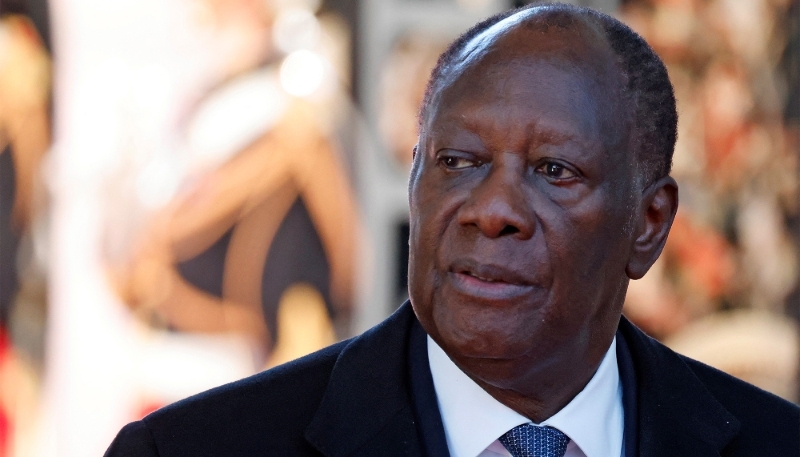
Alassane Ouattara has secured a fourth term as President of Côte d'Ivoire, winning a landslide 89.77% of the vote in an election marked by controversy
Alassane Ouattara has secured a fourth term as President of Côte d’Ivoire, winning a landslide 89.77% of the vote in an election marked by controversy and opposition exclusion.
President Alassane Ouattara has once again emerged victorious in Côte d’Ivoire’s presidential election, clinching a fourth term with a commanding 89.77% of the vote, according to provisional results released by the Independent Electoral Commission.
The 83-year-old leader’s win was widely anticipated, especially after several prominent opposition figures were barred from contesting.
Nearly nine million Ivorians were eligible to vote, and turnout was reportedly high in Ouattara’s northern strongholds, where support for the incumbent remains deeply rooted.
The election, held on October 25, 2025, was not without controversy. Former president Laurent Gbagbo and ex-Credit Suisse CEO Tidjane Thiam were among the heavyweight contenders disqualified from the race, raising concerns about the fairness of the process.
Ouattara’s closest challengers—former commerce minister Jean-Louis Billon and ex-first lady Simone Gbagbo—garnered just 3.09% and 2.42% of the vote, respectively.
While Billon conceded defeat early, Simone Gbagbo extended her congratulations to the president, signalling a rare moment of political civility amid a tense electoral climate.
Despite the overwhelming margin of victory, the election has drawn criticism from opposition voices and international observers.
Tidjane Thiam dismissed the process as “not a real election,” pointing to the exclusion of key rivals and the lack of competitive balance.
Nonetheless, Ouattara’s supporters hailed the result as a reaffirmation of stability and continuity in a country that has largely resisted the coups and insurgencies affecting much of West Africa.
The president’s ability to secure votes even in traditionally opposition-leaning regions underscores his enduring political influence.
As Ouattara prepares to extend his tenure, questions loom about the future of democratic participation in Côte d’Ivoire.
His fourth term places him among Africa’s longest-serving leaders, and critics warn that the erosion of electoral competition could deepen political divisions.
Yet for many Ivorians, especially in the north, his leadership is seen as a bulwark against instability.
The coming months will reveal whether Ouattara can translate his sweeping mandate into inclusive governance—or whether the shadows cast by this election will linger.

COMMENTS