
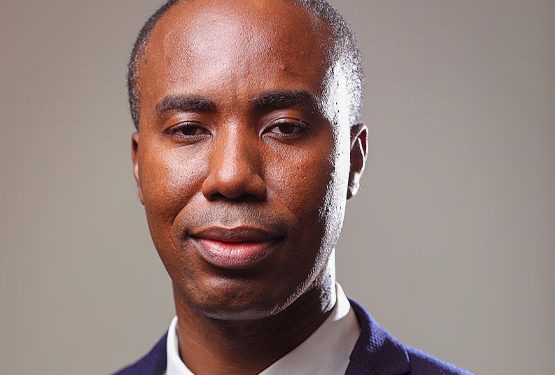
The Supreme Court has dismissed a motion filed by the former Director-General of the National Signals Bureau (NSB), Kwabena Adu-Boahene, seeking to di
The Supreme Court has dismissed a motion filed by the former Director-General of the National Signals Bureau (NSB), Kwabena Adu-Boahene, seeking to disqualify the trial judge, Justice John Eugene Nyante Nyadu, from presiding over his ongoing criminal case involving a controversial $7 million cyber-defence software procurement deal.
In a unanimous decision delivered on October 29, 2025, a five-member Supreme Court panel chaired by Justice Avril Lovelace Johnson ruled that the application lacked merit and failed to meet the legal threshold for the prohibition of a sitting judge.
The apex court therefore allowed Justice Nyadu to continue hearing the high-profile case currently before the Accra High Court.
Background of the Case
The criminal proceedings stem from allegations that Mr. Adu-Boahene, while serving as Director-General of the National Signals Bureau, colluded with his associate, Adjei-Boateng, to divert GH₵49 million (approximately $7 million) earmarked for the purchase of a national cyber-defence software system.
Prosecutors allege that the funds were routed through a series of shell companies eventually linked to a private firm known as ASL, which was allegedly controlled by the accused persons.
The case, which first made headlines in mid-2023, has since attracted significant public interest due to its implications for the national security and the management of state intelligence resources.
The Office of the Attorney-General and the Economic and Organised Crime Office (EOCO) have been jointly pursuing the matter as part of a broader crackdown on financial malfeasance in public procurement.
Charges and Bail
Adu-Boahene faces multiple charges, including defrauding by false pretences, wilfully causing financial loss to the state, using public office for personal gain, and obtaining public property by false pretences.
His wife, who is also standing trial, faces charges of collaboration to use public office for personal gain, conspiracy to launder money, and money laundering.
Both have pleaded not guilty and are currently on bail granted by the trial court.
The prosecution, meanwhile, continues to present witnesses and documentary evidence to substantiate its claims.
The Motion to Remove the Judge
On October 22, 2025, Adu-Boahene’s lawyer, Samuel Atta Akyea, invoked the Supreme Court’s supervisory jurisdiction, arguing that Justice Nyadu had exhibited bias in his conduct of the trial.
The defence claimed that the judge’s earlier rulings—particularly his refusal to compel the Attorney-General to release certain evidence requested by the defence—suggested a predisposition against the accused.
Counsel also cited the judge’s decision to extend daily court sittings from 9 a.m. to 4 p.m. as evidence of an “unusual personal interest” in expediting the trial, which they argued could compromise judicial impartiality.
The motion sought an order to bar Justice Nyadu from continuing with the proceedings, claiming a violation of Article 19 of the 1992 Constitution, which guarantees a fair trial.
Supreme Court’s Decision
In its ruling, the Supreme Court found no evidence of bias or procedural irregularity on the part of the trial judge.
The panel held that Justice Nyadu’s decisions fell within the scope of judicial discretion and did not, by themselves, constitute proof of prejudice or unfair treatment.
Justice Lovelace Johnson, delivering the lead opinion, emphasized that “mere dissatisfaction with a judge’s rulings cannot, without more, ground an allegation of bias.” She added that the defence failed to demonstrate that Justice Nyadu’s conduct created a real likelihood of bias capable of undermining the integrity of the trial.
Implications and Next Steps
The ruling effectively clears the path for the continuation of the substantive criminal trial, which resumes in the coming weeks.

COMMENTS