
In what appears to be a diplomatic shocker involving one of Africa’s most revered literary icons, the United States government has permanently revoked
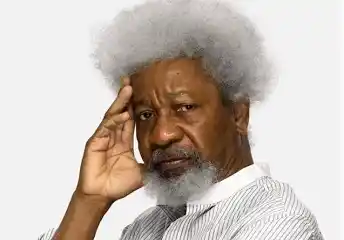
In what appears to be a diplomatic shocker involving one of Africa’s most revered literary icons, the United States government has permanently revoked the entry visa of Nigerian Nobel laureate, Professor Wole Soyinka.
The decision, which Soyinka confirmed during a press briefing in Lagos on Tuesday, effectively bars him from entering the U.S.—a country that once celebrated him as a symbol of global literary excellence and democratic advocacy.
Speaking to journalists at the Kongi’s Harvest Gallery, Freedom Park, Lagos Island, the 89-year-old playwright and activist revealed that he received an official letter notifying him of the revocation of his B1/B2 visa, originally issued in April 2024.
The letter, dated October 23, 2025, cited U.S. immigration regulation 22 CFR 41.122, a statute that permits visa cancellation when new information emerges that affects a person’s eligibility for entry.
Soyinka disclosed that the revocation followed his refusal to attend a visa re-interview at the U.S. Consulate in Lagos, scheduled for September 11—a date he described as “bizarre and symbolically insensitive,” given its connection to the 9/11 terrorist attacks.
“I initially thought the invitation was a scam or an AI-generated hoax. It made no sense that I should be called in for re-interview after decades of traveling lawfully to the United States,” Soyinka explained.
The iconic writer said he convened the press briefing to inform his colleagues and institutions in the U.S. that his attendance at future events was now impossible.
“I have no visa. I am banned, obviously, from the United States. If anyone wishes to see me, you know where to find me,” he said, in his characteristic tone of defiance and irony.
Soyinka added that he remained unsure what specific action or statement triggered the American decision but insisted that he harbored no bitterness toward the American people.
However, he questioned the “arbitrariness” of the process, describing it as inconsistent with the principles of justice and freedom that the U.S. often claims to champion.
According to media reports, the U.S. Consulate had earlier invited several Nigerian visa holders—including Soyinka—for “verification re-interviews,” a process the professor found “demeaning” and “unnecessary.”
He ignored the invitation, which may have been interpreted by consular officials as noncompliance.
This is not the first time the Nobel laureate’s relationship with the United States has been strained.
In 2016, shortly after the election of Donald Trump, Soyinka famously tore up his American green card in protest, declaring that he would “not be part of Trump’s America.”
That symbolic act, though deeply personal, drew both praise and criticism across the political and cultural spectrum.
While U.S. authorities have not provided specific details about the new revocation, a brief statement referenced only that “additional information became available,” suggesting that the decision could be based on updated policy or intelligence considerations.
The U.S. Embassy in Nigeria has yet to issue an official comment, leaving open questions about whether the revocation applies solely to Soyinka or is part of a broader review affecting other Nigerian intellectuals and public figures.
Despite the diplomatic setback, Soyinka reaffirmed that his global engagements and advocacy work would continue unhindered.
“The United States is not the world,” he remarked. “If they choose to close their doors, I’ll open mine. I have always welcomed dialogue, and if Americans wish to visit me, they are free to do so here in Nigeria.”

COMMENTS