
The Minority in Parliament on Tuesday mounted a strong critique of the 2026 budget statement presented by Finance Minister, Dr Cassiel Ato Forson last
The Minority in Parliament on Tuesday mounted a strong critique of the 2026 budget statement presented by Finance Minister, Dr Cassiel Ato Forson last Thursday, highlighting what they described as unrealistic targets, misallocated resources, and questionable fiscal strategies.
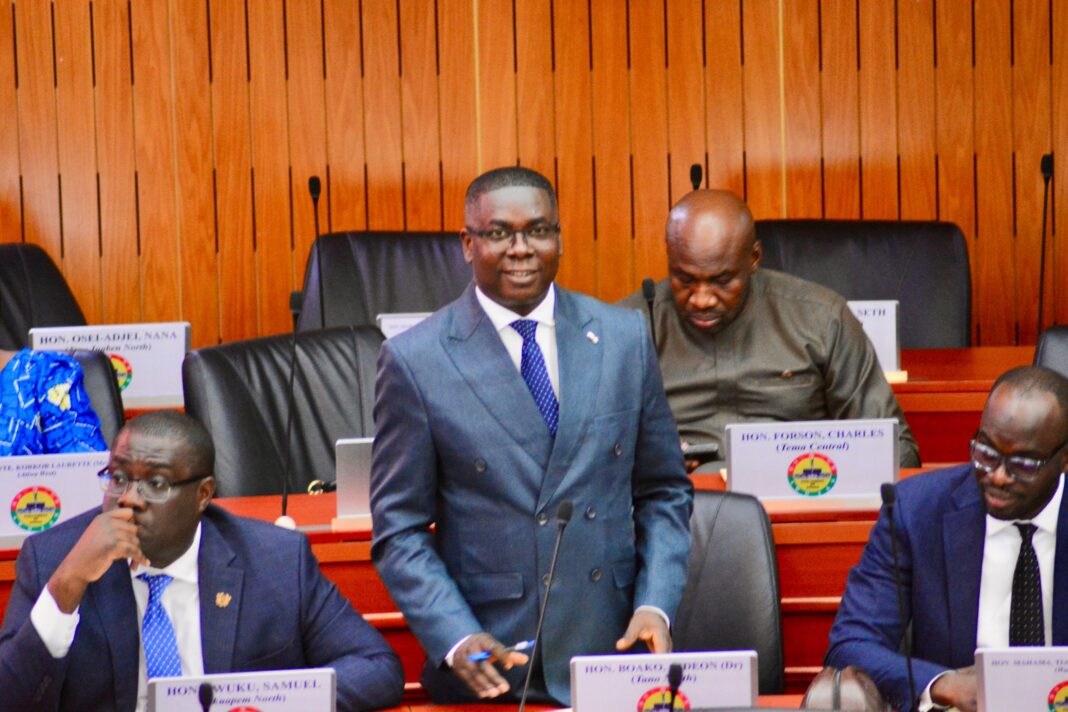
The MP for Tano North, Dr. Gideon Boako, speaking for the Minority on the Finance Committee, accused the government of repeating mistakes from the 2025 budget while presenting ambitious but unachievable projections.
Dr. Boako noted that while the 2026 budget shows promise in certain areas, including the introduction of AI-powered tools at ports to improve tax administration, there are serious gaps that undermine its credibility.
“An effective tax system is not about higher incidence but efficiency. We must ensure that AI deployment does not become another avenue for profiteering,” he said, cautioning against procurement loopholes and corruption.
The Minority underscored the underperformance of the 2025 budget as a basis for skepticism.
About 50 percent of projected targets were reportedly missed, and even where targets were achieved, Dr. Boako argued, they were done at the expense of ordinary Ghanaians.
He criticized the Bank of Ghana’s sterilization of GH¢62 billion from the economy, which reduced household disposable income, slowed consumption, and negatively affected traders during peak seasons such as Christmas.
He also condemned what he termed “excessive fiscal consolidation” by the Ministry of Finance, which included cuts to goods and services spending by 44 percent and capital expenditure by 66 percent, denying critical public investment of over US$1 billion.
Dr. Boako further questioned the government’s handling of the foreign exchange market.
While acknowledging efforts to stabilize the cedi, he warned that the continued reliance on gold-backed interventions, similar to past policies, may not be sustainable.
He emphasized that interventions should address short-term volatility rather than becoming a recurring mechanism for propping up the currency.
Drawing from historical economic performance, the Minority highlighted similarities between current fiscal trends and previous periods under IMF Extended Credit Facility programs (2015–2019, 2022–2026).
During those earlier periods, fiscal and monetary reforms delivered significant gains: inflation fell from 15.4 percent in 2016 to single digits by 2018, primary balances shifted into surplus, and Ghana’s macroeconomic indicators showed tangible improvements.
In contrast, Gideon Boako argued, the 2026 budget lacks such credibility, citing wide deviations between projected and actual revenues in 2025.
Total revenue and grants fell 4.7 percent below targets, non-oil tax revenue missed by 4.1 percent, and oil and gas receipts underperformed by over 52 percent.
Expenditure performance, according to the Minority, also revealed serious gaps. Total expenditure in 2025 fell 15 percent below the approved budget, with capital spending hitting only 41 percent of planned allocation.
The shortfall contributed to slower industrial growth, despite the gold sector posting strong gains.
“Resources were not delivered to priority areas, and the GDP growth was largely driven by gold production rather than real sector development,” Dr. Boako noted.
Looking ahead, the Minority described the 2026 revenue target of GH¢268.1 billion as overly ambitious. They highlighted challenges in oil and gas revenue collection, with the GNPC facing significant funding gaps that limit exploration and production, making projected oil receipts of GH¢13.6 billion appear unrealistic.
Similarly, they argued that the expenditure framework, projected at GH¢302.5 billion, reflects ambition rather than fiscal capability.
Job creation claims in the 2026 budget were also challenged. The Finance Minister has projected 800,000 new jobs through programs like the GH¢63 billion “Big Push” road contracts, new garment factories, agro-processing plants, and the National Policy on Integrated Oil Palm Development.
Boako warned that most of these jobs are temporary or depend on unfunded programs, questioning their sustainability without strong private-sector engagement.

COMMENTS