
The fragile agricultural supply chain has once again been exposed as a major national liability after 15 truckloads of imported onions—valued at more
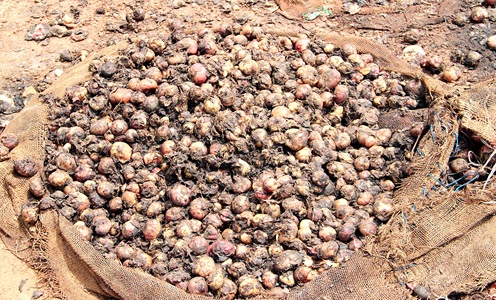
The fragile agricultural supply chain has once again been exposed as a major national liability after 15 truckloads of imported onions—valued at more than GH¢3.1 million—rotted away at the Adjen Kotoku Market in Accra.
The incident, which traders describe as the worst post-harvest disaster this year, has reignited debate over the country’s dependence on imports, weak logistics systems, and chronic lack of storage infrastructure.
The Adjen Kotoku Market was established in 2021 following the government’s relocation of traders from the once-vibrant Agbogbloshie food market.
Authorities at the time argued that the move would decongest Accra and create a modern trading hub. But the relocation has been widely criticized by traders who say the new site lacks the accessibility, foot-traffic, and support systems that made Agbogbloshie a resilient commercial center.
Since the move, onion traders have continuously complained about inadequate road networks, poor drainage, limited storage facilities, and the collapse of the secondary market of buyers—those who previously purchased distressed or damaged produce for processing.
The latest mass spoilage has brought those grievances back into national focus.
Fifteen Trucks, 6,300 Bags, and a Total Financial Meltdown
According to market authorities, each truck that arrived at Adjen Kotoku carried approximately 420 bags of onions. In total, the 15 spoiled trucks represent an estimated 6,300 bags—produce that traders had financed with loans or personal savings.
For many, the entire investment has evaporated.
Trader Shaibu Ibrahim lost a full truckload imported from Kano in northern Nigeria.
Some are considering selling personal property to avoid insolvency.
Insurance—which could have cushioned such losses—is virtually unavailable.
A 1,500km Journey That Onions Can’t Survive
Behind the financial ruin lies a deeper structural failure: Ghana’s dependence on a long, vulnerable supply route stretching more than 1,500 kilometres from Kano to Accra.
The Onion Traders Association spokesperson, Osman Mohammed Sidi, explained that the imported onions this season are largely of the Kano variety, which is much less durable than the preferred varieties from Niger, Sokoto, or Burkina Faso.
This year, shortages from those regions forced traders to rely on the Kano supply.
The trip typically takes eight to ten days, but mechanical breakdowns or road delays often stretch it to 12 days—far beyond the safe window for Kano onions.
Compounding the problem were: Persistent heavy rains that soaked the goods, poor ventilation in the trucks,
Unstable weather conditions along the route, and No cold-chain or temperature-controlled transport support.
These factors combined to create a perfect storm for post-harvest losses—already a major problem in West Africa, where some commodities lose more than 30% before reaching the market.
Traders say the Adjen Kotoku market’s isolation made the disaster even worse.
At Agbogbloshie, thousands of buyers, including processors, caterers, and wholesalers, could quickly absorb distressed goods at reduced prices, minimizing losses. At the new location, poor access roads mean buyers rarely show up.
Without modern storage facilities—such as ventilated warehouses, cooling units, or dehydration plants—traders had no alternative but to dump the produce, filling parts of the market with a stench that symbolized economic waste and years of systemic neglect.
Lessons from Abroad: Quality Matters
Trader Ibrahim insists that part of the long-term solution lies in improving the quality of onions produced locally.
He compared the imports from Egypt, Morocco, and China—regions whose onions travel even longer distances yet remain fresh for months due to superior cultivation practices.
“Those onions don’t spoil. You can store them for two months. They focus on quality, not just quantity,” he said.
In contrast, many locally grown onions are oversized due to excessive fertilizer use, making them less durable and highly prone to quick decay.

COMMENTS