
The Institute of Economic Research and Public Policy (IERPP) has raised fresh concerns over the government’s 2026 Budget, cautioning that the current
The Institute of Economic Research and Public Policy (IERPP) has raised fresh concerns over the government’s 2026 Budget, cautioning that the current approach to revenue mobilisation and project implementation timelines risks undermining the fragile fiscal recovery.
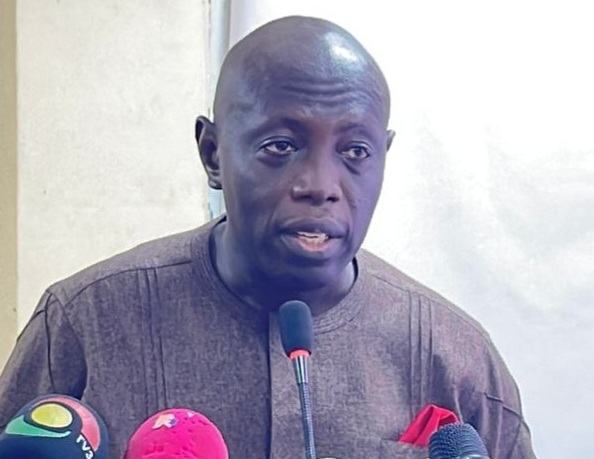
Addressing journalists at the Ghana International Press Centre on Thursday, November 20, 2025, the Executive Director of IERPP, Prof. Isaac Boadi, said the budget’s foundations must be revisited to avoid what he described as “avoidable policy miscalculations.”
Prof. Boadi’s critique adds to a history of concerns raised by fiscal policy analysts over the government’s handling of budget implementation, particularly the recurrent mismatch between contract awards and project timelines.
For years, Ghana has struggled with delays in procurement processes, late release of funds, and over-ambitious revenue assumptions—issues that have contributed to stalled projects and unmet fiscal targets.
Speaking under the theme “The 2026 Budget: Ambitions, Pressures, and Possible Pitfalls,” Prof. Boadi stressed that the government must address long-standing structural weaknesses in revenue mobilisation rather than rely on what he described as unrealistic and “impractical” measures.
He noted that the budget’s promise of improved revenue outcomes hinges critically on when contracts for major public projects are awarded.
He questioned the logic behind awarding key infrastructure and social sector contracts in 2026 when the projects are expected to deliver full economic value within the same fiscal year.
“Should we award contracts in 2026 or 2025? Obviously, contracts are issued now so they can be implemented in 2026,” he argued. “If we want value for money, then when will the true economic effect be felt — 2025, 2026, or 2027?”
According to him, assumptions in the budget regarding revenue gains from procurement efficiencies are inconsistent because they are “built on the notion that contracts have already been awarded.”
The economist further questioned the government’s optimism about earning revenue from cryptocurrency transactions through the newly drafted Virtual Asset Service Providers Bill.
He argued that even advanced economies derive minimal revenue from crypto-related activities, making it unrealistic for Ghana to rely on a volatile and limited sector.
“If we want to raise revenue through these means, then we might as well tax GRA officers,” he remarked humorously, adding that many officers of the Ghana Revenue Authority rarely utilise opportunities available to them internationally.
Prof. Boadi warned that Ghana’s existing revenue measures are too weak to withstand upcoming debt payments. As deferred obligations from previous restructurings begin to mature in the coming years, he said the country cannot depend on speculative revenue sources and vague projections.
“In the years ahead, several debt negotiations and deferred payments will start maturing. If we keep depending on crypto revenues and vague value-for-money projections, what are we really doing as a country?” he asked.
He highlighted several reforms and bills presented to Parliament as part of the 2026 Budget cycle, including amendments to the Public Procurement Regulations, revisions to the Ghana Investment Promotion Fund policy, the introduction of an AI-driven data analytics system for customs, and changes to the GETFund, National Insurance, and Copy Levy frameworks.
He stressed that these proposals must go beyond paperwork and create real revenue outcomes.
Responding to critics who argue that IERPP only highlights problems, Prof. Boadi insisted the institute has consistently offered practical solutions but is not responsible for executing national policy.
“We are not paid to run the country. Those at the helm must give us solutions. That said, we have outlined several actionable measures to support revenue enhancement,” he noted.
Among IERPP’s key recommendations are reforms in property rate administration, which he described as one of the most untapped revenue sources; audits of mining sector revenues to ensure the state benefits from rising gold prices; formalisation of the agricultural value chain; incentives for local manufacturing; improved SOE dividend policies; and better revenue capture from the Tourism and Creative Arts sectors.
Reviewing Ghana’s fiscal performance from January to September 2025, Prof. Boadi said that despite some progress, the country has not met essential revenue goals.
He disclosed that IERPP’s independent assessment scored the government at 40.5 percent in revenue performance—an improvement, but still far below what is required for sustained growth.
He reaffirmed IERPP’s commitment to guiding national discourse with evidence-based analysis.
“Our hope is that government will take these recommendations seriously if we truly want to broaden the revenue base and achieve sustainable development,” he concluded.

COMMENTS