
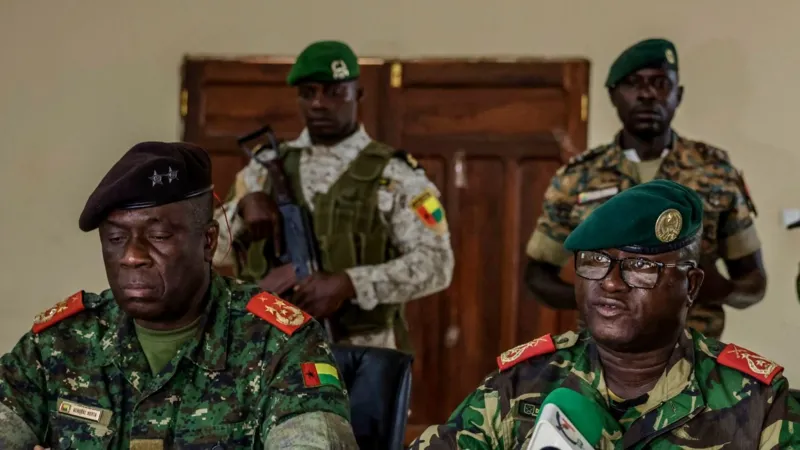
Gunfire crackled around Bissau as a group of military officers announced they had seized “total control” of Guinea-Bissau, closing all borders and hal
Gunfire crackled around Bissau as a group of military officers announced they had seized “total control” of Guinea-Bissau, closing all borders and halting the electoral process just days after hotly contested polls.
President Umaro Sissoco Embaló was reported arrested and held at the general staff headquarters, with the junta appearing on state television to declare a suspension of the vote count as rival camps claimed victory.
The officers said a unified command drawn from the armed forces would assume authority “until further notice.”
Regional and international observers moved quickly. ECOWAS and the African Union expressed concern over the arrests of election officials and the abrupt interruption of the electoral timetable.
Statements from West African actors condemned the takeover as a threat to democratic governance, urging restraint and a return to legal, transparent processes as the nation awaited provisional results.
Border closures and patrols deepened the sense of rupture across the capital and beyond.
The junta framed its actions as preempting an alleged destabilisation plot, invoking the spectre of political meddling backed by a “well-known drug baron.”
Nighttime curfews and tightened controls followed, reinforcing a narrative of restoring order amid claims of fraud and interference.
The timing—hours after gunfire near the presidential palace and on the eve of announced results—underscored how fragile the post-election moment had become.
For Bissau—and for a West Africa grappling with recurring coups—the implications are stark: another sudden break in constitutional rule, another test of regional leverage, and another country forced to reckon with the gap between electoral ritual and institutional trust.
Whether this command’s promise of “restoration” translates into accountability, dialogue, and a credible path back to civilian authority will hinge on pressure from within the armed forces, civic actors, and the regional bloc’s resolve.

COMMENTS