
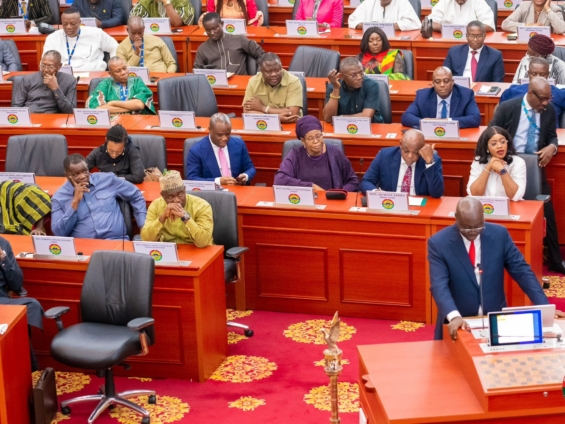
Parliament has passed the Value Added Tax Bill, 2025—bringing to an end one of the most unpopular levies introduced after the COVID-19 pandemic. Th
Parliament has passed the Value Added Tax Bill, 2025—bringing to an end one of the most unpopular levies introduced after the COVID-19 pandemic.
The passage of the bill also marks the most comprehensive restructuring of the nation’s VAT regime since the mid-2010s, signalling a shift toward easing the cost of doing business and stimulating economic recovery.
The repeal of the COVID-19 Health Recovery Levy, introduced in 2021 at the height of the pandemic to support public health expenditure, fulfils a long-standing pledge made by the current administration.
For years, business associations and consumer groups argued that the levy had outlived its purpose and continued to burden households already grappling with rising prices.
Finance Minister Dr. Cassiel Ato Forson, who first announced the reform package during the 2025 Budget and Mid-Year Fiscal Policy Review, described the bill as a landmark achievement that places fairness and economic growth at the centre of tax administration.
“We promised to abolish the COVID-19 levy,” Forson told lawmakers. “With the support of this House, I am happy to announce today that it is abolished.”
Abolition Expected to Inject GH₵3.7bn Back Into the Economy
The removal of the levy alone is projected to return GH₵3.7 billion to the pockets of consumers and businesses in 2026.
The government believes this liquidity boost will help stabilise consumption and support private sector expansion at a time when economic resilience remains a national priority.
Reversing Distortions
A key feature of the new bill is the reversal of the controversial decoupling of GETFund and NHIL from the VAT structure—an arrangement that critics said inflated tax burdens and increased production costs.
By restoring input tax credit eligibility for both funds, government estimates that the cost of doing business could drop by up to 5%, particularly benefiting manufacturers and service providers.
In total, the entire VAT reform package is expected to channel nearly GH₵6 billion back into the broader economy.
Sector-Specific Changes to Spur Growth
The bill includes a number of targeted interventions aimed at addressing longstanding bottlenecks in key economic sectors:
VAT abolished on mineral reconnaissance and prospecting, an incentive the government hopes will revive mineral exploration and attract investment after years of stagnation.
Effective VAT rate reduced from 21.9% to 20%, offering broad relief across supply chains.
VAT registration threshold raised significantly—from GH₵200,000 to GH₵750,000—providing thousands of microenterprises immediate exemption from VAT compliance.
Zero-rated VAT on locally produced textiles extended to December 2028, supporting over 2,000 jobs and boosting Ghana’s competitiveness against imported clothing.

COMMENTS