
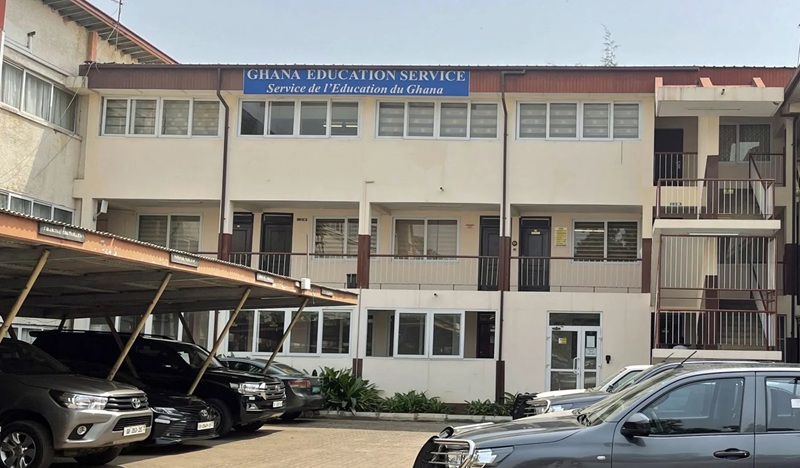
The Ghana Education Service (GES) has responded decisively to criticism following the release of the 2025 West African Senior School Certificate Exami
The Ghana Education Service (GES) has responded decisively to criticism following the release of the 2025 West African Senior School Certificate Examination (WASSCE) results, which revealed a sharp decline in student performance across core subjects.
In a statement on Tuesday, GES sought to clarify claims made by the immediate past Minister of Education, Dr. Yaw Osei-Adutwum, and to defend the integrity of the examination process.
The 2025 results triggered nationwide concern after statistics indicated unprecedented failures in critical subjects. Core Mathematics, for example, saw a dramatic drop from 66.86% credit pass rate in 2024 to below average at just 48.73% in 2025, with 114,872 candidates (26.77%) failing outright.
Integrated Science also recorded declining performance, with 57.74% earning credit passes and 161,606 candidates (39.87%) failing.
Social Studies, which cultivates civic literacy, recorded a dramatic fall to 55.82% credit passes, leaving 122,449 candidates (27.50%) unable to pass the subject. English Language, while relatively stable at 69.00% credit passes, still saw 131,097 candidates (30.27%) fail.
Overall, more than half of the candidates who sat for the 2025 WASSCE failed at least one core subject required for progression to tertiary education.
Following the release of these results, Dr. Osei-Adutwum publicly suggested that the performance decline was linked to unsupportive management practices within GES, claiming among other things that teachers’ allowances had been cancelled.
GES has categorically denied these allegations, emphasizing that no such punitive measures were taken. The service pointed to clarifications from the Controller and Accountant-General’s Department (CAGD), which confirmed that delays in the payment of November allowances were unrelated to teacher performance or the conduct of the examination.
GES maintained that the results accurately reflect students’ abilities and represent a credible assessment of learning outcomes.
According to the service, the 2025 WASSCE was conducted under enhanced supervision, strengthened invigilation, and strict adherence to examination protocols, measures that led to the apprehension of students and a few staff who attempted malpractice.
This, GES argued, demonstrates the commitment of the Ministry of Education and the service to restoring integrity to the national examination system, a process that began in earnest after past WASSCE cycles were marred by irregularities.
The 2025 cohort is particularly significant, as it largely comprises students admitted under the Free Senior High School (Free SHS) policy in 2022 and 2023, many of whom entered SHS with grades as low as 45 during the computerised placement process.
Education analysts have warned for years that while Free SHS has expanded access, systemic challenges — including overcrowded classrooms, insufficient resources, and inconsistent teaching quality — continue to limit learning outcomes.
GES also noted ongoing steps to prepare students for the upcoming international WASSCE, to be written by all West African member states in May/June 2026.
The service urged students to intensify preparation while reaffirming that examination integrity will not be compromised.
GES highlighted its continued collaboration with heads of schools, teachers, students, parents, civil society organizations, and WAEC to improve teaching, learning, and examination integrity, emphasizing that the performance of students should be understood in the context of systemic and historical factors rather than seen as solely a reflection of teacher or student effort.
Daniel Fenyi, Head of Public Relations for GES, signed the statement, reinforcing the service’s position that the 2025 WASSCE results, while alarming, are a transparent representation of the current state of education and a crucial step toward addressing longstanding challenges in the academic system.

COMMENTS