
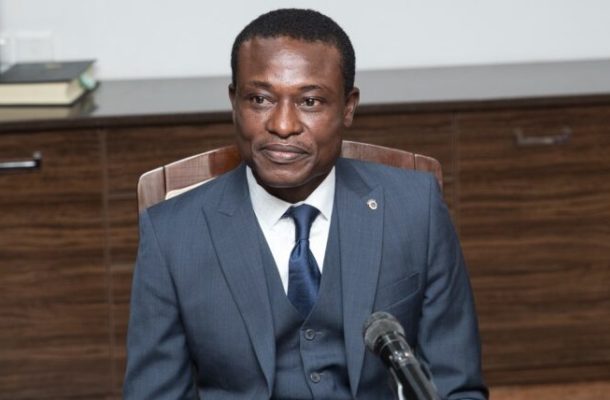
The anti-corruption environment has taken a dramatic turn as the Presidency confirms the receipt of multiple petitions seeking the removal of Special
The anti-corruption environment has taken a dramatic turn as the Presidency confirms the receipt of multiple petitions seeking the removal of Special Prosecutor Kissi Agyebeng.
The latest and most comprehensive of these petitions, comes from the Coalition for Integrity in Governance-Ghana (COFIIG), led by its Executive Chairman, Simon Yaw Awadzi, and supported by earlier petitions linked to prominent civil society voices including lawyer Martin Kpebu.
Martin Kpebu, according to sources is also preparing to file a groundbreaking petition with audio and video evidence to substantiate his petition.
Kpebu has accused the Special Prosecutor of presiding over an endemic corruption, claiming that Kissi Agyebeng’s hand are allegedly tainted with corruption.
The legal practitioner even declared the Office of the Special Prosecutor, OSP, as crime scene, leading to his invitation to the OSP to substantiate his allegations.
The petition filed by COFIIG, dated October 20, 2025, joins at least two others presented to President John Dramani Mahama, all demanding that the Special Prosecutor be removed from office on grounds ranging from incompetence and misbehavior to conflict of interest and alleged connivance in high-profile investigations.
The growing number of petitions signals a coordinated surge of dissatisfaction across civic, religious, and legal circles, reopening longstanding debates about the effectiveness of the anti-corruption machinery.
COFIIG Petition: A Detailed Accusation of Incompetence, Mismanagement and Abuse of Power
In its petition, COFIIG asserts that since Agyebeng assumed office in August 2021, his stewardship at the Office of the Special Prosecutor (OSP) has been marked by financial opacity, administrative inefficiency, and institutional conflict.
COFIIG argues that although the OSP has received significant budget allocations from 2021 to 2024, there is no publicly available audited financial report detailing its expenditure—contrary to Article 187(7)(b) of the Constitution and Section 20 of Act 959.
The coalition insists that the absence of transparency raises serious concerns about misappropriation and warrants an urgent forensic audit.
They further claim that the OSP’s total recoveries from corruption cases amount to less than one percent of the funds allocated to the office, which they cite as evidence of operational failure and poor leadership.
The petition also accuses the Special Prosecutor of withholding investigative dockets from the Attorney-General for months, particularly regarding former Finance Minister Ken Ofori-Atta’s extradition processes.
This conduct, COFIIG argues, amounts to misbehavior, insubordination, and a breach of Article 41 of the Constitution, which mandates cooperation with lawful authority.
Perhaps most striking is COFIIG’s allegation that Agyebeng exercises what it terms “Bully Judicial Constitutional Custodial Powers” — a claim suggesting that he has overstepped his authority by interfering with the constitutional powers of the Attorney-General under Article 88.
The coalition likens this tension to previous constitutional clashes between high-ranking state officials, warning that such institutional disharmony undermines the collective anti-corruption efforts.
Conflict of Interest Allegations: COFIIG Questions SP’s Independence
COFIIG also raises concerns about Kissi Agyebeng’s nomination history, claiming it was supported by a prominent political figure from the previous administration.
This, they argue, creates a perception of conflict of interest, particularly since the OSP is mandated to prosecute officials of that same administration. They warn that such perceived loyalties may lead to selective prosecution or compromise sensitive investigations, thereby eroding public trust in the institution.
To restore confidence and ensure accountability, COFIIG requests that President Mahama initiate removal proceedings in line with Section 15 of Act 959, direct the Special Prosecutor to step aside during an independent forensic audit, and mandate the Auditor-General to publicly release a full audit of OSP accounts from 2021 to 2024.
Second And Third Petitions
The second petition—filed by Apostle Abraham Lincoln Larbi, who recently led a small demonstration alongside lawyer Martin Kpebu—intensifies the claims against the Special Prosecutor.
This petition states that Agyebeng allegedly connived with former Finance Minister Ken Ofori-Atta, allowing him to travel outside the country despite being under investigation. It further accuses the SP of misleading the public by claiming he contacted security agencies who failed to act.
This petition also revisits claims of insubordination to the Attorney-General, arguing that the Special Prosecutor’s refusal to release the investigative docket on Ken Ofori-Atta constitutes gross disrespect to his supervisory ministry.
The third petition, which focuses primarily on the controversial Strategic Mobilisation Ghana Limited (SML) case, repeats many of the allegations raised by lawyer Martin Kpebu in earlier public discussions.
It accuses the SP of incompetence, lax enforcement of his police powers, and fabricating excuses to cover internal failures.
The petition alleges that by claiming he wrote to security agencies to prevent Ofori-Atta’s departure but receiving no assistance, the SP unfairly portrayed his colleagues as negligent—an act the petitioners describe as immoral and dishonest.
A Special Prosecutor Under Intensifying Scrutiny
Since taking office in 2021, Agyebeng’s tenure has been polarizing. While some view the OSP as a young institution facing teething challenges, critics argue that the office has become embroiled in too many controversies, delivering few prosecutorial results despite substantial public investment running into several million Ghana cedis.
What Happens Next?
With multiple petitions already forwarded to the Chief Justice, Justice Paul Baffoe-Bonnie by the Presidency, the constitutional removal process is now in motion.
The Chief Justice must first determine whether a prima facie case exists. If so, a three-member committee will be constituted to conduct a full inquiry.

COMMENTS