
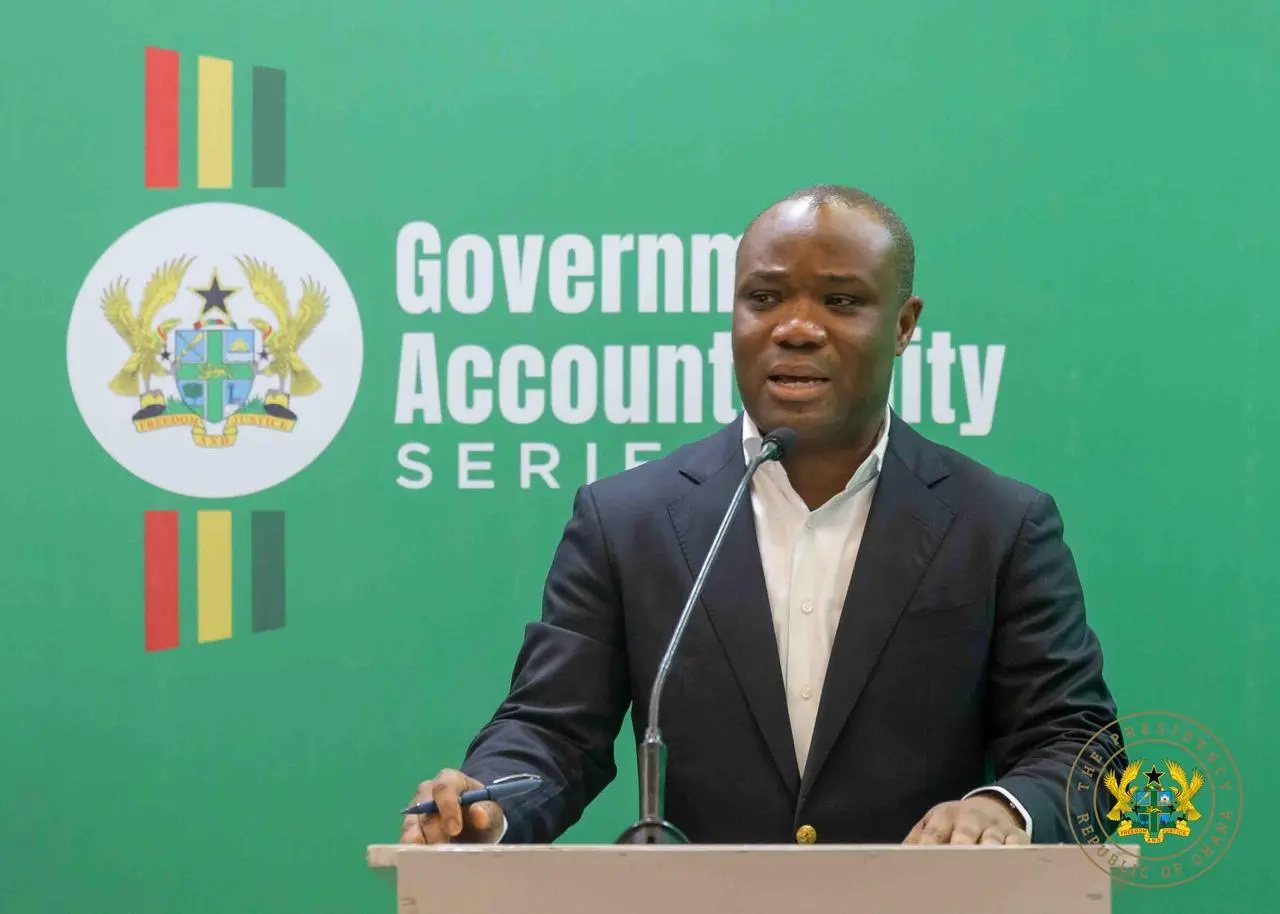
Ghana’s Minister for Government Communications, Felix Kwakye Ofosu, has stated categorically that proceeds from the recently introduced levy on petrol
Ghana’s Minister for Government Communications, Felix Kwakye Ofosu, has stated categorically that proceeds from the recently introduced levy on petroleum products have been utilised effectively and have contributed significantly to stabilising electricity supply in the country.
The levy, passed under the Energy Sector Levies (Amendment) Act, 2025, imposes a charge of one Ghana cedi (GH¢1) per litre on petroleum products purchased by consumers, effective June 16, 2025.
The government introduced the levy to raise additional funds for fuel purchases for thermal power plants and to help settle outstanding debts in the energy sector.
However, the policy has faced calls for greater transparency from some stakeholders.
Despite concerns raised by sections of the public, the government proceeded with the implementation.
Speaking at the Government Accountability Series in Accra on Wednesday, January 14, Kwakye Ofosu explained that the primary objective of the GH¢1.00 fuel levy was to address the tariff shortfall created by the high cost of liquid fuels used to power thermal plants—costs that had not been adequately factored into the electricity tariff structure.
“The estimate shows that, on a yearly basis, about US$1.2 billion is required to import liquid fuels for firing thermal plants. If no deliberate effort is made to bridge this gap, it will pose serious challenges, even as steps are being taken to resolve the numerous problems we inherited in the sector,” the Minister said.
He indicated that the Ministry of Finance would provide details on collections from the GH¢1.00 fuel levy in its annual reports to Parliament on petroleum receipts and through the general budget accounting for each year.
“But what is clear is that the levy has been put to good use and has contributed significantly to stability in the power sector,” he said. “When we assumed office, there were challenges with electricity supply. I believe all of us can attest that power has been stable for several months now, and we have not experienced the outages that many feared would occur.”
On the issue of energy-sector debt, Kwakye Ofosu noted that the Ministry of Finance had issued a statement confirming that approximately US$1.4 billion in debt owed to the energy sector had been cleared. He clarified that the statement did not suggest that this amount represented the total outstanding debt, but rather that a substantial portion had been settled within a year, providing significant relief to sector players.
He attributed earlier challenges partly to poor adherence to the cash waterfall mechanism, which is designed to ensure equitable liquidity distribution among sector participants.
“For a long time, some players in the sector—particularly independent power producers (IPPs)—were not receiving commensurate payments,” he said. “The Minister for Finance and the Minister for Energy have ensured strict adherence to this arrangement, which is why funds are now flowing to all players, contributing to the stability we are witnessing.”
Kwakye Ofosu stressed that the statement on debt clearance underscored the government’s commitment to paying down energy-sector liabilities. He added that efforts would continue to clear the remaining debt and to open up financing opportunities within the sector to ensure long-term sustainability.

COMMENTS