
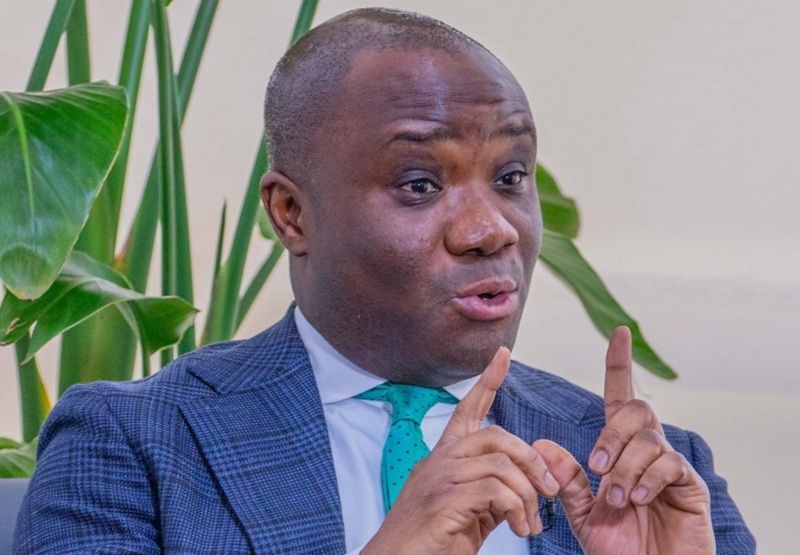
A fresh controversy has emerged around the John Mahama administration’s widely publicised decision to cancel fuel allowances for political appointees,
A fresh controversy has emerged around the John Mahama administration’s widely publicised decision to cancel fuel allowances for political appointees, following candid remarks by the Minister for Government Communications, Felix Kwakye Ofosu, which suggest that ministers continue to enjoy fuel entitlements under the terms of their appointments.
Speaking at the Jubilee House during a media engagement as part of the Government Accountability Series, Felix Kwakye Ofosu offered a rare insider explanation of the benefits attached to ministerial appointments, laying bare what he described as standard conditions of service for ministers of state.
His comments have reignited public debate about whether the government’s fuel allowance cancellation is being applied in practice or exists largely as a policy signal.
According to the Minister, every minister’s appointment letter clearly spells out the resources they are entitled to in order to perform their official duties effectively.
He explained that ministers are provided with official vehicles, including a four-wheel drive vehicle—typically a Toyota Land Cruiser—as well as a saloon car.
These, he stressed, are duty-post vehicles rather than personal gifts and are meant strictly for official use.
Kwakye Ofosu noted that in many cases, new vehicles are procured when a new government assumes office, largely because existing vehicles inherited from previous administrations are often no longer roadworthy or capable of meeting the operational demands placed on ministers.
He said this practice has become routine across successive governments.
Beyond vehicles, the minister explained that accommodation is another key entitlement.
Ministers are either housed in refurbished government bungalows or, where such accommodation is unavailable, are paid a rent allowance equivalent to 20 percent of their basic salary, calculated at prevailing market rates.
He added that ministers also receive a consolidated salary that includes various emoluments previously paid separately.
He also said that the several presidential staffers and presidential aides appointed by this administration are of the same conditions as ministers and deputy ministers respectively.
However, it was his comments on fuel that have drawn the most attention.
Felix Kwakye Ofosu disclosed that his own appointment letter, like those of other ministers, explicitly entitles him to a specified quantity of fuel every week.
This revelation appears to contradict the government’s earlier announcement that fuel allowances for all political appointees had been cancelled with immediate effect.
The National Democratic Congress government’s fuel cancellation policy was formally announced on July 15, 2025, in a statement issued by the Presidency and signed by Felix Kwakye Ofosu himself.
The statement said President John Dramani Mahama had directed the immediate withdrawal of fuel allocations and payments to political appointees as part of broader efforts to reduce public expenditure and demonstrate leadership sacrifice amid economic hardship.
“The President believes that leadership must also bear its part of the sacrifices it is calling on the people to make,” the statement said at the time, framing the decision as a moral and fiscal response to mounting economic pressures.
The fuel allowance cancellation formed part of a wider austerity agenda pursued by the Mahama administration, which has included reducing the size of government, cutting down on ministerial and presidential staff appointments, and cancelling satellite television subscriptions for offices within the Presidency and other state institutions.
Notably, the decision came just a day before the implementation of a GHS1.00 levy on every litre of fuel sold at the pump, a policy the government said was necessary to raise funds for the Ministry of Energy to secure fuel for power generation and stabilise electricity supply.
Felix Kwakye Ofosu’s latest remarks have therefore raised questions about the sincerity of the government.
While government officials insist the austerity measures are real and ongoing, critics argue that the disclosures reinforce public perceptions that political officeholders are insulated from the economic sacrifices imposed on ordinary Ghanaians.

COMMENTS