
Bulk tomato traders and major market outlets in Accra have praised the government-supported West Africa Food System Resilience Programme (FSRP), in pa
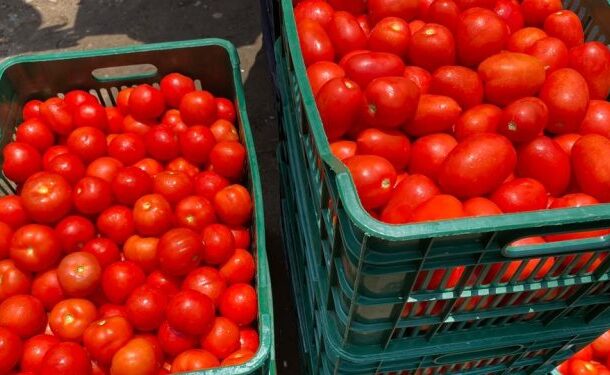
Bulk tomato traders and major market outlets in Accra have praised the government-supported West Africa Food System Resilience Programme (FSRP), in partnership with FarmMate Ltd, for supplying high-quality, freshly harvested tomatoes to the city’s market over 240 tons of tomatoes from the Upper East Region have already been delivered this week to major wholesale and premium markets, including Agbogbloshi, CMB Market, Palace Mall, and Accra City Hotel.
Other outlets stocking the FSRP-FarmMate tomatoes include Farmer’s Market, Fairway Supermarket, Sky Bar (Villagio), and D Café.
These deliveries mark the first of three to five harvest rounds in the current production period and form part of FSRP interventions under the Ministry of Food and Agriculture (MoFA) aimed at stabilizing tomato supply and prices in Ghana, particularly during the dry season.
Funded by the Norwegian government and coordinated by the World Bank, the programme seeks to revamp the local tomato industry to ensure year-round availability.
FSRP’s tomato production follows climate-smart agricultural practices with strict quality control enforced by MoFA experts from the Plant Protection & Regulatory Services, Directorate of Crops Services, and Directorate of Agricultural Extension Services, as well as the Soil Research Institute, Crop Research Institute, and FSRP and FarmMate environmental and social safeguards officers.
After harvesting, tomatoes are packed in solar-powered, temperature-controlled on-farm packhouses and transported to market outlets within 24–36 hours, ensuring freshness and quality. Farmers participating in the programme receive high-quality seeds, improved fertilizers, organic manure, pesticides, and advisory services, while FarmMate provides hands-on support, monitoring, and guaranteed off-take of produce.
The FSRP-FarmMate initiative covers 200 acres nationwide, with 110 acres in the Upper East Region, involving approximately 100 farmers across Zebilla, Pwalugu, Tono Irrigation Scheme, and Navrongo. Other production locations include Ningo-Prampram, Okere, Kwahu East, Akumadan Irrigation Scheme, and Asunafo South. The Norwegian Tomato Support Programme under FSRP spans 20 districts in six regions and involves 1,500 farmers, 40 percent of whom are women.
Yields from the intervention currently average 10 tons per hectare and are expected to reach 15 tons per hectare by the end of the 2025 dry season, targeting a total of 6,000 metric tonnes of tomato production.
Traders and buyers have expressed satisfaction with the quality of the tomatoes. Naomi Atuahene, also known as Shatta-Mama, a bulk trader at CMB Railway Market, said: “The tomatoes are especially good when fresh, even better than those imported from Burkina Faso. We plead with the government to support such initiatives so we don’t have to go to Burkina for tomatoes.”
Hanna Owusu, a bulk trader at Agbogbloshi Market, added: “The tomatoes remain in good shape for up to a week, and the market women like them. I would advise the government to invest in such projects so we don’t rely on Burkina Faso anymore.”
At premium outlets such as Accra City Hotel, food safety and quality standards are equally appreciated. Opoku Agyemang Clinton, Sustainability and Compliance Officer at the hotel, noted: “FSRP-FarmMate tomatoes conform to international food safety standards, arriving ripe, juicy, and wholesome. Their processes match our commitment to high food safety standards, and our chefs confirm the quality daily.”
Tomatoes account for 40 percent of vegetable expenditures in Ghana, yet only 34 percent of the 1.4 million tons consumed annually are locally produced, creating reliance on imports, particularly between December and May.
Challenges facing local production include poor-quality seeds, pest and disease management, inadequate agronomic practices, and post-harvest losses of 20–60 percent. The FSRP-FarmMate initiative aims to increase yields, stabilize prices, and improve local food security while reducing dependence on imported tomatoes.

COMMENTS