
The New Patriotic Party (NPP) presidential primary scheduled for January 31, 2026, has entered a highly contentious phase following an unusual flare-u
The New Patriotic Party (NPP) presidential primary scheduled for January 31, 2026, has entered a highly contentious phase following an unusual flare-up between two leading aspirants.
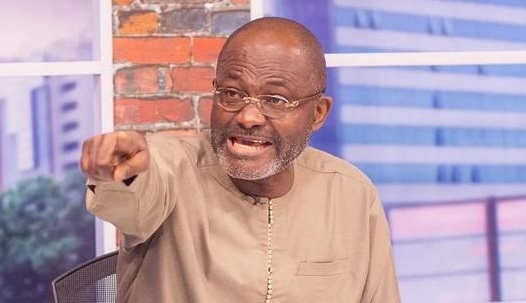
Kennedy Agyapong, former Member of Parliament for Assin Central and one of the five candidates vying to lead the party into the 2028 general election, has publicly launched sharp attacks on former Vice-President Dr. Mahamudu Bawumia, accusing him of making statements the latter did not actually make.
The verbal confrontation, which observers describe as the most personal yet in the 2026 primary campaign, was triggered by remarks made by Bernard Antwi Boasiako, widely known as Chairman Wontumi, the NPP Ashanti Regional Chairman.
In a speech to party delegates in Kumasi, Chairman Wontumi referenced historical patterns in NPP primaries, noting that the party has generally retained first-time presidential candidates, except Professor Albert Adu Boahen, who lost the 1996 nomination after contesting the 1992 election due to poor health—a fact documented in a book by the late professor’s close associate, Apenten Appiah-Menka.
Despite video evidence confirming that it was Chairman Wontumi who made the statement, Kennedy Agyapong publicly attributed it to Dr. Bawumia.
In a series of social media posts and recorded messages, Agyapong accused the former Vice-President of lying, stating, “I have never seen a liar like our former flagbearer before. This man is a liar for saying that Adu Boahen did not contest because he was sick.”
The comments drew immediate attention, raising questions about the accuracy and fairness of his attacks.
The Context Of a Heated Primary
The incident comes as the NPP navigates one of the most divisive internal contests in recent party history.
After the party’s 2024 electoral defeat, which ended the eight consecutive years in government, internal competition has intensified, revealing personal, ideological, and regional fault lines.
Scores of Ghanaians on social media note that the campaign has increasingly featured direct confrontations, with Kennedy Agyapong positioning himself as a disruptor and anti-establishment figure while Dr Mahamudu Bawumia is widely regarded as the establishment candidate, drawing on his record as Vice-President and 2024 flagbearer.
Political commentators also describe the Agyapong-Bawumia exchange as emblematic of the challenges facing the NPP: balancing internal democracy with party unity, managing public perception, and preparing to present a cohesive front against the governing National Democratic Congress (NDC) in 2028.
Public And Social Media Reactions
The backlash to Agyapong’s comments was swift on social media platforms, with many users questioning why he would launch attacks based on a misattributed statement.
Several analysts and party observers described the move as misguided and potentially damaging, particularly given the narrow margins of support between the two frontrunners in delegate polls.
Surveys ahead of the primary suggest a highly competitive race: while Dr. Bawumia remains a frontrunner in most polls, Kennedy Agyapong has steadily gained momentum among grassroots delegates in Central, Western, and Greater Accra regions, leveraging his reputation as an outspoken critic of party orthodoxy.
Historical Perspective
The episode also echoes historical tensions within the NPP during its formative years.
Past internal disputes—such as the 1996 primary that excluded Prof. Adu Boahen or the internal manoeuvring that elevated Nana Akufo-Addo in 2007—demonstrate how miscommunication and personal rivalries have previously influenced the party’s trajectory.
Political Commentators caution that unresolved tensions, if amplified, could weaken party cohesion ahead of the 2028 elections, potentially repeating past patterns of fragmented primaries followed by electoral underperformance.
Looking Ahead To January 31
However, as the party approaches January 31, delegates are being asked to weigh not just popularity and rhetoric, but also electability, national appeal, and capacity to unify the party after a bruising contest.
With five candidates officially on the ballot—but the spotlight firmly on Bawumia and Agyapong—the outcome remains unpredictable.
Observers say that the real test will come in the post-primary phase, when the winner must consolidate support across the party’s diverse regional, ideological, and generational factions.

COMMENTS