
The New Patriotic Party Minority Caucus in Parliament has raised alarm over what it describes as a deepening crisis in the cocoa sector, accusing the
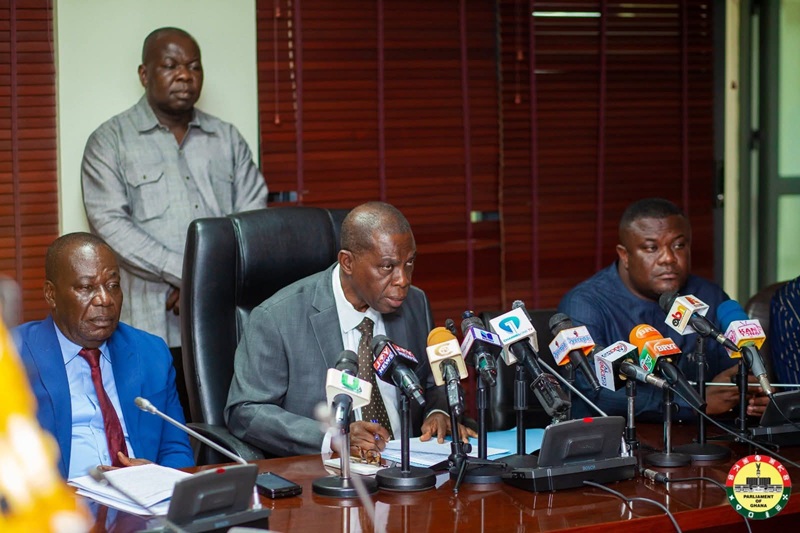
The New Patriotic Party Minority Caucus in Parliament has raised alarm over what it describes as a deepening crisis in the cocoa sector, accusing the government and the Ghana Cocoa Board (COCOBOD) of failing to pay cocoa farmers for produce delivered as far back as November 2025.
According to the Minority, the prolonged delays have pushed thousands of farmers into severe financial distress, threatening livelihoods and undermining confidence in one of the most critical export industries.
At the centre of the problem, the Minority argues, is the inability of COCOBOD to reimburse Licensed Buying Companies (LBCs) for cocoa beans already purchased and delivered.
These companies, which act as intermediaries between farmers and the state, are said to be owed more than GH¢10 billion in outstanding cocoa taken-over receipts (CTORs). As a result, LBCs—many of which rely on bank loans and off-taker financing to pre-finance purchases—have been forced to scale back operations, leaving farmers unpaid or compelled to sell their produce on credit, at discounts, or not at all.
The Minority insists that while farmers bear the brunt of the crisis, the LBCs themselves cannot be blamed. With reimbursements stalled, companies are unwilling to risk further capital, fearing an accumulation of unpaid receipts and mounting debt.
This, the caucus warns, has created a chain reaction that now threatens the entire cocoa value chain, from production and transport to export earnings and rural livelihoods.
In recent weeks, COCOBOD officials have attempted to explain the payment delays, citing challenges such as alleged defaults on syndicated loans contracted for previous cocoa seasons and a downturn in international cocoa prices.
The Minority has flatly rejected these explanations. It maintains that Ghana has never defaulted on its syndicated cocoa loans since the facility was introduced in 1993, including during the 2023/2024 cocoa season, and has challenged COCOBOD’s leadership to produce evidence to the contrary.
On global prices, the Minority concedes that cocoa prices have fallen but argues that price volatility is not new. It recalls that when the New Patriotic Party (NPP) assumed office in 2017, world market prices had declined sharply from about US$3,000 per tonne to roughly US$1,800 per tonne. Despite this, the then government, according to the caucus, found ways to cushion farmers and ensure timely payments—an approach it says the current administration has failed to replicate.
The caucus has also pointed to policy reversals within COCOBOD as a major contributor to the crisis. For decades, Ghana sold about 70 percent of its projected cocoa output through forward contracts, a strategy that helped stabilize revenues, protect farmers during price downturns, and guarantee prompt payments.
The Minority claims the current administration reduced forward sales to about 30 percent for the 2025/2026 season, opting instead to rely heavily on spot market sales in anticipation of sustained high prices—an expectation that was upended when prices began to fall.
Compounding these challenges, the Minority alleges, are internal leadership struggles within COCOBOD, particularly between the Chief Executive and the Managing Director of the Cocoa Marketing Company.
These disputes, it says, have disrupted the work of the Sales Executive Committee, delayed critical decisions, and weakened the institution’s ability to respond effectively to market shifts.
Beyond policy and institutional failures, the Minority painted a grim picture of the human cost of the payment delays. It recounted stories of farmers unable to afford basic healthcare, purchase medication, support sick family members, or pay school fees for their children.
In an unprecedented development, the caucus noted, some cocoa-growing communities were reportedly forced to postpone Christmas celebrations because farmers had not been paid for months.
The crisis has also reignited political tensions over campaign promises made ahead of the 2024 general elections. During the campaign, key figures in the then-opposition National Democratic Congress (NDC), including Dr. Eric Opoku and Dr. Cassiel Ato Forson, promised cocoa farmers producer prices ranging between GH¢6,000 and GH¢7,000 per 64kg bag.
Today, however, the prevailing farmgate price stands at GH¢3,625 per bag, far below those pledges. The Minority says reports that the government is considering a reduction in the producer price to facilitate payments would amount to a “betrayal of trust” if implemented.
The caucus further accused the government of failing to live up to commitments in the NDC’s 2024 manifesto, which promised the timely release of funds to prevent cocoa smuggling and prioritized investment in cocoa production over administrative expenditure. Instead, it alleges that since assuming office in January 2025, the administration has overseen widespread transfers and restructuring within COCOBOD, leading to duplicated roles and millions of cedis spent on administrative costs at a time when farmers remain unpaid.
According to the Minority, the consequences extend beyond farmers to indigenous cocoa buying companies, transporters, and local enterprises whose working capital is now locked up. The delays, it warns, risk undermining financing confidence and reversing gains made in promoting local participation in the cocoa industry.
In conclusion, the Minority called on the government and COCOBOD to immediately pay all outstanding amounts owed to cocoa farmers and reimburse LBCs for cocoa already delivered. It has demanded a public apology for what it describes as a gross dereliction of duty and urged decisive action to prevent a return to what it termed “days of despondency” in the cocoa sector. Paying farmers promptly, the caucus stressed, is not a favor but a fundamental obligation essential to safeguarding Ghana’s cocoa industry and the dignity of those who sustain it.

COMMENTS