
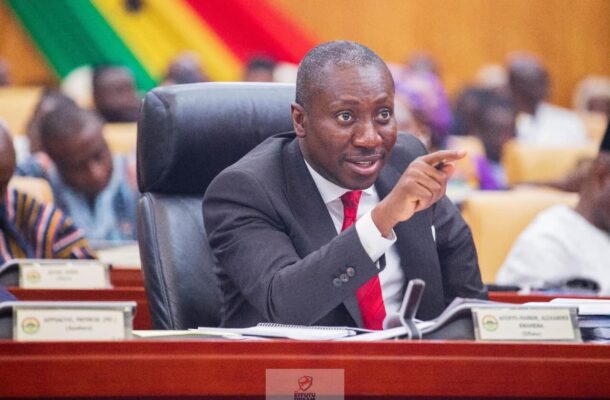
As Ghana marked its 69th Independence Anniversary, the Minority in Parliament issued a strongly worded statement reflecting on the country’s progress
As Ghana marked its 69th Independence Anniversary, the Minority in Parliament issued a strongly worded statement reflecting on the country’s progress while sharply criticising the government over what it described as policy failures affecting employment, agriculture, environmental protection and national security.
In the statement released on March 6, 2026, the Minority extended greetings to Ghanaians both at home and abroad while paying tribute to the pioneers of the country’s independence struggle. The caucus honoured the farmers, workers, market women, chiefs, youth and freedom fighters whose collective efforts helped secure Ghana’s independence and laid the foundation for the Republic.
According to the Minority, the independence must not merely be remembered as a historical milestone but should instead serve as a continuing national responsibility for every generation to strengthen the country’s democratic and economic institutions.
Reflecting on the country’s current circumstances, the caucus argued that the ideals of dignity, justice and prosperity envisioned by the nation’s founders must be continuously renewed through responsible governance and policies that protect the welfare of citizens.
A significant portion of the Minority’s statement focused on youth employment and what it described as the unjust termination of public-sector workers by the current administration after it assumed office in January 2025. The caucus described the dismissals as one of the most troubling governance decisions in recent times, arguing that the livelihoods of young workers should never be used for political or partisan purposes.
The Minority cited findings from a committee reportedly established by the Chief of Staff to review the dismissals.
According to the caucus, the committee examined 2,080 employment cases across 36 public institutions, including the Electricity Company of Ghana (ECG), the Ghana Highway Authority, the Ghana Ports and Harbours Authority (GPHA), the National Health Insurance Authority (NHIA), Metro Mass Transit, the Social Security and National Insurance Trust (SSNIT), and the University of Energy and Natural Resources (UENR).
The committee’s review reportedly cleared 1,539 of the appointments as properly conducted while recommending the revocation of 541 others due to procedural concerns. The Minority said these findings confirm its earlier claim that many of the dismissals lacked justification.
Consequently, the caucus demanded the immediate reinstatement of all workers whose appointments were validated, along with the payment of withheld salaries and compensation for the hardship suffered during the period of dismissal. The Minority also pledged to pursue all lawful parliamentary and legal measures to ensure redress for affected workers.
Beyond employment issues, the statement also highlighted what the caucus described as a worsening crisis facing Ghana’s farmers. According to the Minority, several agricultural sectors are struggling due to policy lapses, inadequate market systems and weak post-harvest infrastructure.
The caucus pointed specifically to rice farmers in northern Ghana who, following the 2024 harvest season, are reportedly struggling to sell large volumes of paddy rice due to the influx of cheap smuggled imports and the collapse of government procurement systems. As a result, large quantities of rice remain unsold in farming communities, leaving farmers burdened with debts accumulated during production.
Cashew farmers were also cited as facing serious economic difficulties following a reduction in the minimum producer price for raw cashew nuts. According to the Minority, the price was reduced from GH₵15.00 per kilogram under the previous administration to GH₵12.00 per kilogram in December 2025.
The caucus argued that the reduction has created widespread uncertainty in the sector and allowed unlicensed middlemen to exploit farmers by purchasing cashew at prices below the regulated minimum.
Additionally, the Minority pointed to widespread post-harvest losses affecting crops such as yam and pepper, particularly in parts of the Upper East Region where farmers reportedly lose large quantities of produce due to the lack of storage facilities, processing plants and reliable market access.
The caucus therefore called for emergency financial support for farmers struggling with unsold produce and urged government to invest heavily in rural infrastructure, including storage facilities, roads and agro-processing industries to reduce agricultural losses.
The statement also addressed the challenges facing cocoa farmers, with the Minority accusing the government of betraying one of the country’s most important agricultural sectors.
According to the caucus, cocoa farmers have historically played a central role in Ghana’s economic development, contributing significantly to national revenue even before independence. However, the Minority alleged that a recent decision by government to reduce the farmgate price of cocoa by more than GH₵1,000 per bag has worsened the financial burden on cocoa-growing communities.
The caucus warned that the decision has had severe consequences for farmers, many of whom are reportedly struggling to meet household expenses and pay school fees for their children.
The Minority also raised alarm over the continuing environmental destruction caused by illegal mining, widely known as galamsey. The caucus described the situation as a national emergency that threatens water resources, forest reserves and agricultural lands.
According to the Minority, illegal mining activities have polluted major rivers and destroyed large portions of Ghana’s natural environment, creating what it described as a public health and national security threat.
While welcoming reports that approximately 1,070 Chanfang excavating machines were recently intercepted at the Tema Port before they could be deployed for illegal mining operations, the caucus demanded full disclosure of the individuals or entities behind the importation.
The Minority further called for the public destruction of the machines, arguing that such a move would demonstrate the state’s seriousness in tackling illegal mining.
In addition to domestic concerns, the caucus expressed worry about recent attacks on Ghanaian fishing vessels within the country’s territorial waters. The Minority commended the Ghana Armed Forces for their swift response but insisted that government must strengthen maritime surveillance and security to prevent future attacks.
The statement also extended solidarity to Ghanaians living and working in the Gulf region, many of whom the caucus said face growing uncertainty due to conflicts in parts of the Middle East. The Minority called on the government to ensure that Ghana’s diplomatic missions remain actively engaged in providing consular assistance and protection for citizens abroad.
Concluding its message, the Minority urged Ghanaians to renew their commitment to the founding ideals of the nation, including responsible governance, unity, justice and collective progress.
The caucus reaffirmed its role in Parliament as a watchdog of government, pledging to continue holding the administration accountable while advocating for policies that promote prosperity, protect citizens’ rights and safeguard the country’s sovereignty.
The statement was signed by the Minority Leadership in Parliament on March 6, 2026, as part of activities marking Ghana’s 69th anniversary of independence.

COMMENTS