
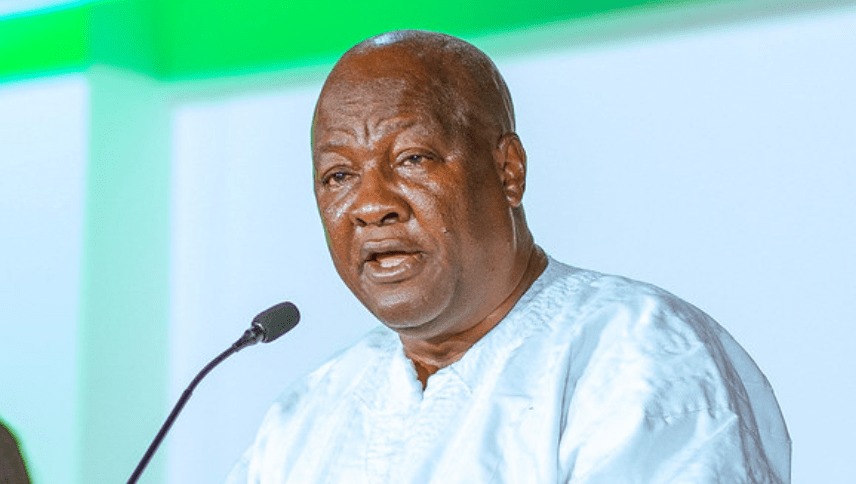
President John Dramani Mahama’s latest decision to explore the engagement of private legal practitioners to assist in preparing dockets for Operation
President John Dramani Mahama’s latest decision to explore the engagement of private legal practitioners to assist in preparing dockets for Operation Recover All Loot (ORAL) cases has deepened concerns about the effectiveness and long-term viability of the government’s flagship anti-corruption initiative, which is increasingly facing criticism from within his own party and the opposition.
The move, announced as part of efforts to fast-track corruption-related prosecutions, is aimed at easing the workload on the Office of the Attorney-General and ensuring that cases investigated under ORAL are properly documented and ready for court.
According to the President, the complexity and volume of cases require additional legal expertise to ensure successful prosecutions and recovery of looted state assets.
ORAL, launched in December 2024 shortly after Mahama assumed office, was designed as a central pillar of his administration’s anti-corruption agenda.
The initiative sought to investigate alleged financial irregularities, recover stolen public funds, and prosecute individuals implicated in the misuse of state resources, particularly from previous administrations.
The ORAL committee—comprising legal, security, and auditing experts—was tasked with receiving complaints, conducting preliminary assessments, and forwarding credible cases to the Attorney-General for prosecution.
However, from its inception, the initiative has been dogged by controversy. Early optimism among supporters of the ruling National Democratic Congress (NDC)—many of whom anticipated swift arrests and prosecutions of former officials linked to the opposition New Patriotic Party (NPP)—has gradually given way to frustration over the slow pace of legal action.
There were allegations of NDC officials cutting deals with ORAL suspects.
Government officials have consistently sought to manage expectations. Minister of State in Charge of Government Communications, Felix Kwakye Ofosu, clarified that ORAL was never intended to operate outside the bounds of the law.
He stressed that the government did not promise extrajudicial measures or automatic imprisonment, but rather a structured legal process involving investigations, evidence gathering, and court proceedings.
Similarly, Attorney-General and Minister for Justice, Dominic Akuritinga Ayine, has repeatedly defended the pace of the process, noting that only well-prepared cases can secure convictions.
He disclosed that his office has been reviewing multiple dockets—16 at a point—while returning some to investigative bodies for further evidence where gaps are identified.
He has also rejected allegations of plea bargaining or political interference, insisting that no ORAL case has been compromised. Yet, these assurances have done little to quell criticism. Former Auditor-General and a member of the ORAL team, Daniel Domelevo had cast doubt on the credibility of the ORAL database, revealing that much of the information collected consisted of unverified complaints, some of which he described as “garbage.”
According to him, the figures often cited publicly were merely raw submissions that required rigorous validation before they could support prosecution.
Within the NDC itself, unease has grown. Party General Secretary Fiifi Kwetey has warned that some party-affiliated lawyers may be undermining the process by engaging in behind-the-scenes manoeuvres that could weaken cases.
Grassroots supporters have also expressed disappointment, arguing that the absence of high-profile convictions undermines the credibility of the anti-corruption drive.
The opposition NPP has been even more scathing, describing ORAL as a politically motivated exercise designed to win electoral support rather than deliver justice. NPP figures argue that the initiative has failed to secure convictions against any of their members because of weak evidence, and have labelled both the ORAL committee and the Attorney-General’s office as ineffective.
Some critics within the party further claim that individuals who were part of the ORAL process have since been appointed into government positions, raising concerns about conflict of interest and neutrality.
Despite these criticisms, the government maintains that progress is being made. In his 2026 State of the Nation Address, President Mahama revealed that the Economic and Organised Crime Office (EOCO) had recovered over GH₵600 million and investigated 462 cases, with several prosecutions underway.
Supporters, including Foreign Affairs Minister Samuel Okudzeto Ablakwa, have described these figures as evidence that ORAL is yielding results, even if gradually.
However, Mahama’s latest proposal to outsource aspects of the legal process to private firms is widely seen as an acknowledgment of systemic bottlenecks within the current framework.
While the move is intended to accelerate prosecutions, it also raises questions about the capacity of state institutions to handle complex anti-corruption cases independently.
The President himself has admitted to the slow pace of justice, noting that while he shares the public’s impatience, due process must be followed to ensure fairness and avoid wrongful prosecution.
He reiterated that investigations must be thorough, dockets properly prepared, and cases tested in court to secure lasting outcomes.

COMMENTS