
We should treat demands for slavery reparations as hostile acts and sanction states that make them. If Barbados wants to come after Britain, we should
We should treat demands for slavery reparations as hostile acts and sanction states that make them. If Barbados wants to come after Britain, we should cancel our aid programmes there. If Ghana wants to lead a Third Worldist posse against us in the United Nations, we should deny all visa applications from that country.
To target Britain, which did more than any other nation on the planet to stamp out what had previously been a universal institution, is not just bad manners. It is an act of aggression to which we should respond in kind.
Instead, we berate ourselves, which is precisely why the grifters keep trying their luck. No one asks for reparations from, say, China (which did not abolish slavery until 1910), Ethiopia (1942) or Saudi Arabia (1962), because these countries do not encourage the shake-down artists.
On Wednesday, the UN passed a motion condemning the Atlantic slave trade and demanding a “good-faith dialogue on reparatory justice, including a full and formal apology, measures of restitution, compensation, rehabilitation, satisfaction, guarantees of non-repetition and changes to laws, programmes and services to address racism and systemic discrimination”.
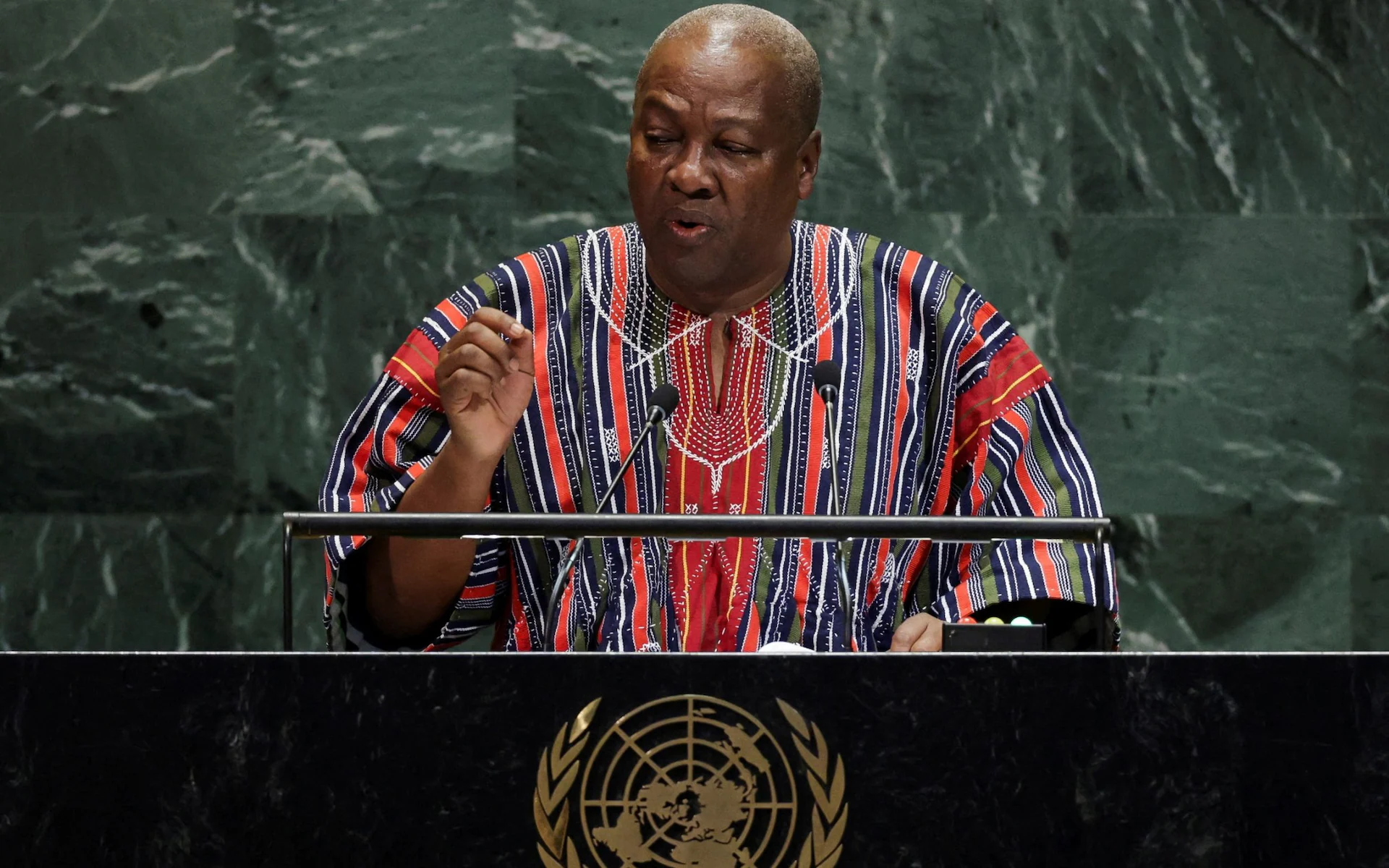
The resolution was moved by Ghana on behalf of the African Union, which has indicated that it intends to pursue Britain and various European countries through the courts. China, Ethiopia and Saudi Arabia were among the states that backed the motion. So, shamelessly, were North Korea, Eritrea and Mauritania, the three places where slavery is most prevalent today.
How did Britain respond? Did we remind our Ghanaian friends that, even when we were locked in battle with Bonaparte, we were diverting ships to hunt down slavers off their coasts? Did we talk about how we had protected their coastal populations from Ashanti slave raiders while promoting palm oil and other industries to encourage alternatives to human traffic? Did we recall that slavery ended in inland Ghana as a direct consequence of British rule, the establishment of the Gold Coast Crown Colony being followed by a proclamation that every child born from that date was free?
Of course not. Incredibly, we did not vote against the resolution, choosing instead to abstain. Our officials even suggested that Britain would have backed the wretched thing had it not been for a pernickety concern about retroactive law.
“We engaged constructively throughout the negotiations on this resolution in the hope of reaching a consensus-based text,” said James Kariuki, our ambassador. “However, it is important to acknowledge, with deep regret, that the prohibitions on slavery, the slave trade, and what are now considered crimes against humanity had not yet been established in international law at the time of the transatlantic slave trade.”
What will the opportunists make of such a milquetoast attitude? How, come to that, did we expect them to respond to the sight of Keir Starmer offering to pay Mauritius to take British territory? They pick on us because we keep asking for it.
Imagine the argument the other way around. Suppose that Britain wanted reparations from Ghana on grounds that we had expended a great deal of blood and treasure defeating its slavers. What might Ghana say in its defence?
I guess that, as well as the retroactivity point, it would argue that slavery was not the only evil in history; that Ghana had hardly been alone in practising it; that whatever had happened before 1875 was in any case not the responsibility of present-day Ghanaians; and that there had been subsequent population movements, so that some of the recipients of any compensation would in fact be Ghanaians in east London. It would be right on all four counts.
The singular focus on the Atlantic slave trade is misplaced. Slavery was utterly evil. That said, it is not the only past injustice. Can we confidently say that slavery was worse than, say, the Cambodian killing fields, the Holodomor, the Mongol conquests or the sack of Carthage?
Even if we do make that argument, why should transatlantic slavery be treated as radically different from all the other versions? Some 17 million Africans were sold as slaves in the Islamic world, for example, many of them being castrated to serve as eunuchs. Britain’s only involvement with that trade was to halt it.
Having blocked the Atlantic traffic, and having been roused by David Livingstone’s accounts of the misery in East Africa, Britain switched its efforts to the Indian Ocean, pressuring the Sultan of Zanzibar to close his slave markets and sending frigates to run down the dhows.
How are we thanked for that effort, which continued into the 20th century? On Wednesday, both the East African beneficiaries of British abolitionism and every Arab country that had been involved in the trade (except Oman, which had the decency to abstain) backed Ghana’s motion.
Even if none of these considerations applied, there would still be something peculiarly abhorrent about resuscitating the notion of ancestral guilt. It is not only indefensible on practical grounds, owners of Barbadian plantations being likelier to have descendants in Barbados than in Britain; it is offensive on moral grounds, because it revives the logic of vendetta.
Who, in any case, are the current victims of the transatlantic trade? Since it had been stamped out by 1860, there are obviously no immediately injured parties. Barbadians are more than three times as wealthy as Jamaicans, which suggests that the financial differences have more to do with the policies pursued by their respective post-independence governments.
Countries, like individuals, are responsible for most of their own success or failure, and grasping this point is the essence of maturity. Every human being alive today is descended, if we go back far enough, from both slaves and slave owners. All of us have ancestors who have suffered horrors. The only thing we get to choose is whether to let those horrors define us.
Few people have been on the receiving end of more violence (including several bouts of slavery) than Jews. While the suffering is remembered in their rituals, Jews generally prefer to aim for present success than to cling to old grudges. I sometimes wonder whether modern anti-Semitism is prompted by their conspicuous refusal to wallow in victimhood.
Let us review the story one more time. Yes, Britain was a major player in the 18th-century slave trade. Although there was no slavery in Britain itself – anyone enslaved overseas who reached our island was automatically emancipated – there were slave-worked plantations in our Caribbean colonies.
Towards the end of the 18th century, following campaigns by religious groups, notably Anglicans and Quakers, Britain began to see slavery as morally abhorrent, banning the trade in 1807 and slavery itself in 1833, raising the then colossal sum of £20m through taxation and government borrowing to buy and free every slave in its dominions.
It then made restitution in the most practical way possible. It adopted an almost unbelievably ambitious plan to wipe out slavery worldwide. It went on to spend vastly more on global suppression than it had earned from slavery in the previous century, amounting to 1.8 per cent of its national income every year in the six decades after 1807. It pressured other nations to impose their own bans, meeting stiff resistance from African kings, who fought to keep the institution. In the end, Britain prevailed.
Yet, of all the nations in the world, it is Britain that is now targeted by the grievance-mongers. Which prompts a final observation. Does anyone imagine that, if we caved in and paid these countries, they would treat it as a final settlement? We all know the answer. Victimhood is a state of mind, a condition that leaves sufferers drained, miserable – and hungry for more. Until we are prepared to hit back, this will not end.
Source: The Telegraph

COMMENTS