
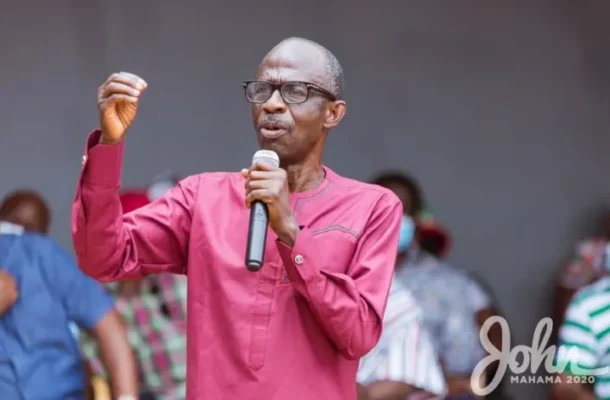
The governing National Democratic Congress (NDC) is facing renewed questions over the level of enthusiasm within its grassroots following reports that
The governing National Democratic Congress (NDC) is facing renewed questions over the level of enthusiasm within its grassroots following reports that its ongoing branch executive elections across the country have attracted limited competition and low participation from party members.
The development has sparked fresh political debate about the state of the party’s internal organisation barely two years after returning to power.
The NDC’s branch elections form part of the party’s constitutional process to renew its grassroots structures ahead of subsequent constituency, regional and national executive elections.
Traditionally, these elections are regarded as the foundation of the party’s organisational machinery, with branch executives playing a crucial role in mobilising supporters and coordinating political activities at the community level.
However, unlike previous internal elections that generated keen interest and intense contests, reports emerging from several constituencies suggest that many positions are being filled unopposed, with incumbent executives expected to retain their positions due to a lack of challengers.
According to accounts circulating within political circles, the low level of competition has been attributed to growing dissatisfaction among some grassroots members.
Interestingly, when prospective aspirants were asked to purchase nomination forms costing GH¢20, some questioned why they should pay to contest when, in their view, they had not been given meaningful responsibilities or opportunities since the party assumed office.
Political observers say the reported lack of enthusiasm contrasts sharply with the expectations that usually accompany a governing party’s internal elections, where competition for executive positions is often driven by the prospect of influencing appointments and decision-making within government.
The conversation surrounding the NDC’s internal mood has also been fuelled by comments attributed to Global InfoAnalytics pollster Mussa Dankwa, who reportedly indicated that 78 percent of NDC delegates are dissatisfied with the direction of the party.
Although the context of the findings has generated political discussion, the figures have been cited by critics as evidence of growing frustration among sections of the party’s base.
The reported dissatisfaction comes against the backdrop of rising expectations among party faithful following the NDC’s victory in the 2024 general elections.
Many grassroots supporters who spent eight years campaigning for the party anticipated greater opportunities after the return to power, but some analysts believe unmet expectations over appointments and internal recognition may be contributing to the reported discontent.
The issue has quickly become a major point of political contest between the NDC and the opposition New Patriotic Party (NPP).
The NPP has pointed to its own recently concluded internal elections as evidence of stronger grassroots mobilisation, highlighting the competitive nature of its polling station, electoral area and constituency executive elections.
According to the NPP, it successfully organised elections in 40,976 polling stations and 6,272 electoral areas across all 276 constituencies, with 245 constituencies completing their executive elections successfully, representing what the party describes as an 88.7 percent success rate.
The opposition has argued that while its internal elections demonstrated vibrant participation and organisational strength, the NDC’s branch elections have exposed what it describes as growing apathy within the governing party.
The political exchanges have intensified following the arrest of Dennis Miracles Aboagye, a member of the NPP’s communications team, by the Economic and Organised Crime Office (EOCO).
Some opposition figures have alleged that the timing of the arrest shifted public attention away from discussions surrounding both the NPP’s internal elections and criticism of the NDC’s branch polls.

COMMENTS