
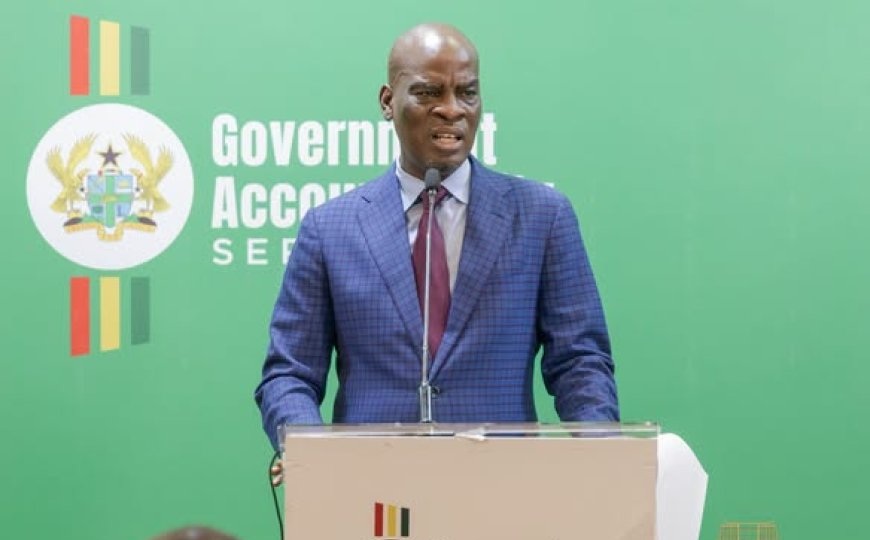
The Minister for Education, Haruna Iddrisu, has announced that the government is set to roll out a revised basic education curriculum that will introd
The Minister for Education, Haruna Iddrisu, has announced that the government is set to roll out a revised basic education curriculum that will introduce coding, artificial intelligence (AI), Technical and Vocational Education and Training (TVET), and ethics as part of efforts to prepare Ghanaian students for the demands of the future.
According to the minister, the curriculum review is designed to equip pupils from kindergarten through junior high school with practical, technology-driven skills that will enable them to thrive in an increasingly digital and competitive global economy.
The planned reforms form part of the government’s broader agenda to strengthen science, technology, engineering and mathematics (STEM) education while ensuring that learners acquire critical thinking, innovation and technical skills from an early age.
Speaking to the press on Monday, July 20, the minister disclosed that the revised curriculum had reached a significant milestone and would be formally presented to the Ministry of Education on Wednesday before proceeding through the necessary government approval processes.
“I am happy to note that on Wednesday, a revised curriculum for all pupils from kindergarten to junior high school will be presented formally to the Ministry of Education for onwards submission to the President and for the policy to go to the Cabinet and Parliament.
“The revision of our curriculum is to ensure a smart curriculum for greater integration of technology, science, engineering, and mathematics. We have promised to introduce coding, electronics, artificial intelligence, and TVET into the basic education curriculum.”
Meanwhile, the education minister also highlighted government interventions aimed at improving access to education, particularly for girls.
He disclosed that the government has distributed 12.2 million sanitary pads across the country to support approximately 2.5 million female students in basic and secondary schools.

COMMENTS