
Minority Leader in Parliament, Alexander Afenyo-Markin, has launched a broadside against the Mahama administration over the state of the economy, repo
Minority Leader in Parliament, Alexander Afenyo-Markin, has launched a broadside against the Mahama administration over the state of the economy, reported losses under the Domestic Gold Purchase Programme, constitutional reforms and what he describes as the selective use of state investigative and prosecutorial powers against opposition figures.
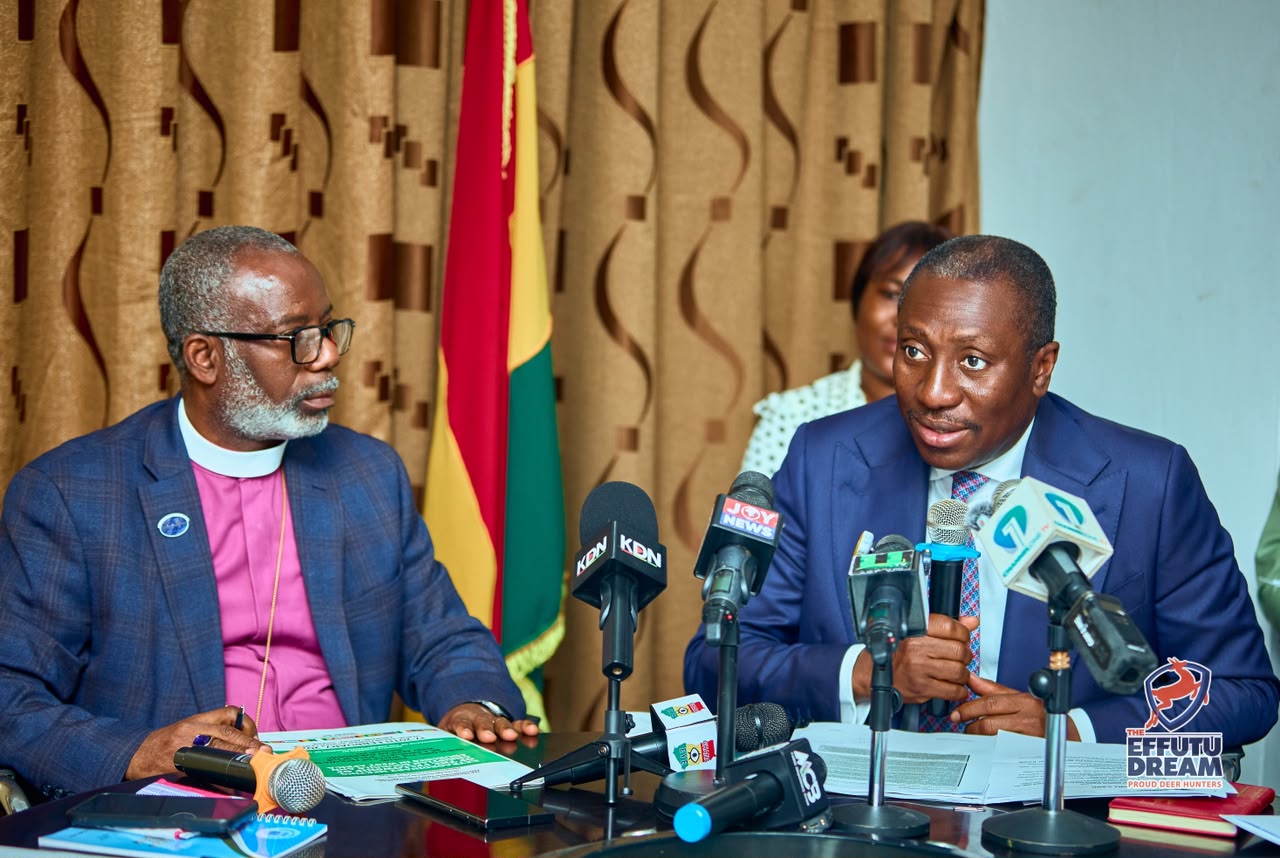
Afenyo-Markin made the claims when he led a delegation of the Minority Caucus to engage the leadership of the Christian Council of Ghana (CCG) on Tuesday, October 6, 2026.
The meeting was held at the invitation of the Christian Council as part of its engagement with key stakeholders over major national issues, particularly the controversy surrounding the financial performance and governance of GoldBod.
The Council sought to understand the Minority’s position on the matter and discuss broader questions of transparency, accountability and the protection of what both sides regard as an important national economic asset.
The Minority Leader was accompanied by Second Deputy Minority Whip and MP for Weija-Gbawe, Jerry Ahmed Shaib; MP for Okere, Daniel Nana Addo-Kenneth; MP for Suhum, Frank Asiedu Bekoe; MP for Anyaa-Sowutuom, Emmanuel Tobbin; MP for Akim Swedru, Kennedy Osei Nyarko; MP for Offinso North, Fred Kyei Asamoah; MP for Juaben, Francis Kwabena Owusu-Akyaw; MP for Akim Oda, Alexander Akwasi Acquah; and former MP for Yendi, Farouk Aliu Mahama.
The Minority delegation was received by a team from the Christian Council chaired by Bishop Dr Lawson Adjei, a former Vice-Chairman and Executive Member of the Council. The delegation included Acting General Secretary Dr Joyce Lako Steiner, Director of Interfaith and Ecumenical Relations Rev. Godwin Amuzu, Communications Advisor to the General Secretary Samuel Koku Anyidoho, Rev. Felix Kadjahlo, Rev. Christian Tsikata and Rev. Mark Quaye.
During the engagement, Afenyo-Markin expressed appreciation to the Christian Council for what he described as its longstanding contribution to Ghana’s democracy and its willingness to maintain an independent voice on matters of national importance.
He said Ghana’s democracy required credible institutions capable of challenging both government and opposition when necessary, arguing that institutions of conscience had an important role to play in enriching public debate and promoting accountability.
A major concern raised by the Minority was the economic hardship confronting households across the country, particularly the difficulties facing young people seeking employment.
Afenyo-Markin argued that economic recovery should not be measured merely by macroeconomic indicators but by whether ordinary Ghanaians were experiencing improved living conditions, greater access to jobs and meaningful economic opportunities.
He warned that persistent unemployment and economic exclusion among the youth could threaten social cohesion and national stability.
The Minority Leader also renewed his concerns over what he described as approximately US$1.7 billion in reported losses associated with the Domestic Gold Purchase Programme, arguing that the issue has implications for the Bank of Ghana’s balance sheet and could eventually create a recapitalisation burden for taxpayers.
He called for an independent and transparent reconciliation of the figures and the transactions underlying the reported losses, insisting that the public deserves clarity on the financial position of the programme.
The controversial GoldBod debate has become one of the major economic issues between the government and the Minority, with the opposition repeatedly demanding greater transparency over the management and financial performance of the gold-purchasing arrangements.
Afenyo-Markin also used the engagement to outline the NPP’s position on constitutional reform.
He said the NPP supported necessary reforms but expressed serious reservations about the government’s current approach, particularly the scale of proposed amendments and what he described as significant departures from recommendations made by the government’s own Constitution Review Committee.
According to him, constitutional reform of such magnitude should not be driven solely by the governing party but must command broad national ownership and consensus.
The Minority Leader further raised the pending Supreme Court proceedings concerning presidential term limits.
While stressing that the Minority respected the independence of the Judiciary and would not prejudge the cases, he said constitutional safeguards against excessive or indefinite concentration of executive power must be protected.
Another contentious issue discussed was the use of investigative and prosecutorial powers by state institutions.
Afenyo-Markin accused the government of what he described as the selective deployment of investigative and prosecutorial authority against opposition figures.
He specifically cited the attempted arrest of the MP for Manhyia South, Nana Agyei Baffour Awuah, within the premises of the High Court in Accra.
The Minority Leader maintained that the circumstances surrounding the attempted arrest did not comply with what he considers applicable constitutional and parliamentary procedures.
He also raised concerns over a subsequent warrant obtained by the Economic and Organised Crime Office (EOCO) and the MP’s prolonged detention after he voluntarily presented himself to the agency.
Afenyo-Markin stressed, however, that the Minority was not seeking immunity for its members from legitimate investigations.
He said the Caucus would not defend impunity but insisted that investigations and prosecutions must be conducted strictly according to law.
He warned that the coercive powers of the State must not be transformed into instruments for intimidating or silencing legitimate political opposition.
The Minority Leader assured the Christian Council that the NPP would remain peaceful and law-abiding but would not abandon its constitutional responsibility to scrutinise the government.
He argued that retreating from that responsibility would effectively silence the millions of Ghanaians whose votes entrusted the Minority with the mandate to hold the government accountable.

COMMENTS