
The Ministry of Finance has said the 2027 Budget is designed to address what it describes as an “unfinished recovery” by translating Ghana’s macroecon
The Ministry of Finance has said the 2027 Budget is designed to address what it describes as an “unfinished recovery” by translating Ghana’s macroeconomic stability into job creation and improved household incomes.
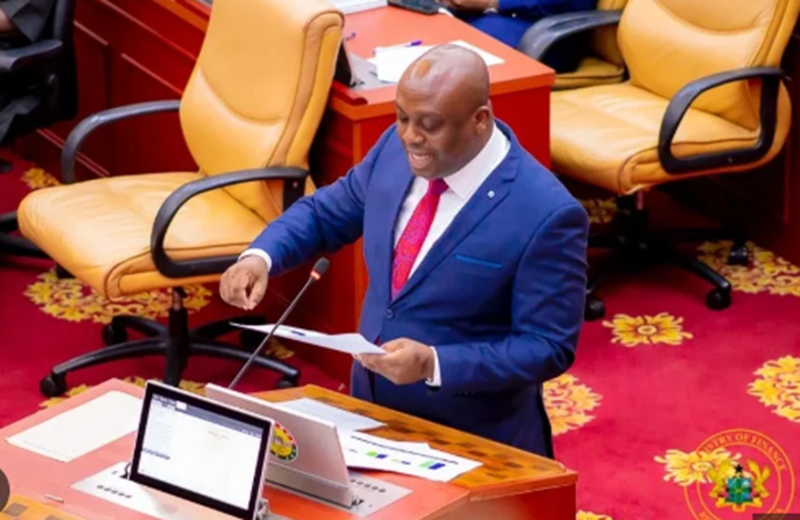
Deputy Finance Minister Thomas Nyarko Ampem gave the assurance during a post-budget workshop for Members of Parliament, arguing that economic stability must deliver tangible benefits to ordinary Ghanaians.
He said the government’s priority for 2027 was to build an economy that produces more locally, processes more of its output and creates sustainable employment opportunities.
“As Dr. Ato Forson has consistently pointed out in recent times, macroeconomic stability is not our destination, it is the foundation. A stable economy that does not create jobs or improve household incomes is an unfinished recovery. So right, Honorable Speaker, the 2027 budget is designed to address this unfinished business,” he said.
Mr. Ampem, who is also the Member of Parliament for Asuogyaman, said the government wanted to move beyond stabilisation towards an economy driven by domestic production, value addition and exports.
“Our ambition is to build a new economy that produces more of what Ghana consumes, processes more of what Ghana produces, exports more value and creates sustainable jobs,” he stated.
He said the New Economy Agenda would prioritise domestic production as a means of creating lasting employment and prosperity, rather than relying heavily on borrowing to stimulate economic growth.
The Deputy Finance Minister also argued that the country needed to invest responsibly and strengthen its productive capacity to achieve sustainable economic transformation.
The 2027 Budget, presented by Finance Minister Dr Cassiel Ato Forson on November 12, is anchored on the government’s New Economy, New Ghana: Jobs and Prosperity agenda.
The four-year programme, covering 2027 to 2030, is expected to mobilise US$10 billion to support productive investment, expand domestic production and create jobs.
Its priority areas include commercial agriculture, critical minerals value addition, textiles and garments, pharmaceuticals and biomanufacturing, tourism and the creative arts, technology, energy infrastructure, and macroeconomic stability and affordable finance.
Government has allocated GH¢30 billion for the programme in 2027.

COMMENTS