
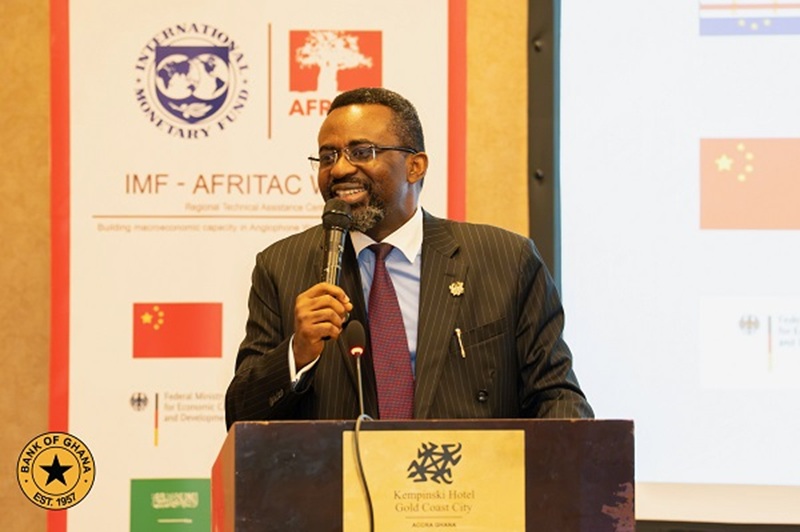
The Bank of Ghana (BoG) has called on importers and exporters to use letters of credit and other formal banking channels to make international payment
The Bank of Ghana (BoG) has called on importers and exporters to use letters of credit and other formal banking channels to make international payments and return export earnings to the country.
Governor Dr Johnson Pandit Asiama made the recommendation at a press briefing in Accra following the 133rd Monetary Policy Committee (MPC) meeting. He was responding to concerns that exporters of non-traditional goods to China, including handicrafts, cashew, shea butter and textiles, continue to face difficulties repatriating their earnings.
“Our advice to our importers is to, as much as possible, use letters of credit,” Dr Asiama said. “If you make use of the banks, you use the appropriate channels, it becomes easy to settle. It becomes easy for the exporters to repatriate.”
A letter of credit is a bank-issued guarantee that a seller will receive payment once specified conditions have been met. Using regulated financial institutions reduces the risk of default and creates a formal record of the transaction.
Dr Asiama also confirmed that a pilot scheme allowing businesses to pay Chinese suppliers directly from Ghanaian cedi accounts remains in operation. Stanbic Bank is leading the initiative, while GCB Bank is developing a similar service.
“We are looking at the piloting that Stanbic is doing. If it works well, we will take it to the next level,” he said.
Stanbic Bank Ghana launched the service in August after receiving approval from the BoG. It became the first local bank with direct access to China’s Cross-Border Interbank Payment System (CIPS).
Under the arrangement, eligible customers can instruct payments in yuan from their existing Ghana cedi accounts, subject to the bank’s requirements and applicable regulations. The Chinese supplier receives the funds in yuan.
At the previous MPC briefing in September, Dr Asiama said the scheme was intended to remove the need to settle Ghana-China trade through a third currency. Payments routed through the US dollar require traders to convert their money twice, increasing their costs.
The Governor said the approach built on earlier work. During the tenure of former Governor Dr Henry Kofi Wampah, the BoG arranged renminbi facilities for Ghanaian importers. He also pointed to the Pan-African Payment and Settlement System (PAPSS) as another option for direct settlement.
The BoG is pursuing similar cross-border payment arrangements beyond China.
“We are working with Nigeria, we are working with Rwanda, about an additional nine or ten countries in terms of facilitating cross-border trade,” Dr Asiama said. “That way, it becomes easier for our businessmen to do business with peers abroad.”
He did not confirm whether the BoG intended to agree a currency swap with the People’s Bank of China, nor whether a direct cedi-yuan exchange rate would be introduced instead of deriving prices through the US dollar.
The issue is linked to wider concerns over how much foreign exchange earned by Ghanaian exporters returns to the country. Dr Asiama acknowledged a disparity between Ghana’s trade surplus and its reserve accumulation, saying the BoG was reviewing how effectively it tracks foreign currency inflows.
Ghana recorded a trade surplus of US$13.0 billion between January and October 2026. However, gross international reserves stood at US$12.1 billion on November 17, down from US$13.8 billion at the end of 2025.
The Governor said the central bank would continue supporting measures to simplify cross-border settlement for Ghanaian businesses.

COMMENTS