
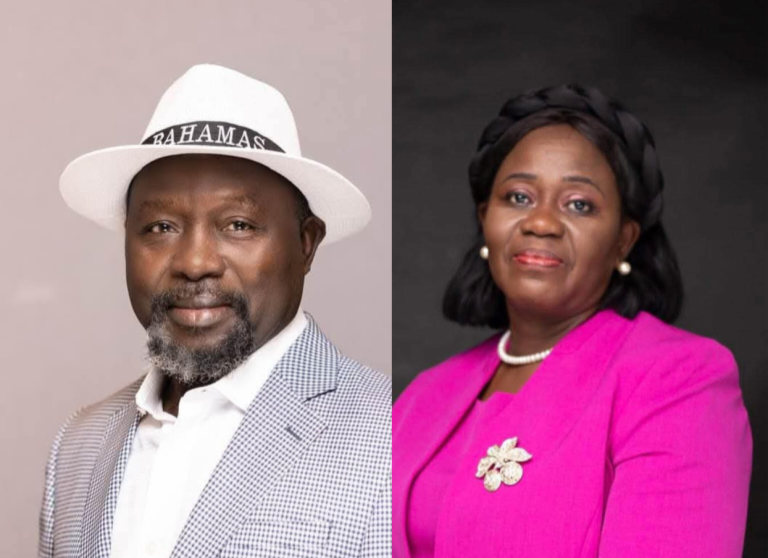
A deepening legal standoff has erupted between Ghana’s Attorney-General and two respected international legal bodies following the suspension of Chief
A deepening legal standoff has erupted between Ghana’s Attorney-General and two respected international legal bodies following the suspension of Chief Justice Gertrude Araba Esaaba Sackey Torkornoo.
On Friday, August 15, 2025, Ghana’s Attorney-General and Minister for Justice, Dr. Dominic Ayine, issued a strongly worded statement defending the government’s decision to suspend the Chief Justice.
His response was directed at the Bar Council of England and Wales (BCEW) and the Commonwealth Lawyers Association (CLA), who, a day earlier, jointly criticised the suspension as a breach of judicial independence and constitutional order.
How the Controversy Began
Justice Torkornoo, who became Ghana’s 15th Chief Justice on June 12, 2023, under former President Nana Addo Dankwa Akufo-Addo, was suspended on April 22, 2025, by the administration of President John Dramani Mahama.
The move followed three separate petitions from citizens alleging “stated misbehaviour and incompetence” against her.
Relying on Article 146 of Ghana’s 1992 Constitution, President Mahama referred the petitions to the Council of State.
After reviewing her responses, the Council found a prima facie case against her and recommended the constitution of an inestigative committee.
The President, acting on this advice, suspended the Chief Justice pending the outcome of the inquiry.
The committee, which began sittings on May 15, 2025, comprises two Supreme Court Justices and three non-lawyers, in line with constitutional requirements. Its proceedings are being held in camera.
International Pushback
The BCEW and the CLA, however, argue that the suspension undermines both the Commonwealth Charter and the Latimer House Principles, which demand that judicial officers be subjected only to fair, transparent, and timely disciplinary procedures.
In their August 14, 2025, joint statement, the organisations accused the Ghanaian government of:
Allowing petitioners to rely on witnesses rather than directly answering questions before the disciplinary committee.
Permitting alleged acts of disrespect toward the Chief Justice’s legal team.
Failing to conclude the inquiry within a reasonable timeframe, thereby prolonging uncertainty and undermining natural justice.
They further warned that Ghana risks eroding public trust in its judiciary if the suspension continues without a final determination.
The bodies demanded that Justice CJ Torkornoo be reinstated immediately, her legal team given transparent access to proceedings, and the inquiry bound by clear timelines.
The Attorney-General’s Defence
In his rebuttal, Dr. Ayine described the international organisations’ statement as “misinformed” and accused them of failing to acquaint themselves with Ghana’s constitutional provisions.
He insisted that:
The suspension followed due constitutional process under Article 146, which protects judicial independence.
The President acted only on the advice of the Council of State and plays no role in the inquiry beyond receiving the committee’s final report.
Justice Torkornoo has full legal representation and the proceedings are being conducted fairly.
Courts in Ghana have already dismissed applications by the Chief Justice challenging the process, and similar arguments are pending before the ECOWAS Court.
“The suggestion of undue delay is grossly misplaced,” the Attorney-General’s statement read, stressing that the inquiry only began in mid-May. He added that neither the Constitution nor international principles bar the suspension of a Chief Justice once a prima facie case has been established.
A Legal and Political Crossfire
The back-and-forth highlights an increasingly tense legal and political battle.
While the government insists it is merely following constitutional procedure, critics say the suspension of a sitting Chief Justice, especially under politically charged circumstances, risks undermining the perception of judicial independence.
The case has not only divided Ghana’s legal community but also attracted global scrutiny.
Justice Torkornoo herself has mounted legal challenges both in Ghanaian courts and before the ECOWAS Court of Justice, alleging constitutional breaches and procedural unfairness.
With the inquiry still ongoing, the debate over whether the government has acted within the bounds of the Constitution or overstepped into judicial interference continues to dominate discourse in legal and political circles.
For now, Justice Torkornoo remains suspended, and the fate of the judiciary hangs on the eventual outcome of the inquiry committee—while the world watches closely.

COMMENTS