
With just about three months to the 2026 FIFA World Cup kick-off, a major debate has emerged in the football circles over whether veteran forward Andr
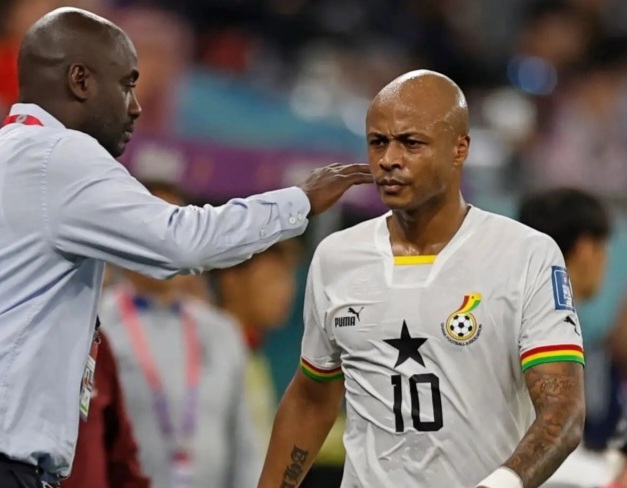
With just about three months to the 2026 FIFA World Cup kick-off, a major debate has emerged in the football circles over whether veteran forward André Dede Ayew should be recalled to the Ghana national football team for the tournament.
The Black Stars are set to begin their World Cup campaign against the Panama national football team at BMO Field in Toronto. This match, many analysts believe, could prove decisive in the chances of progressing from the group stage.
Yet, instead of focusing solely on preparations for the tournament, public discussion has largely centred on Ayew’s future and whether the experienced forward deserves a place in the squad.
Ayew, a former captain of the Black Stars, has not been called up to the national team since 2024.
Head coach Otto Addo has consistently indicated that his current preference is to provide opportunities to other players as he reshapes the team ahead of the global competition.
After spending several months without a club, the 36-year-old forward recently revived his playing career with Dutch side NAC Breda in the Eredivisie. Since joining the club, he has made four starts in nine appearances and scored a headed goal in a recent match, a development that has reignited discussions about his readiness for international football.
Ayew’s absence from the Black Stars setup followed a gradual shift in the team’s structure after the 2022 World Cup. During that tournament, the former captain played a central role in the campaign, scoring in the team’s 3–2 defeat to Portugal national football team and missing a crucial penalty in the 2–0 loss to Uruguay national football team that ultimately ended Ghana’s hopes of reaching the knockout stage.
However, the last time Ayew featured for Ghana was during an international friendly against the Uganda national football team in March 2024. Following that match, Otto Addo suggested that the veteran’s time with the national team might have come to an end.
Speaking publicly about the decision, Addo described Ayew as a “living legend” of Ghanaian football but insisted that his responsibility was to make choices that best served the team’s future.
“I had a long talk with Andre,” Addo explained. “He is a living legend of Ghana. It was a difficult decision but this is the decision we took and I gave him the explanation. I have to take the best decision for the team.”
Despite the coach’s position, the player’s long service to Ghana continues to influence public opinion. Ayew remains the most capped player in the history of the Black Stars, having made 120 appearances and scored 24 goals since his debut in 2007. Over nearly two decades, he has been a key figure in Ghana’s international campaigns and has served as captain for several years.
Supporters of his potential return argue that experience is invaluable in major tournaments such as the World Cup. Veteran sports journalist Benedict Owusu believes Ayew could still contribute to the squad but suggests that his role would need to be clearly defined before any selection is made.
Others are less convinced. Ignatius Osei-Fosu, currently serving as assistant coach of the Sudan national football team, has argued that the time may have come for the veteran to step aside. Speaking on Luv FM, Osei-Fosu said that while Ayew remains highly respected, he believes the current team structure does not necessarily require his inclusion.
Beyond sentiment, tactical considerations also play a role in the debate. Otto Addo frequently deploys formations such as 4-2-3-1 and 3-5-2, systems that demand high pressing intensity, quick transitions and mobility in attacking positions. Critics argue that these tactical requirements often favour younger players with greater speed and stamina.
In Ayew’s absence, several attacking options have emerged within the national team. Mohammed Kudus has become a central creative force for Ghana, operating primarily as a playmaker but also capable of playing on the right wing. Antoine Semenyo has also enjoyed a strong season in the English Premier League, scoring 15 goals and establishing himself as one of Ghana’s most in-form forwards.
Team captain Jordan Ayew, André’s younger brother, continues to be an influential attacking presence after contributing to 14 goals during the World Cup qualification campaign.
Other attacking options available to the technical team include Ernest Nuamah, Abdul Fatawu Issahaku, Joseph Paintsil, Christopher Bonsu-Baah and Brandon Thomas-Asante, among others.
Statistics from the qualification campaign also suggest that Ghana’s attack has remained productive even without Ayew, with the team scoring 23 goals in 10 matches—an average of more than two goals per game.
Meanwhile, the Black Stars are preparing for a series of international friendlies as part of their World Cup build-up. Ghana will face the Austria national football team on March 27 at Ernst Happel Stadium before taking on the Germany national football team in Stuttgart three days later.
The team will then travel to North America for another friendly against the Mexico national football team on May 22, before concluding their preparations with a final warm-up match against the Wales national football team at Cardiff City Stadium on June 2.
Ultimately, the decision on whether André Ayew will be part of Ghana’s World Cup squad rests solely with Otto Addo and his technical team. As the tournament approaches, the debate highlights the challenge of balancing experience, loyalty and current form as Ghana prepares for one of football’s biggest stages.

COMMENTS