
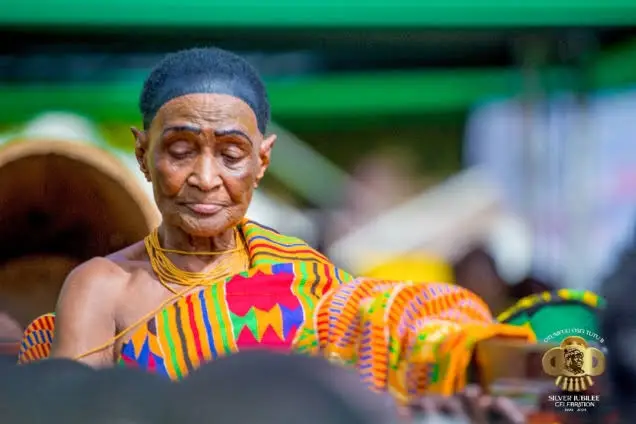
Kumasi, the vibrant capital of the Ashanti Kingdom, came to a standstill on Thursday, September 18, 2025, as the mortal remains of the late Asantehema
Kumasi, the vibrant capital of the Ashanti Kingdom, came to a standstill on Thursday, September 18, 2025, as the mortal remains of the late Asantehemaa, Nana Ama Konadu Yiadom III, were interred at the royal cemetery in Kumasi.
The solemn occasion transformed the bustling city into a ghost town, a fitting reflection of the reverence commanded by the Queen Mother of Asanteman.
A City Under Sacred Silence
The unusual calm that descended on Kumasi was not accidental. In line with age-old Ashanti tradition, residents were ordered to remain indoors during the final funeral rites.
The Manhyia Palace, backed by the Ashanti Regional Coordinating Council (ARCC), directed that all non-essential activities cease.
Essential workers were instructed to appear in uniforms, use official vehicles, and comply strictly with security arrangements.
Streets that typically pulse with endless traffic—from the Central Business District to major intersections like the Airport Roundabout, Aboabo, and Anloga Junction—were deserted.
Shops shuttered, vehicles vanished, and the hum of daily commerce gave way to an overwhelming stillness. For one day, Kumasi became a city of mourning, honoring its departed matriarch.
The Passing of a Pillar
Nana Ama Konadu Yiadom III, who passed away on August 7, 2025, at age 93, spent eight years on the stool.
Installed in 2018, she served faithfully alongside the Asantehene, Otumfuo Osei Tutu II, his blood brother offering counsel, maternal wisdom, and unyielding support for the preservation of Ashanti customs.
She embodied the role of mother of Asanteman, nurturing the cultural identity of her people while also championing community development.
Her reign was characterized by quiet strength and a deep respect for tradition, making her not only a royal figure but also a symbol of unity for the Ashanti nation.
A Week Of Royal Mourning
The funeral rites began on Sunday, September 14, with thousands thronging Kumasi to pay their respects.
On September 15, she was laid in state at the Manhyia Palace, where dignitaries, chiefs, royals, and ordinary citizens filed past in a moving display of national grief.
The rituals were deeply traditional, combining drumming, dancing, and mourning songs with the grandeur befitting Ashanti royalty.
By the time of her final burial on September 18, Kumasi had become the epicenter of national attention, drawing leaders from across the political and cultural spectrum.
National Leaders Converge
Among the dignitaries present were President John Dramani Mahama, former Presidents John Agyekum Kufuor and Nana Addo Dankwa Akufo-Addo, Vice President Professor Naana Jane Opoku-Agyemang, and former Vice President Dr. Mahamudu Bawumia.
Also in attendance were prominent political figures, including Alan Kyerematen and Kennedy Ohene Agyapong, whose public display of laughter and camaraderie during the solemn occasion carried symbolic weight in Ghana’s polarized political climate.
Their exchange reminded Ghanaians that while politics divides, tradition has the power to unite.
Former First Lady Nana Konadu Agyeman-Rawlings, together with her children Kimathi and Amina Rawlings, also joined mourners at the doteyie (funeral).
Their presence further underscored the Asantehemaa’s status as a national figure whose influence extended well beyond the Ashanti Kingdom.
Tradition Meets State Protocol
Security personnel were deployed across the city to enforce compliance, while state agencies ensured that essential services continued without disruption.
The fusion of strict traditional practice with modern governance underscored the enduring relevance of Ashanti customs in contemporary Ghana.

COMMENTS