
After months of mounting criticism and waning public confidence in the government’s flagship anti-corruption initiative, Operation Recover All Loots (
After months of mounting criticism and waning public confidence in the government’s flagship anti-corruption initiative, Operation Recover All Loots (ORAL), President John Dramani Mahama’s administration is set to give a major update on the programme’s progress.
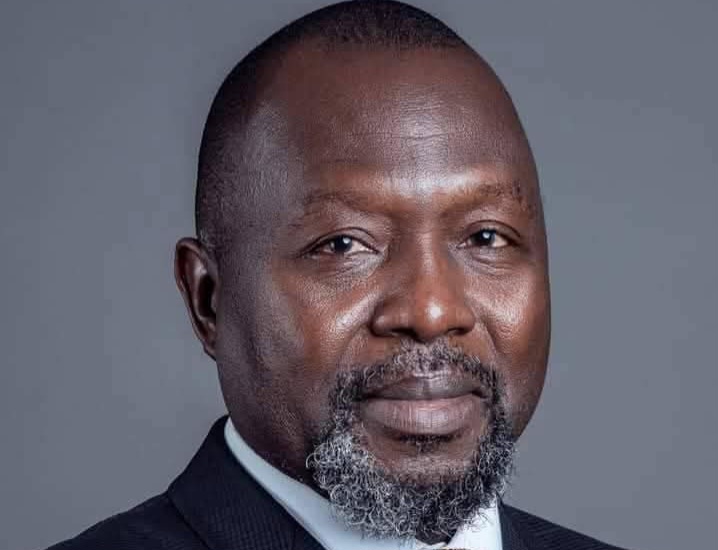
According to the Minister for Government Communications, Felix Kwakye Ofosu, the Attorney-General and Minister for Justice, Dr. Dominic Ayine, will on Wednesday deliver a comprehensive ORAL update — described by insiders as “Rumble in the Jungle” — to clarify the government’s next steps following a barrage of public backlash.
A Once-Promising Initiative Now Under Fire
Launched in December 2024, Operation Recover All Loots was introduced as one of President Mahama’s most ambitious governance reforms — a sweeping anti-graft campaign to trace, recover, and prosecute corruption-linked cases, particularly those connected to the previous administration.
The programme initially received overwhelming public support, with over 25,000 corruption complaints filed by citizens, whistleblowers, and civil society organizations.
Of these, 2,500 were formally processed, and 280 cases were found to have prosecutorial merit.
However, nearly a year on, the operation has struggled to deliver visible outcomes.
Despite 80 individuals being interrogated and dozens of cases reportedly under investigation, no single conviction has been recorded, drawing accusations of inefficiency and political posturing.
The Government’s Defence: Due Process Over Populism
President Mahama has repeatedly defended ORAL, arguing that the absence of convictions does not signify failure but a demonstration of his government’s commitment to due process.
“What you are witnessing is not inaction,” the President stated in a televised address last month.
“It is our steadfast adherence to diligence, fairness, and justice. Temporary reprieve for accused persons does not equate to impunity.”
Deputy Attorney-General Dr. Justice Srem Sai echoed similar sentiments, insisting that the law “cannot be short-circuited to satisfy public impatience.”
He disclosed that some accused persons had voluntarily returned stolen assets or expressed willingness to serve as state witnesses — an approach he described as “a smarter, faster way of recovering stolen funds.”
Inside the ORAL Investigations
Among the high-profile cases under ORAL’s radar are the Republic v. Adu Boahene & Others, involving the former Director-General of the National Signals Bureau, and the Accra SkyTrain Project scandal, in which former Ghana Infrastructure Investment Fund (GIIF) officials are facing trial over a $2 million loss to the state.
Other pending cases include investigations into the National Service Authority, Akonta Mining, Buffer Stock Company, and the National Cathedral Project, which is awaiting a forensic audit from the Auditor-General.
Despite these developments, critics say the pace of prosecutions remains “painfully slow.” Judicial delays, insufficient evidence, and what some allege as behind-the-scenes political interference have all contributed to ORAL’s stagnation.
Internal Discontent And Political Resistance
Even within the ruling National Democratic Congress (NDC), discontent is growing.
In early September, NDC General Secretary Ffi Kwetey publicly admonished party-affiliated lawyers for cutting secret deals with ORAL suspects, warning that such conduct undermines the government’s anti-graft message.
“You cannot, in one breath, call for accountability and in another, shield those who must face justice,” Kwetey warned, hinting that some lawyers were sabotaging the administration’s anti-corruption campaign for political expediency.
Observers say his remarks reflect growing unease within the NDC, as the government walks a tightrope between protecting internal loyalties and satisfying public demand for accountability.
Why ORAL Is Faltering
Several factors have been cited for ORAL’s perceived failure to gain traction:
1. Judicial Bottlenecks: The Attorney-General’s office faces a backlog of corruption-related dockets, while existing courts are overburdened.
2. Political Pushback: Some politically exposed individuals continue to wield influence, slowing investigations.
3. Public Distrust: Citizens who initially rallied behind the initiative now doubt its sincerity, seeing it as a political tool rather than a justice-driven mission.
4. Lack of Transparency: The government has yet to publish a comprehensive list of prosecuted or acquitted cases, leaving the public in the dark.
Looking Ahead: Today’s ORAL Briefing
Dr. Dominic Ayine’s expected address on Wednesday is seen as a crucial test of the Mahama administration’s credibility.
Sources close to the Attorney-General’s Department say the update will include progress reports on ongoing prosecutions, new recovery figures, and plans for establishing special anti-corruption courts to fast-track cases.
Government spokesperson Felix Kwakye Ofosu hinted that the address will “separate fact from fiction” and “demonstrate that the government remains resolute in its fight against graft despite propaganda and cynicism.”

COMMENTS