
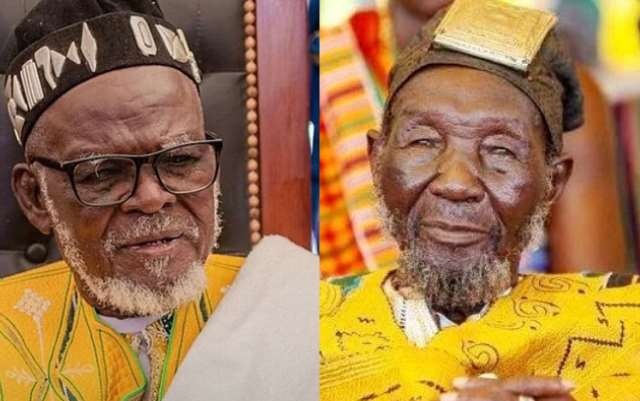
The Bissaku Traditional Council, representing the Bissa/Busanga ethnic group, has issued a strong statement rejecting recent claims attributed to the
The Bissaku Traditional Council, representing the Bissa/Busanga ethnic group, has issued a strong statement rejecting recent claims attributed to the mediation process led by Otumfuo Osei Tutu II, Asantehene.
According to the council, these claims—asserting that the entire Bawku area belongs exclusively to the Kusasi ethnic group—are historically inaccurate, constitutionally flawed, and provocative, posing a direct threat to the identity, rights, and ancestral lands of the Bissaku people.
In its statement released on December 22, 2025, the council emphasized that Bissaku ancestral lands have never been part of any Kusasi traditional jurisdiction, whether in Bawku, Pusiga, or Binduri.
The council cited Article 36(8) of the 1992 Constitution of Ghana, which obliges the State to protect stool and skin lands according to established customary ownership, noting that any attempt to impose contrary claims violates both history and constitutional order.
They further invoked Article 35(5), which mandates national unity and prohibits ethnic supremacy, highlighting that efforts to legitimize control over Bissaku lands based on manipulated demographics are unlawful.
The council specifically identified communities that are recognized as Bissaku ancestral lands under customary law and protected by the Constitution.
In the Pusiga District, these include Kulungugu, Garcki, Garekoka, Bengula, Nware, Kulpelgu, Kultase, Mandago, Cinkone, and Zuagala. Within Bawku Municipal District, recognized Bissaku communities include Tampizua, Bador, Mognori, Zuagala, and Gentign Gumakutaree.
In the Binduri District, Manga, Bansi, Supclea, and Mamga were listed as indisputable Bissaku lands.
The council stressed that any attempts to transfer, reclassify, or subsume these territories under other traditional authorities would constitute historical falsification and legal provocation.
While reaffirming its commitment to peace and coexistence, the Bissaku Traditional Council made clear that peace built on distortion, exclusion, or imposed narratives is illegitimate.
The council urged the Government of Ghana, the National House of Chiefs, and all relevant stakeholders to correct any misrepresentations, uphold constitutional protections, and pursue mediation approaches that are historically accurate, inclusive, and legally sound.
“The land, identity, and dignity of the Bissaku people are non-negotiable, not transferable, and not subject to reinterpretation,” the statement concluded.
This press statement comes amid ongoing tensions in the Upper East Region over the Bawku chieftaincy dispute, a long-standing conflict primarily involving the Kusasi and Mamprusi ethnic groups.
Recent mediation efforts, led by the Asantehene and supported by the Government of Ghana, sought to reconcile both parties, but the emergence of claims affecting other ethnic groups, such as the Bissaku, has added complexity to the process.

COMMENTS