
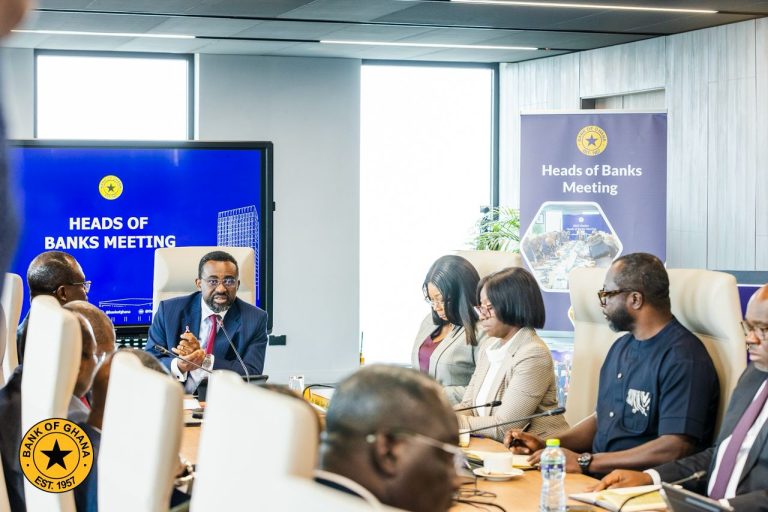
In a post-Monetary Policy Committee (MPC) engagement with top banking executives, Dr. Johnson Pandit Asiama, Governor of the Bank of Ghana, outlined t
In a post-Monetary Policy Committee (MPC) engagement with top banking executives, Dr. Johnson Pandit Asiama, Governor of the Bank of Ghana, outlined the current macroeconomic landscape, policy decisions, and future supervisory plans for the financial sector.
The meeting, held on Tuesday, follows the 126th MPC session, which saw the central bank take bold steps to sustain economic recovery and financial stability.

Inflation Decline Signals Economic Resilience
The Governor, Johnson Asiama highlighted that inflation has fallen to 9.4 percent in September 2025, the first single-digit reading in four years and the ninth consecutive month of decline.
Food inflation dropped to 11 percent, while non-food inflation eased to 8.2 percent.
These figures reflect the cumulative effects of consistent monetary policy, prudent liquidity management, and ongoing fiscal consolidation efforts

Economic growth remains robust. Data from the Ghana Statistical Service indicates the economy expanded by 6.3 percent in Q2 2025, with non-oil GDP growing 7.8 percent, driven by agriculture and services
The Composite Index of Economic Activity rose 6.1 percent in July, signaling sustained domestic demand and production expansion.
Externally, Ghana recorded a trade surplus of US$6.2 billion in the first eight months of the year, with international reserves hitting US$10.7 billion—equivalent to 4.5 months of import cover.
The cedi has strengthened by 21 percent year-to-date, placing it among the best-performing currencies globally.
Policy Rate Cut To Support Disinflation and Growth
Reflecting confidence in the continued decline of inflation, the MPC voted to reduce the policy rate by 350 basis points to 21.5 percent, marking the third cut this year.
Asiama noted the easing stance is designed to support growth while maintaining inflation within the medium-term target band of 8 ± 2 percent by year-end.

Treasury bill rates have already fallen from 13.4 percent in July to 10.3 percent in August, and average lending rates have decreased from 26.6 percent to 24.2 percent. Banks are expected to realign lending and deposit rates to reflect the easing policy.
Strengthening Banking Sector Resilience
The central bank acknowledged the banking sector’s resilience, with the Capital Adequacy Ratio at 17.7 percent and non-performing loans (NPLs) improving to 20.8 percent, though still elevated.
To ensure sustained prudential oversight, the Bank of Ghana has implemented new directives including the Bancassurance Directive, Large Exposures Directive, and Guidelines on Credit Concentration Risk Management.
The transition period for the Outsourcing Directive has been extended to December 2025, following consultations with the Ghana Association of Banks.
Governor Asiama emphasized this would be the final extension, urging banks to achieve full compliance. Looking forward, exposure drafts on Liquidity Risk Management, Interest Rate Risk in the Banking Book, Stress Testing, and Recovery Planning are expected, aligning domestic supervision with international best practices.
FX Market Operations and Domestic Gold Programme
From October 2025, the Bank of Ghana will begin foreign exchange intermediation under the Domestic Gold Purchase Programme, planning to sell up to US$1.15 billion through twice-weekly spot auctions open to all licensed banks.
Governor Asiama stressed that the process will be transparent, with no conditions or earmarking, to deepen the interbank FX market, improve price discovery, and reduce volatility.

COMMENTS