
In a renewed push toward transforming Africa’s digital payment landscape, the Bank of Ghana hosted central bankers, international financial experts, a
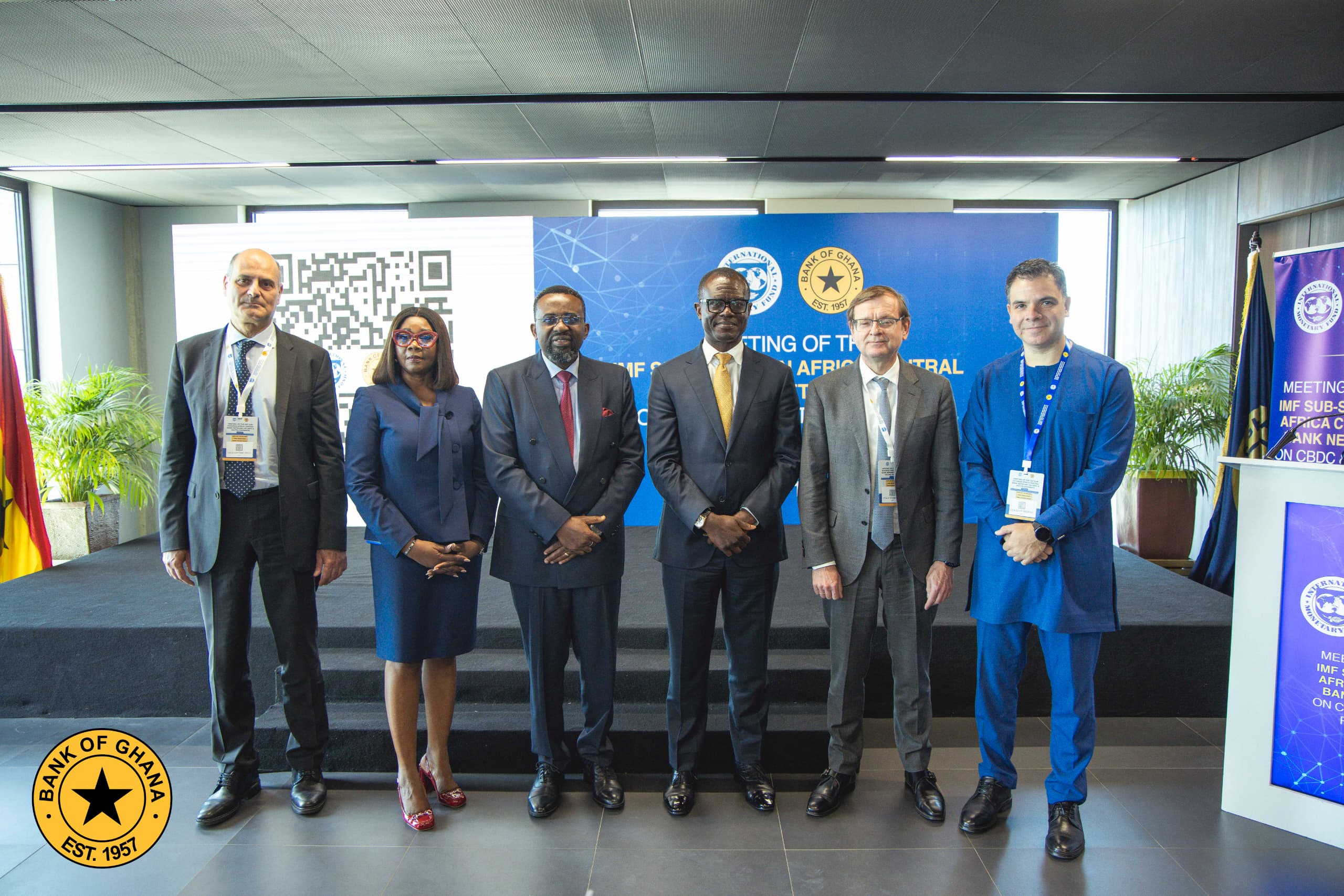
In a renewed push toward transforming Africa’s digital payment landscape, the Bank of Ghana hosted central bankers, international financial experts, and regional stakeholders in Accra on Tuesday for the IMF Sub-Saharan Africa Central Bank Network Seminar on Central Bank Digital Currencies (CBDCs) and Digital Payments. Held under the theme “Remittances, Compliance and Interoperability,” the seminar seeks to tackle long-standing inefficiencies in cross-border payments while aligning regulatory efforts across the continent.
Speaking at the opening of the event, Dr. Johnson P. Asiama, Governor of the Bank of Ghana, emphasized that the digital revolution in financial systems presents both a tremendous opportunity and a serious challenge—particularly for African economies that depend heavily on remittances and trade flows.
This year’s gathering marks a significant step forward following the launch of the Sub-Saharan Africa Central Bank Network on CBDCs and Digital Payments in 2024—an initiative driven by the IMF to foster collaborative learning and shared infrastructure among African central banks.
Unlike past engagements that were largely virtual, this in-person seminar represents a turning point in regional cooperation and strategic dialogue.
The Stakes: High Costs and Broken Systems
Dr. Asiama noted that despite advances in technology and increased demand for seamless payment solutions, cross-border transactions across Africa remain burdened by high costs, slow processing times, limited transparency, and poor interoperability.
These inefficiencies are rooted in outdated infrastructure, regulatory fragmentation, and a lack of harmonized standards.
“For our continent, the stakes are high,” Dr. Asiama said. “Remittances—often lifelines for families—remain costly and inefficient. Small businesses struggle with the high friction of cross-border trade settlements. And regulators face growing complexity in balancing openness with oversight.”
Remittances, which constitute a significant portion of household incomes in several African countries, continue to attract scrutiny for their costliness.
Despite global targets set by the G20 to reduce remittance costs to below 3%, many African corridors still record fees as high as 8-10%, limiting their developmental impact.
Ghana’s Response: Infrastructure and Innovation
Against this backdrop, Ghana is taking a leadership role in reshaping the payment architecture on the continent.
The Bank of Ghana is a key participant in the Pan-African Payment and Settlement System (PAPSS)—a platform designed to enable instant, low-cost cross-border payments in local currencies.
Already, 15 central banks, 12 switches, and over 50 commercial banks have joined PAPSS, marking a significant shift toward financial sovereignty and away from dependence on external clearing systems.
In parallel, Ghana is co-leading two landmark projects alongside the National Bank of Rwanda:
1. The FinTech License Passporting Framework – A bold effort to create regulatory coherence across borders, allowing trusted FinTech firms to operate more easily within multiple African markets.
2. The Africa NextGen Digital Payment Infrastructure (DPI) Initiative – A future-facing project focused on building secure, interoperable, and inclusive payment systems tailored to the continent’s needs.
Beyond Technology: Regulation and Inclusion
While infrastructure investments are critical, Dr. Asiama stressed that policy coherence and regulatory agility are equally vital.
He advocated for the use of multi-regulator sandboxes—shared testing environments for innovators, regulators, and policymakers—and Supervisory Technologies (SupTech) that can enhance real-time monitoring and cross-border compliance.
Crucially, the governor called on African stakeholders to be active participants in shaping international digital finance standards in areas such as anti-money laundering, digital identity, and data privacy, warning against frameworks that are imposed externally without regard for local realities.
Human-Centered Finance
Amid the technical discussions, Dr. Asiama brought the focus back to the human impact of financial systems reform.
“Let us not lose sight of the real human stories behind these reforms,” he said. “The single mother receiving remittances to keep her children in school. The young entrepreneur seeking payment channels to export their goods. The regulator striving to ensure innovation does not outpace resilience.”
He underscored that the seminar is not just about technical upgrades, but about co-creating a financial ecosystem that works for people—one that supports inclusive markets and preserves public trust.
A Call to Bold Action
With delegates expected to engage in two days of high-level discussions, Dr. Asiama urged participants to be forward-thinking and bold, to question outdated assumptions, and to propose new models for cooperation and interoperability.

COMMENTS