
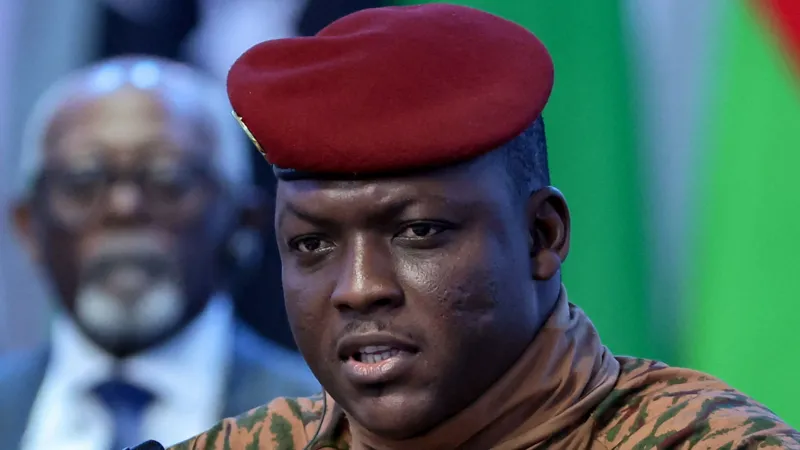
Burkina Faso's military leader, Captain Ibrahim Traoré, has declared that the country must "forget" about democracy, stating that the system is unsuit
Burkina Faso’s military leader, Captain Ibrahim Traoré, has declared that the country must “forget” about democracy, stating that the system is unsuitable for the nation.
In a televised interview on April 2, 2026, Traoré argued that “democracy kills” and described it as a form of “slavery” that has failed to bring development to Africa.
He pointed to the instability in Libya as a warning against Western-imposed governance, asserting that no country has achieved true development through democratic means alone.
Instead of a traditional democracy, Traoré framed the current governance as a “People’s Progressive Revolution,” which he claims is a necessary phase for the country to achieve sovereignty and security.
This stance marks a significant departure from his initial promises to return the country to civilian rule by July 2024; that transition has now been extended by five years, allowing him to remain in power until 2029.
To further consolidate this revolutionary path, the junta formally banned all political parties in early 2026, claiming they were divisive and incompatible with the state’s current goals.
While Traoré has gained support from some who admire his anti-Western rhetoric and focus on self-reliance, his administration faces mounting criticism from international bodies and human rights groups.
The United Nations has urged a reversal of the political party ban, while reports from organisations like Human Rights Watch highlight a rising death toll among civilians as the military battles long-standing Islamist insurgencies.
Despite the junta’s promises to restore safety, violence remains a critical challenge, and the suppression of dissent has led to accusations that the “revolution” is masking a long-term shift toward autocratic rule.

COMMENTS