
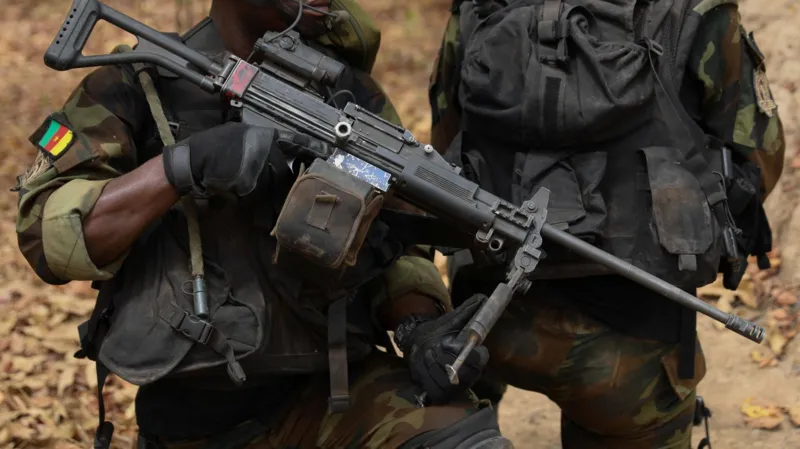
Three Cameroonian soldiers have been handed rare prison sentences for their involvement in the killing of 21 civilians in the village of Ngarbuh, in C
Three Cameroonian soldiers have been handed rare prison sentences for their involvement in the killing of 21 civilians in the village of Ngarbuh, in Cameroon’s Anglophone Northwest region.
The massacre, which occurred in February 2020, saw government troops and allied Fulani militia raid the community, killing men, women, and children. Among the victims were 13 children and a pregnant woman.
The soldiers were convicted of murder, arson, and destruction, marking one of the few times Cameroonian security forces have been held accountable for abuses committed during the country’s long-running Anglophone conflict.
The military court in Yaoundé sentenced Gendarme Haranga Gilbert to 10 years in prison, Sergeant Baba Guida to eight years, and Corporal Sanding Sanding to five years.
A militia member involved in the attack also received a similar sentence.
While the convictions are seen as a rare step toward justice, critics argue that the punishments are too lenient given the severity of the crimes.
Under Cameroonian law, murder and arson carry minimum sentences of 10 years, yet two of the soldiers received terms below that threshold.
The Ngarbuh massacre drew international condemnation at the time, with Human Rights Watch and other organisations accusing Cameroonian forces of targeting civilians in a brutal crackdown on suspected separatist sympathisers.
The killings became emblematic of the wider abuses committed in the Anglophone regions, where government forces and separatist fighters have clashed for nearly a decade.
The trial and sentencing of the soldiers, therefore, represent a rare acknowledgement of wrongdoing by state forces in a conflict that has often been marked by impunity.
Despite the verdict, victims’ families and rights advocates remain dissatisfied.
Lawyers representing the victims described the sentences as “insignificant,” arguing that they fail to reflect the gravity of the crimes or provide meaningful justice for the affected community.

COMMENTS