
The cedi’s recent struggle against the United States dollar has reopened debate about the true state of the economy under President John Mahama. De
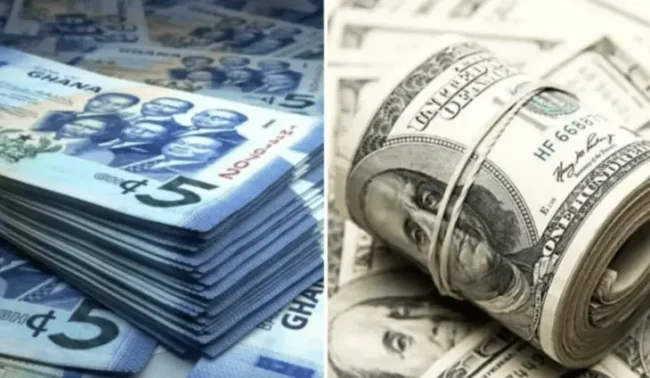
The cedi’s recent struggle against the United States dollar has reopened debate about the true state of the economy under President John Mahama.
Despite official claims of stability, the current depreciation has exposed the fragility of what critics describe as an “artificially managed economy.”
Over the past two weeks, the cedi’s fall against major trading currencies slowed but still revealed underlying weaknesses.
On the interbank market, the local currency closed trading at GH¢12.40 to the dollar, a 2.02 percent dip compared to a sharper 6.17 percent fall recorded two weeks earlier. In the retail or forex bureau market, the cedi traded between GH¢13.40 and GH¢13.50, ending at GH¢13.70, representing a 0.74 percent decline.
Market analysts say the slowdown in depreciation was largely due to temporary inflows from commodity exports and the Bank of Ghana’s interventions by pumping over $300million, rather than structural reforms.
According to Databank Research, while the cedi’s slide has eased, heightened corporate demand—especially from the services sector ahead of the festive season—remains a risk factor.
The British pound and the euro also gained ground, trading at GH¢18.05 and GH¢15.70 respectively, underscoring the cedi’s persistent vulnerability.
Experts note that the Bank of Ghana’s reliance on reserves and the anticipated International Monetary Fund (IMF) programme review are the only buffers preventing a full-blown currency crisis.
For many observers, the current situation is a reminder of Ghana’s long-standing economic challenges, particularly under President Mahama’s administration. Critics argue that his government painted a picture of stability by leaning heavily on borrowed reserves, IMF support, and artificial interventions, rather than addressing deep-seated issues such as low industrial output, high import dependency, and weak export diversification.
The cedi’s year-to-date decline of 15 percent against the dollar tells a bigger story: that the so-called stability of Mahama’s economy was fragile and unsustainable.
The recent dollar rate has reinforced public concerns that Ghana’s economy is still being propped up by short-term measures instead of durable reforms.
With the festive season approaching and corporate demand for foreign exchange expected to rise, economists warn that unless structural policies are introduced, the cedi’s woes may resurface in the months ahead—further exposing the cracks in what many now call Mahama’s “artificial economy.”

COMMENTS