
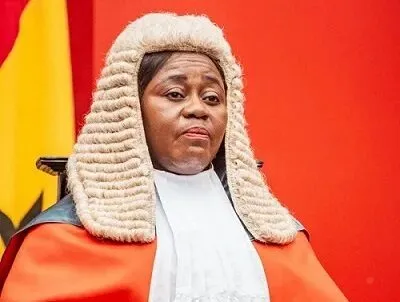
Suspended Chief Justice of Ghana, Her Ladyship Justice Gertrude Araba Esaaba Torkornoo, has taken her legal battle to a new frontier — the ECOWAS Comm
Suspended Chief Justice of Ghana, Her Ladyship Justice Gertrude Araba Esaaba Torkornoo, has taken her legal battle to a new frontier — the ECOWAS Community Court of Justice in Abuja, Nigeria — accusing the Ghanaian state of violating her fundamental human rights through what she describes as an unconstitutional suspension from office.
The move marks a dramatic escalation in an already complex legal saga playing out across multiple courtrooms in Ghana, and now in a regional tribunal.
The latest suit, filed on July 4, 2025, is separate from but closely mirrors ongoing cases at Ghana’s Supreme Court and Human Rights High Court, in which the suspended Chief Justice is challenging the legitimacy of the processes initiated for her removal.
Fighting Suspension on All Fronts
Justice Torkornoo argues in her ECOWAS Court filing that her suspension amounts to a de facto removal from office without a final determination, thereby infringing upon her rights to due process, dignity, and continued service in the role she was constitutionally appointed to.
She insists that her ability to function has been compromised without recourse to a lawful resolution.
The suspension stems from petitions filed against her earlier this year, triggering a five-member committee under Article 146 of the Constitution to investigate her conduct.
However, the Chief Justice has questioned the composition and mandate of the committee, and claims that her constitutional rights have been trampled on in the process.
In Ghana’s courts, she is seeking judicial review of the ongoing proceedings against her.
Her suit at the High Court, however, has come under attack from the Attorney-General, who is seeking to have it struck out, citing procedural flaws.
AG Pushes Back
The Attorney-General, Dr. Dominic Ayine, through his Deputy, Dr. Justice Srem-Sai, has filed a motion to dismiss Justice Torkornoo’s application for judicial review, arguing that it suffers from “grave misstatements of capacity” and the “non-inclusion of essential parties,” rendering it a nullity.
In a sworn affidavit by Reginald Nii Odoi, a state attorney, the AG’s office maintains that the High Court lacks jurisdiction to entertain matters already under consideration by the Supreme Court.
The AG’s team also pointed to multiple related constitutional cases currently before the apex court, further reinforcing their claim that the Chief Justice’s High Court action is procedurally defective and jurisdictionally misplaced.
Notably, one of the pending cases before the Supreme Court is titled Justice Gertrude Torkornoo v. The Attorney-General & 5 Others (Suit No. J8/113/2025)—part of a growing list of litigation involving both civil society actors and individuals over the constitutional implications of her suspension.
Political and Legal Stakes Rise
The Chief Justice’s decision to take the matter to the ECOWAS Court is already triggering debates over judicial independence, executive overreach, and Ghana’s adherence to international human rights norms.
Legal observers suggest this move could be a pre-emptive strategy to gain a neutral regional verdict that might influence or pressure domestic proceedings.
For the Mahama-led administration, the optics are challenging. The case portrays Ghana — long held as a beacon of democracy and judicial integrity in West Africa — as embroiled in an unprecedented judicial crisis where the head of the judiciary must seek refuge at a foreign court.
At the heart of the issue is the perception that constitutional due process is being either circumvented or manipulated.
Critics of the government believe the removal proceedings are politically motivated, while others insist the judiciary must not be above accountability mechanisms clearly outlined in the Constitution.
What’s Next?
The ECOWAS Court will now assess whether the Chief Justice’s rights under regional human rights instruments have been violated.
A ruling in her favour could have profound implications — not only for her reinstatement but for Ghana’s legal system, governance credibility, and international standing.
Back home, all eyes are also on July 15, when the High Court is scheduled to hear the Attorney-General’s motion to strike out the Chief Justice’s judicial review suit.

COMMENTS